
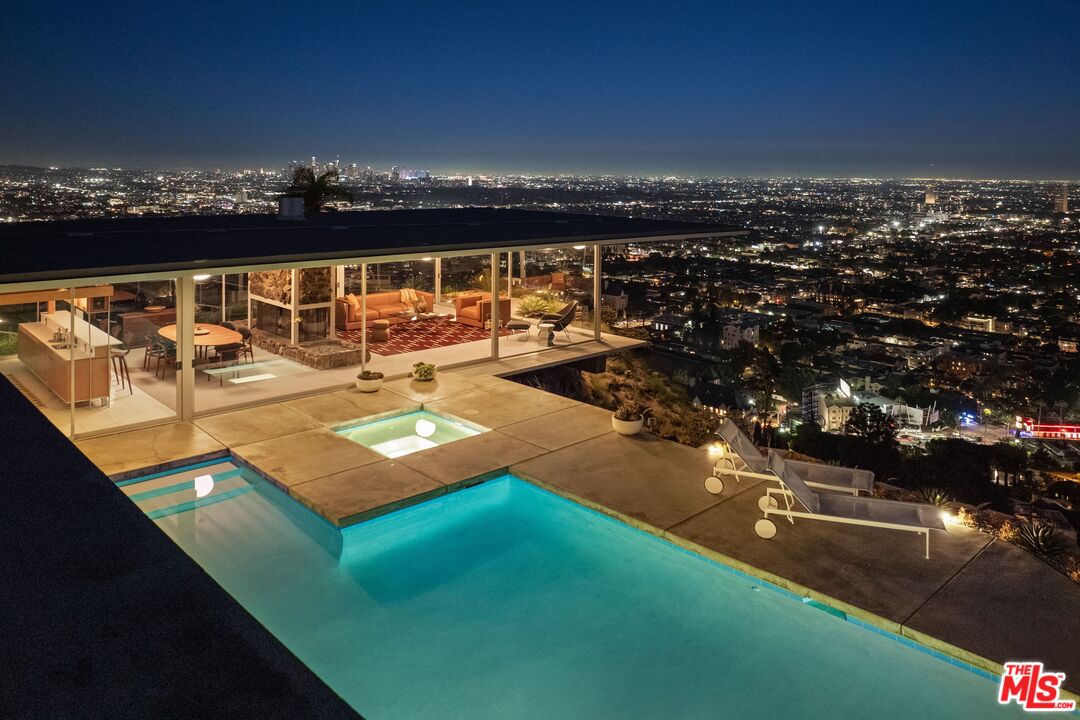
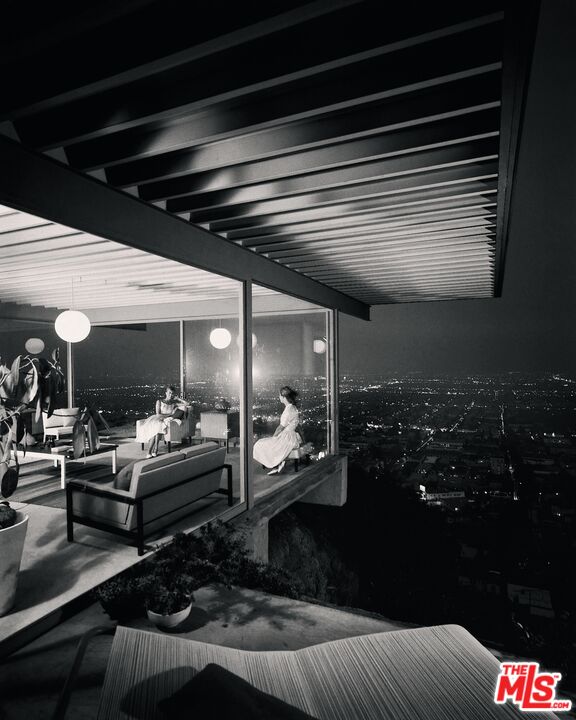
High above the lights of Los Angeles, a thin plane of steel and glass floats over the city grid. For more than six decades, the Stahl House — better known as Case Study House #22 — has been less a private residence than an image in the collective imagination: Julius Shulman’s famous night-time photograph of two women suspended above an endless carpet of twinkling streets. It is that rare building that has become shorthand for an entire idea of a city, an era, and a lifestyle.
Now, for the first time in its 65-year history, the Stahl House is for sale. Its appearance on the market is not simply another high-end real-estate story; it raises questions about architectural heritage, domestic modernism, and what it means when one of the most reproduced homes in the world quietly shifts from being a family home to an object of global collecting.
For Sale — Key Facts
Address: 1635 Woods Drive, Los Angeles
Architect: Pierre Koenig (1960)
Program: Case Study House #22
Asking Price: Approx. $25 million
Size: c. 2,200 sq ft, 2 bedrooms
Status: Los Angeles Historic-Cultural Monument; listed on the National Register of Historic Places
Listing Agent: The Agency
Tours: Public tours historically available; future access depends on new ownership
The Case Study Dream
The Stahl House sits at the intersection of two post-war forces: the expansion of Los Angeles into the hills, and the Case Study House Program launched in 1945 by Arts & Architecture magazine. Conceived as experiments in affordable, modern living, the Case Study houses explored new materials, steel construction, and efficient layouts for a booming suburban culture.
Case Study House #22 was among the last—and ultimately the most radical—of these experiments. While many Case Study houses stood on ordinary suburban lots, the Stahls’ site in the Hollywood Hills was so steep that several architects had dismissed it as “unbuildable.” In 1954, Buck and Carlotta Stahl bought the precipitous land and spent years stabilising it with hand-laid retaining walls before approaching architect Pierre Koenig.
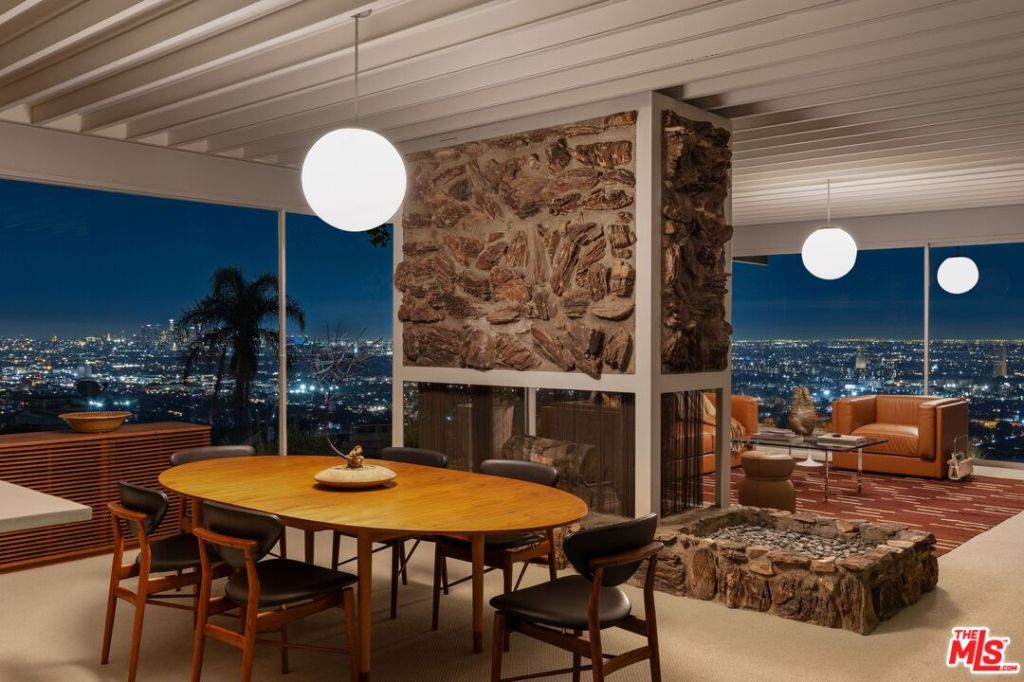
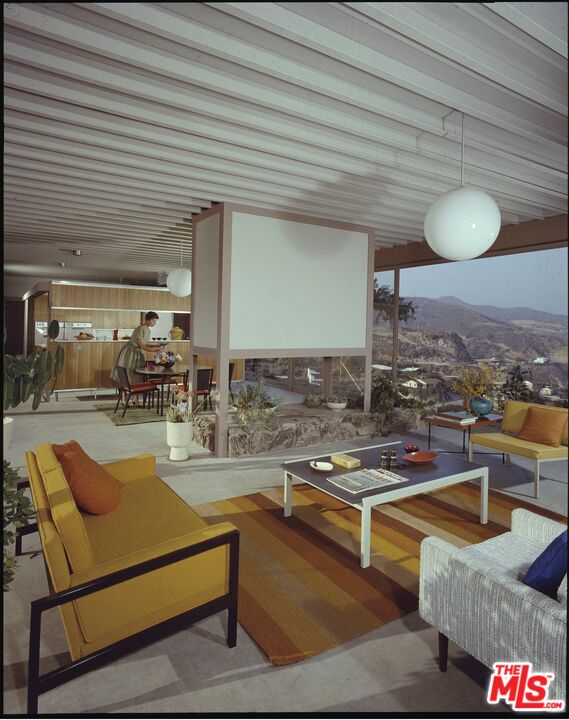
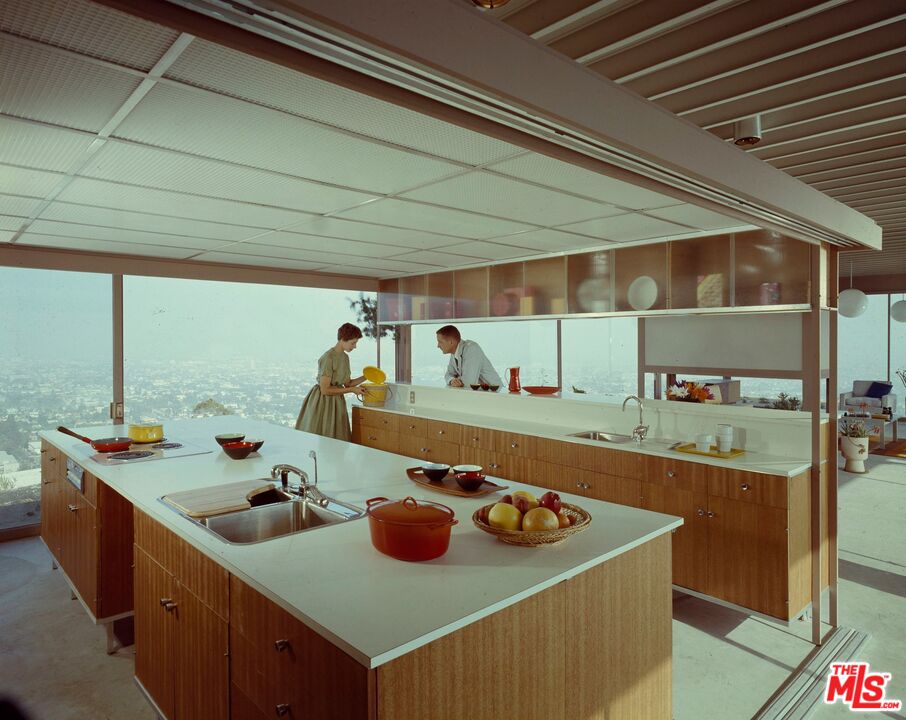
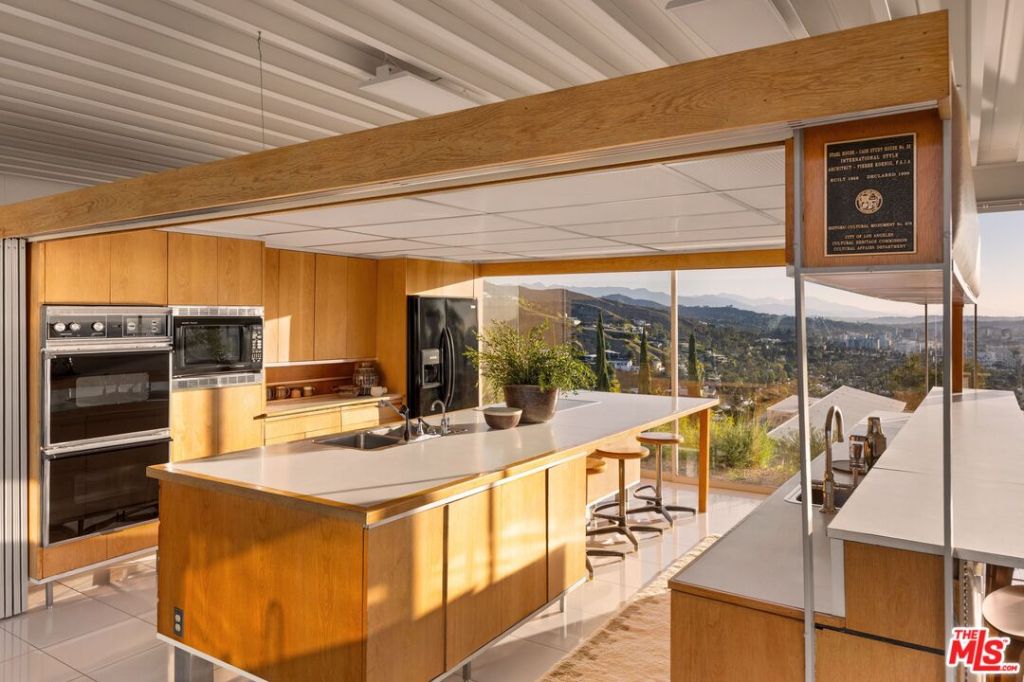
Koenig refined Buck Stahl’s early sketches into a rigorously modern steel-and-glass pavilion and enrolled the project in the Case Study program. Construction began in 1959 and finished in 1960, yielding a strikingly modest dwelling: two bedrooms, a thin steel frame, floor-to-ceiling glass, concrete floors with radiant heat, and a flat roof that seems to hover above the city.
Structure as Landscape: A House in Suspense
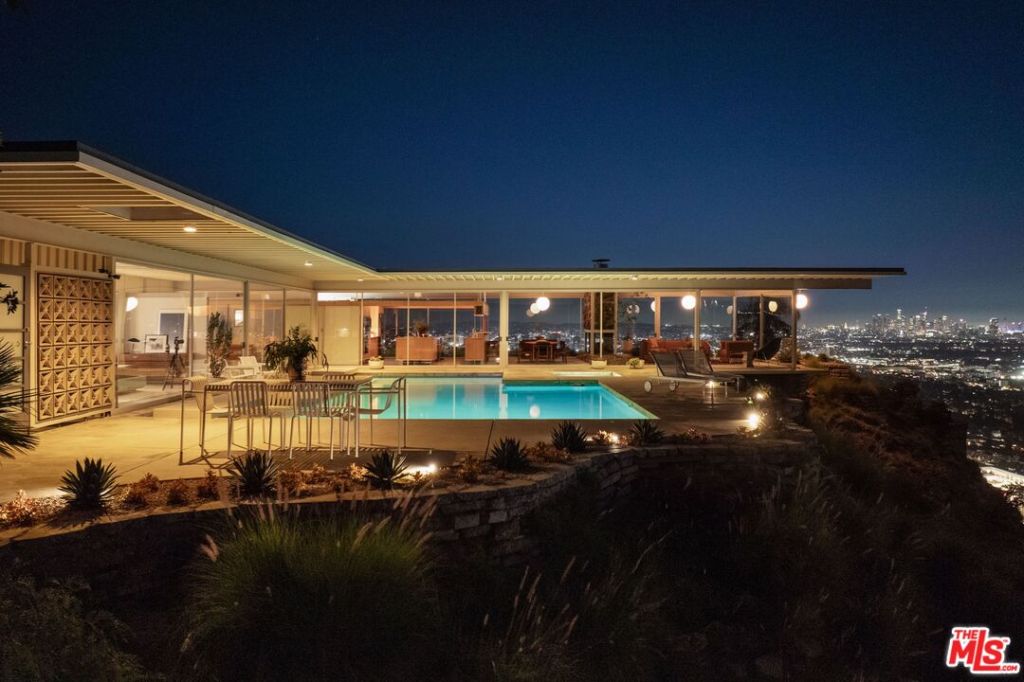
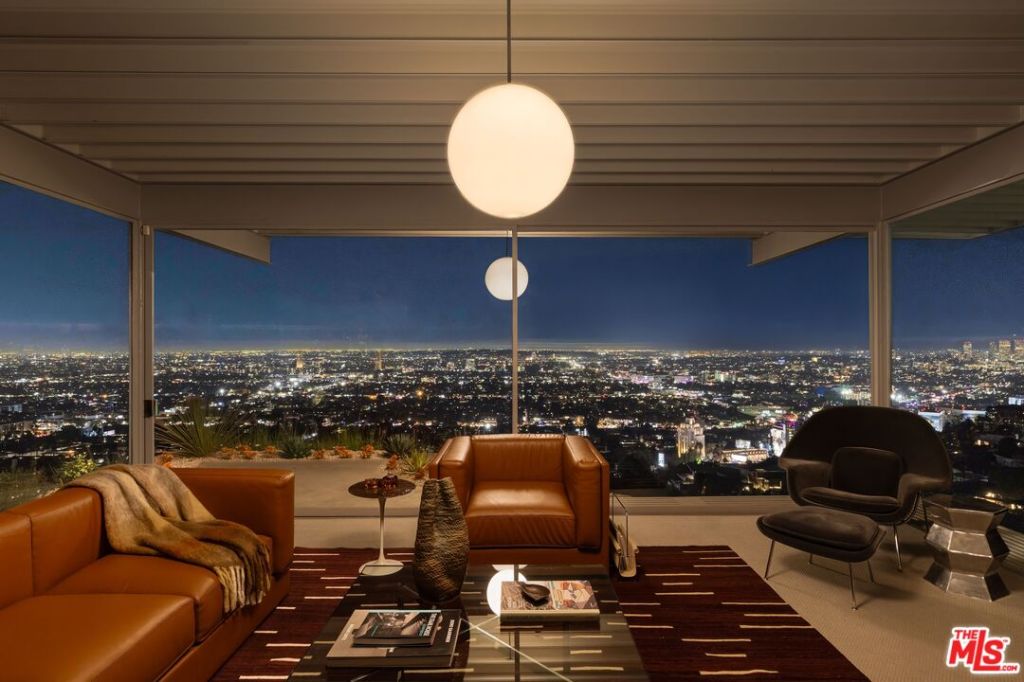
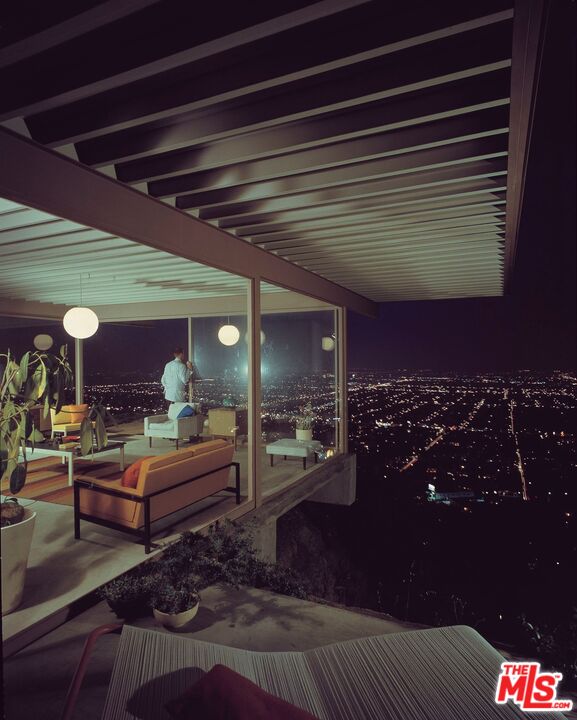
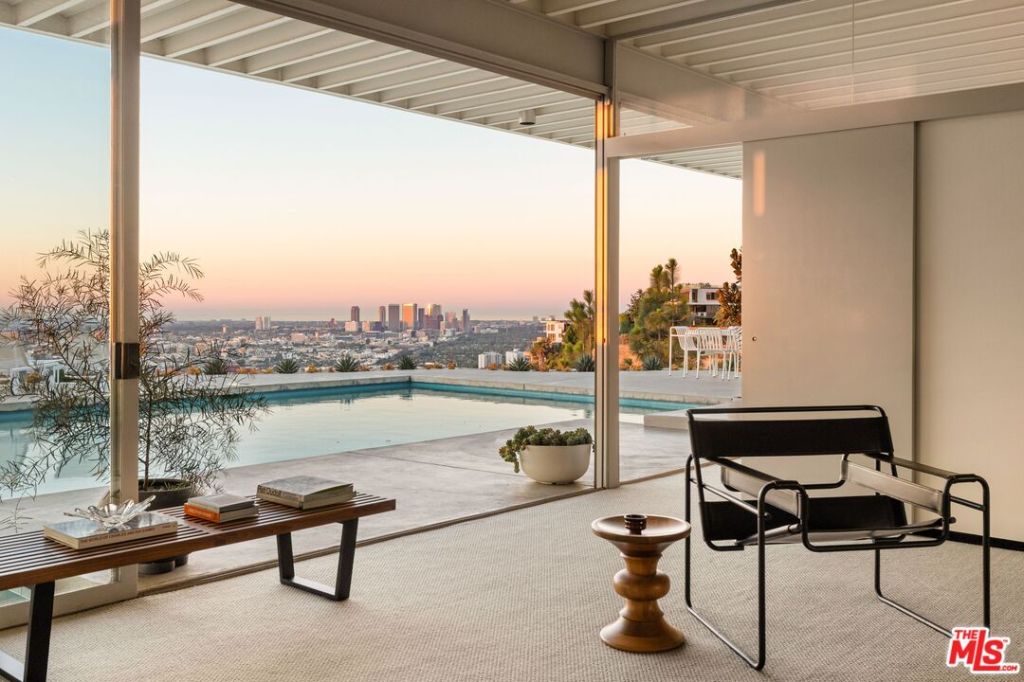
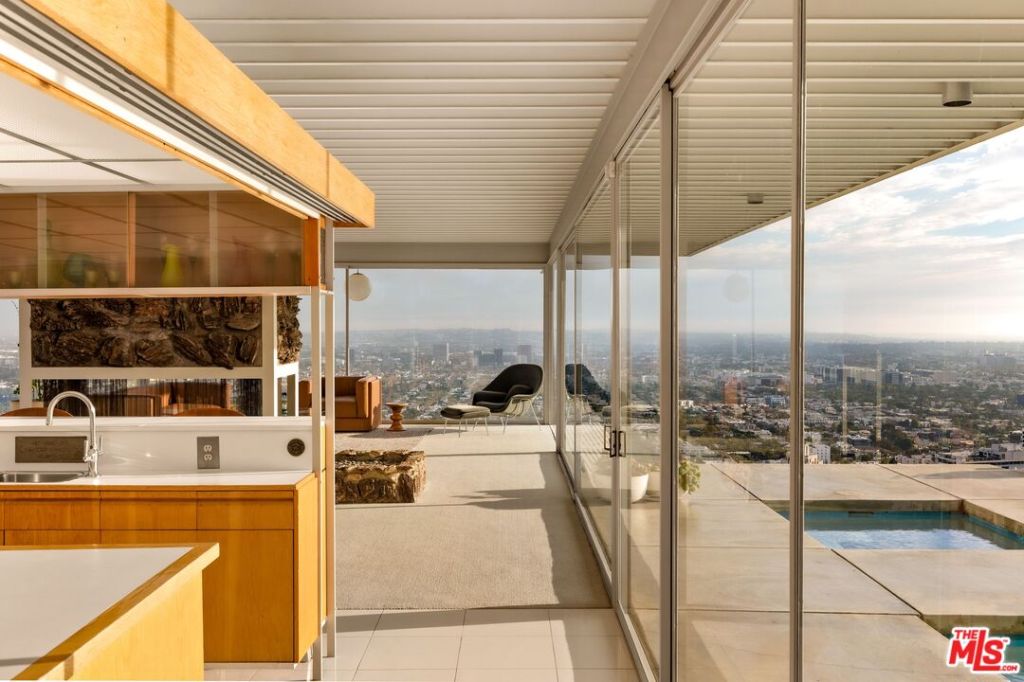
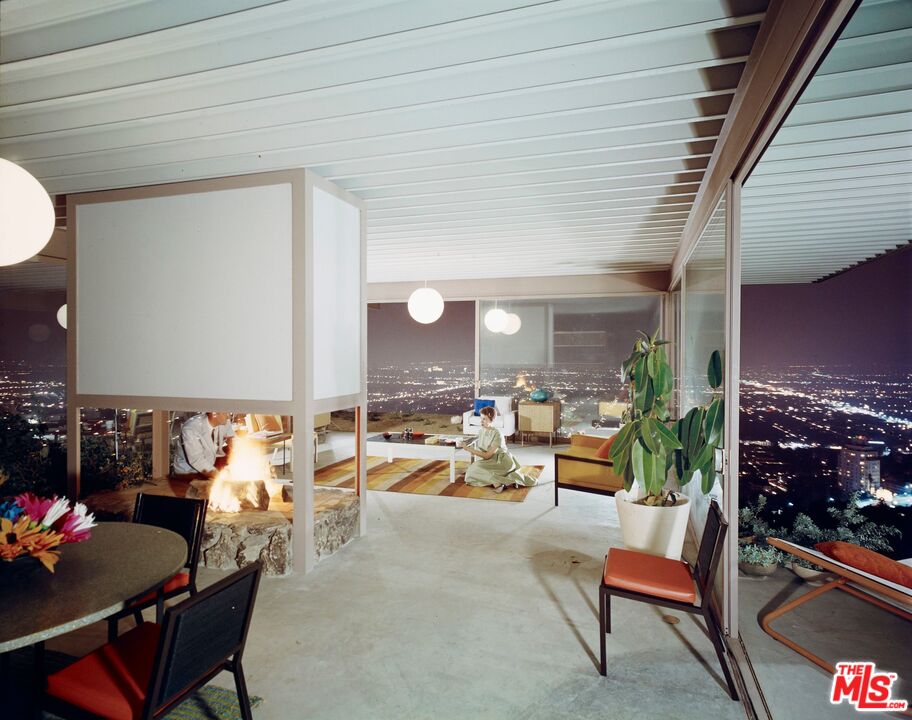
Koenig’s design pushes International Style modernism toward something distinctly Californian. The steel structure is partly cantilevered over the cliff’s edge, so that the living spaces appear to float in mid-air. Floor-to-ceiling glazing erases the boundary between interior and the vertiginous drop beyond, turning the city into a vast illuminated “floor” on which the house seems to rest.
Two design moves are especially significant:
1. The Glass Corner
The famous unsupported glass corner in the living room creates a sense of total openness. It places the viewer at the very edge of domestic space, with Los Angeles unfurling below as if it were part of the room.
2. The Pool Terrace
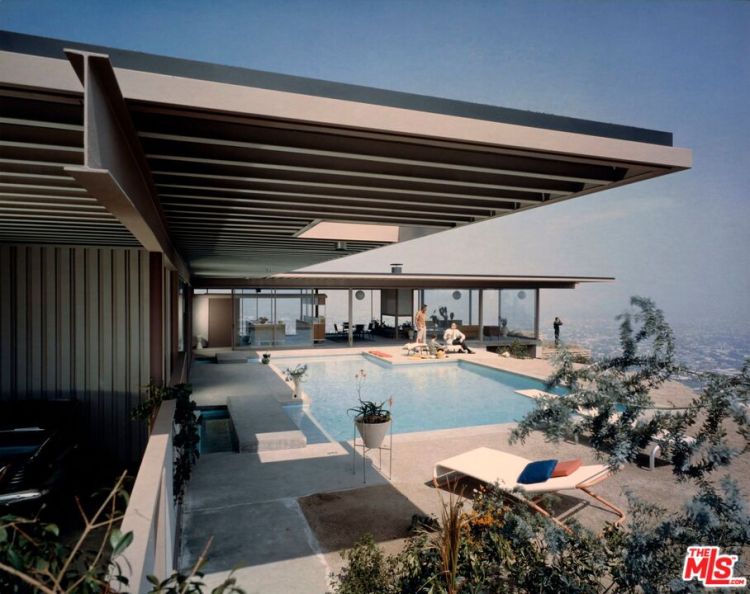
Koenig positioned the pool as a horizontal mirror in front of the pavilion, heightening the sense of weightlessness. At night, reflections from the water echo the city lights below, as though the house floats between two skies.
The Stahl House is not just a home in a landscape; it transforms the landscape into a surface of habitation. To live here is, in architectural terms, to inhabit the view itself.
The Photograph That Made the Myth
If Koenig created the architecture, it was Julius Shulman who created the myth. His 1960 twilight photograph of two women perched in the glass-walled living room, with the city glittering below, is among the most recognised architectural images ever made.
The photograph is as composed as a film still: the diagonal steel beams align with the city grid; the women’s light dresses echo the pendant lamps; and the domestic scale of the living room is juxtaposed with the limitless metropolis beyond. It staged an entire way of life—informal, glamorous, and deeply Californian.
Over time, the photograph transformed the house from a Case Study prototype into a universal symbol of mid-century modernism, Hollywood aspiration, and Los Angeles itself.
From Prototype to Monument
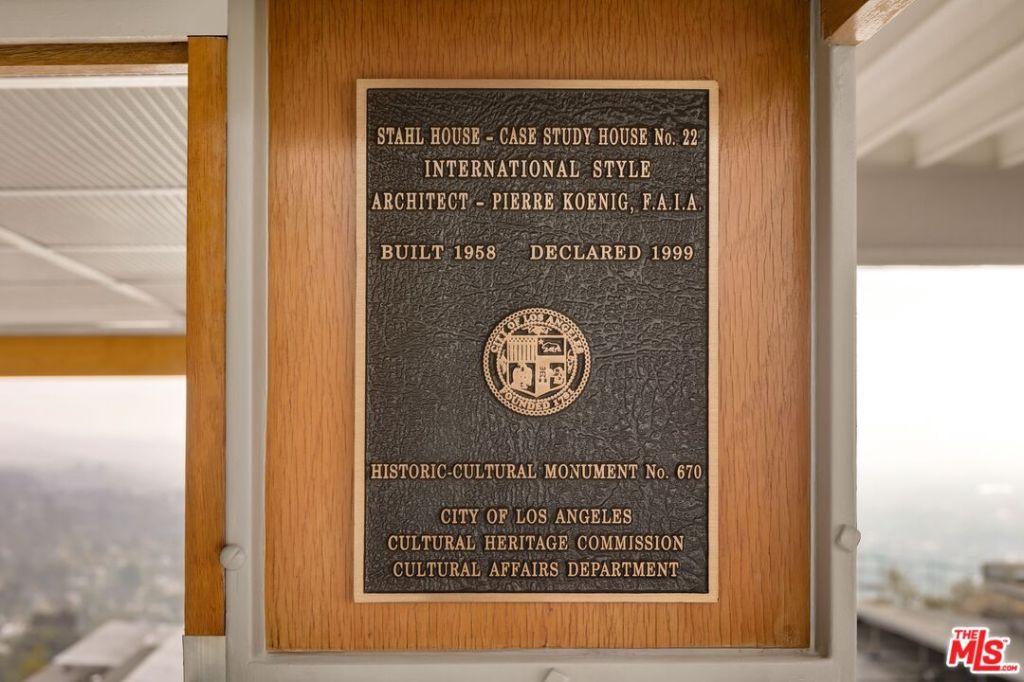
Ironically, a program meant to produce affordable, replicable homes resulted here in an architectural one-off. Unlike many Case Study houses, which were altered or demolished, the Stahl House survived intact. It was designated a Los Angeles Historic-Cultural Monument in 1999 and added to the National Register of Historic Places in 2013.
For decades, the Stahl family maintained the house, opening it for carefully managed tours and allowing it to appear in films, music videos, and fashion shoots. It became one of the most recognisable mid-century homes in the world and a touchstone for architects studying Californian modernism.
A Family Home, Not Just a Masterpiece
Amidst the international acclaim, the house remained first and foremost a domestic space. The Stahl children grew up inside its glass walls, listening to coyotes in the canyon and watching traffic streams flicker across the basin. The fact that the house remained in the same family for 65 years is one reason it still feels so close to Koenig’s original vision.
Many of the house’s most iconic features—built-ins, concrete floors, radiant heat—remain intact. The long stewardship by its original inhabitants has preserved an authenticity rarely seen in architectural landmarks.
On the Market: Architecture as Collectible Object
The current sale marks a shift in how we understand domestic modernism. The asking price of roughly $25 million places Case Study House #22 among the most expensive per-square-foot residential offerings in Los Angeles. More importantly, the listing presents the home less as real estate and more as an architectural artefact in search of a steward.
The language around the sale acknowledges that buying the Stahl House carries responsibilities: safeguarding a cultural icon, managing a sensitive landmark, and potentially continuing public access through tours.
This transforms the role of owner into something closer to that of a guardian or trustee.
Why This Sale Matters
1. Heritage and Uncertainty
When a globally significant private house changes hands, its future becomes uncertain. Preservation relies on the commitment—and resources—of whoever buys it next.
2. Modernism as Luxury
What began as an experiment in efficient, affordable building has become one of the world’s most coveted architectural trophies. The Stahl House exemplifies how mid-century modernism has shifted from idealistic prototype to luxury collector’s item.
3. Architecture and the Image
Few houses owe as much to a single photograph. The enduring fame of Shulman’s image continues to shape the home’s cultural and real-estate value. It exists simultaneously as a structure and a global image.
4. Stewardship as Ownership
The idea that a buyer becomes a steward reflects a broader shift in how iconic modernist homes circulate within global markets. Ownership carries historical, aesthetic, and public responsibilities.
Looking Ahead
Whatever happens next, the listing of the Stahl House marks the end of one era and the beginning of another. For 65 years, the house has contained overlapping worlds: a family’s private life, Koenig’s architectural clarity, Shulman’s photographic myth-making, and the city’s own self-image.
As it enters the realm of global collectors, institutions, and high-stakes buyers, the question becomes not simply who will own it, but what it will become. Will it remain accessible? Will its fragile equilibrium be preserved? Or will it retreat further into the realm of iconic images and architectural lore?
For now, Case Study House #22 remains what it has always been: a modest two-bedroom home that somehow came to define the dreams, contradictions, and audacities of mid-century California modernism. And for the first time, that dream is—at least in theory—available to buy.
 My World of Interiors