
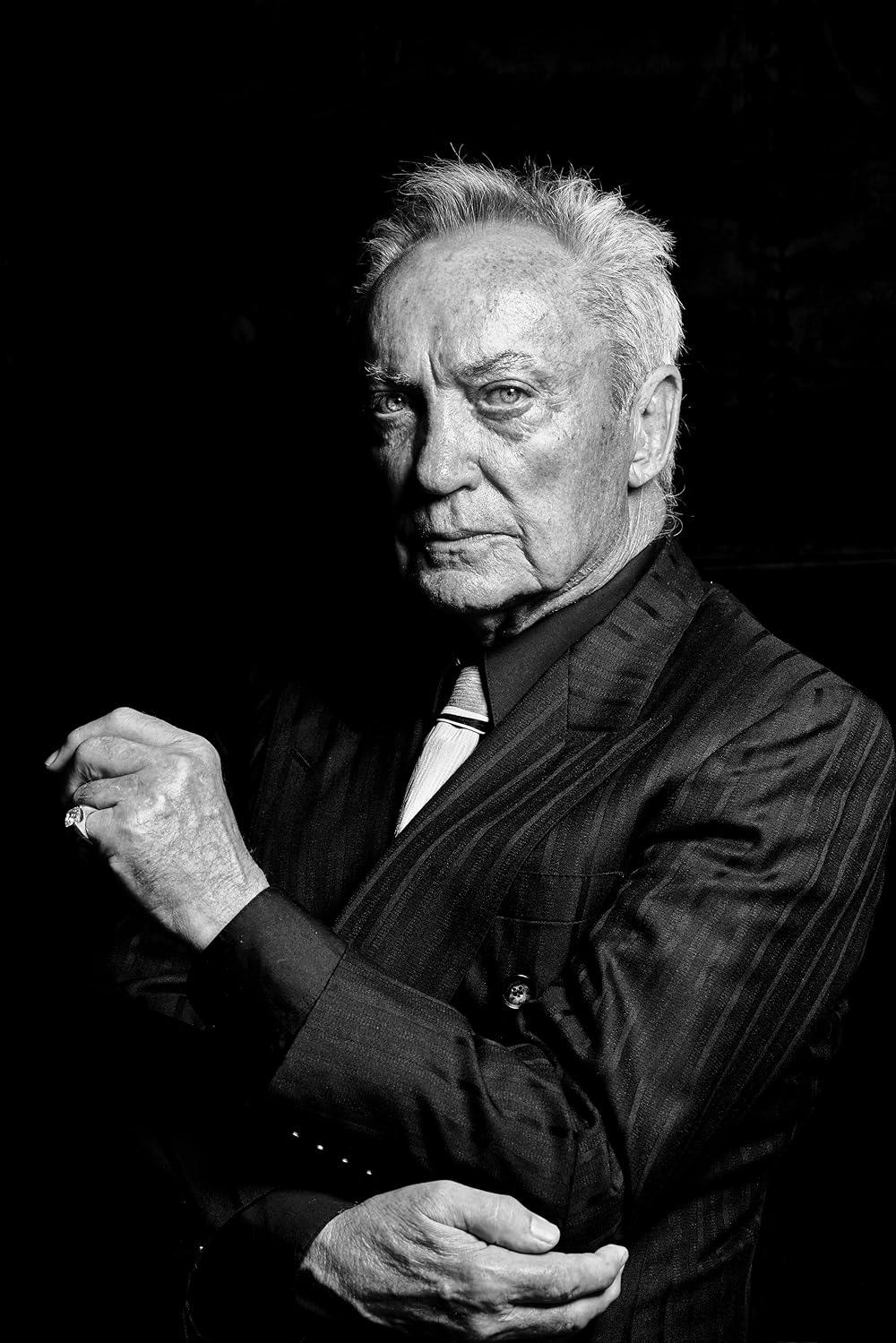
Udo Kier, the German actor whose glacial blue eyes, androgynous beauty, and fearless taste for the surreal made him one of cinema’s great cult icons, has died aged 81 at his home in Palm Springs, California. His death was confirmed on Sunday.
Across more than half a century of film, Kier built a career unlike anyone else’s: a patchwork of art-house classics, underground provocations, Hollywood oddities, and performances so distinctive that he became a genre unto himself. Few actors moved so fluidly between the avant-garde and the mainstream, between the grotesque and the sublime. Fewer still did it with such elegance, wit, and unfailing strangeness.
Born Udo Kierspe in 1944 in Cologne, Kier came into the world as Germany was collapsing under the final months of war. The circumstances of his early life – scarcity, dislocation, a world in ruins – lingered with him throughout adulthood. Yet from this unpromising beginning emerged a performer marked by imagination, humour, and an instinctive reach for the unconventional.
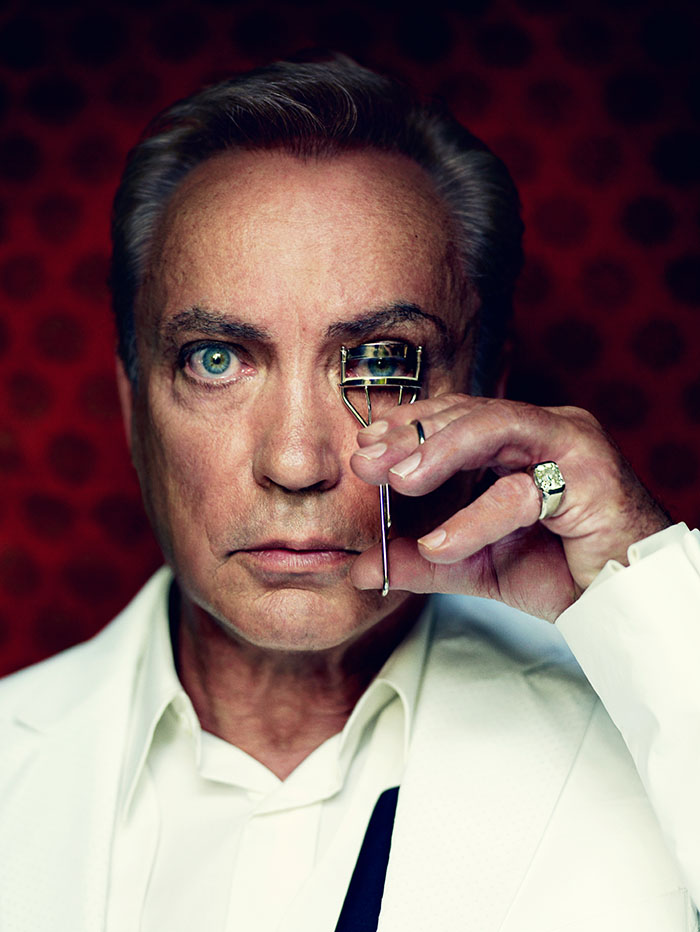
His entrance into European cinema in the late 1960s was abrupt and memorable: a young man with cheekbones and charisma impossible to ignore. But it was in the 1970s, under the direction of Paul Morrissey, that Kier became a legend. Flesh for Frankenstein (1973) and Blood for Dracula (1974) introduced the world to his singular ability to make the monstrous beautiful and the beautiful monstrous. His performances were operatic, erotic, grotesque and unforgettable – the work of an actor utterly unafraid of excess.
What followed was a career that defied taxonomy. He worked with Fassbinder, Wenders, Herzog and Lars von Trier; appeared in American blockbusters as easily as German television; and slipped into roles that required menace, melancholy, camp, psychosis or – most often – an unplaceable mix of all four. Few actors have inhabited so many worlds, and so convincingly.
In interviews he often spoke of his openness to new experiences, a philosophy that made him beloved among directors. Lars von Trier cast him repeatedly, treating him as a kind of talismanic presence – mischievous, precise and impossible to replace. Gus Van Sant placed him as a haunting figure on the margins of My Own Private Idaho. Todd Stephens entrusted him with his late-career jewel, Swan Song, a performance that revealed the full depth of Kier’s emotional intelligence.
For all his eccentricity, Kier never regarded himself as a cult figure. He saw himself as an actor – a working one – and treated every role with the same commitment, whether it was in a low-budget horror film or a Palme d’Or contender. His delight in his vocation was unmistakable.
He once joked, “I’ve made 200 films: 100 are bad, 50 you can watch with a glass of wine, and 50 are good.” It was typical Kier: self-aware, playful and – as anyone who has watched his finest performances knows – far too modest.
He is survived by a career that remains vast, varied and irreplaceable.
Five Essential Udo Kier Performances
1. Flesh for Frankenstein (1973) – dir. Paul Morrissey
A delirious, unforgettable turn as an unhinged Baron Frankenstein: decadent, operatic and career-defining. Kier throws himself into the role with a fearless physicality that helped secure his place as a European horror icon.
2. Blood for Dracula (1974) – dir. Paul Morrissey
Kier’s fragile, languorous, aristocratic vampire remains one of the most original interpretations of Dracula ever committed to film. At once tragic and absurd, his performance lingers in the memory long after the credits roll.
3. My Own Private Idaho (1991) – dir. Gus Van Sant
As Hans, the enigmatic figure on the fringes of Gus Van Sant’s modern classic, Kier delivers a brief but deeply affecting performance. His scenes are infused with loneliness, theatricality and unexpected tenderness, demonstrating how much he could do with very little screen time.
4. Melancholia (2011) – dir. Lars von Trier
As the brittle, panicked wedding planner in von Trier’s apocalyptic drama, Kier achieves pitch-perfect dark comedy. His refusal to look at the depressed bride as the world quietly collapses around them is one of the film’s most indelible, absurdly human touches.
5. Swan Song (2021) – dir. Todd Stephens
A late-career masterpiece. As retired hairdresser Pat Pitsenbarger, coaxed out of a nursing home for one last job, Kier is luminous, humane and heartbreakingly dignified. The film allows him to draw on decades of camp, melancholy and mischief, distilling them into a performance that feels like a valediction.
Udo Kier’s legacy is written in the faces and figures he played: outsiders, monsters, beauties, eccentrics, men haunted and men haunting. In an industry that often demands sameness, he remained gloriously, defiantly himself.
 My World of Interiors