
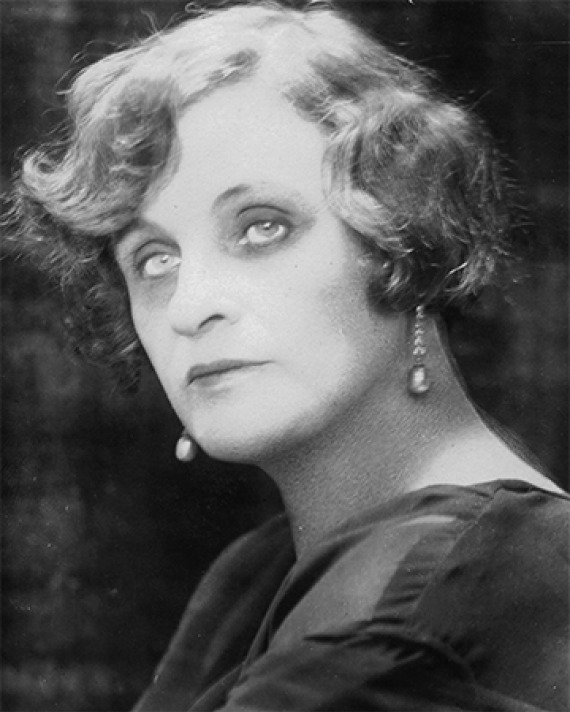
There are writers who chronicle history from the center of power, and there are writers who record it from the margins, turning displacement itself into a vantage point. Teffi, born Nadezhda Lokhvitskaya in 1872, belonged firmly to the latter. Known in her lifetime as a humorist, satirist, and chronicler of Russian émigré life, she has only recently begun to receive the international recognition her work deserves. In her essays, stories, and memoirs, Teffi captured the absurdities of revolution, the melancholy of exile, and the resilience of wit in the face of loss.
The Russian Belle Époque
Teffi emerged in the literary world of pre-revolutionary Russia — a milieu of salons, feuilletons, and serialized fiction. She published in satirical journals such as Satirikon, where her light, ironic touch found eager readers. To write humor as a woman in turn-of-the-century Russia was already a subversive act; Teffi’s sharp observations and playful inversions of social norms made her a literary celebrity.
Her early stories teased the hypocrisies of the bourgeoisie, the foibles of intellectuals, the pretensions of politicians. She was a writer of small details with large implications, often revealing how power works not in proclamations but in gestures, slips, and everyday absurdities.
Revolution and Flight
The October Revolution of 1917 changed everything. Teffi fled Petrograd and eventually made her way through Ukraine, the Black Sea, and Constantinople to Paris, where she would remain for the rest of her life. Her memoir of this journey, Memories: From Moscow to the Black Sea, is both harrowing and comic — a record of revolution seen not from the view of generals or commissars but from the chaos of train stations, boarding houses, and border crossings.
Her humor did not trivialize the upheaval; it made it bearable. By noticing the ridiculous amid the terrifying, Teffi conveyed the disorienting texture of lived history: how exile feels not like grand tragedy but a series of inconveniences, misunderstandings, and small indignities.
Parisian Exile
In Paris, Teffi became one of the leading voices of the Russian émigré press. She published stories, plays, and columns in Russian-language newspapers, writing for a diaspora that was both nostalgic and fractured. Her fiction explored themes of displacement, memory, and cultural survival, often with irony so dry it verged on tragic.
She became known as “the female Chekhov” — though the comparison obscures her unique tone. Where Chekhov’s humor often shaded into melancholy, Teffi’s laughter carried defiance. She was less interested in the existential ennui of provincial doctors than in the absurd theater of political collapse and exile.
Style and Voice
Teffi’s prose is deceptively light. She writes with brevity, rhythm, and a conversational directness that conceals a sharp philosophical edge. She could sketch a character in a single sentence, or expose the futility of ideology in a passing joke. Her humor, unlike satire aimed at easy targets, always contained empathy; she mocked pretension without cruelty, revealing how fragile human dignity becomes in unstable times.
Her work resonates today because it refuses binaries — tragedy versus comedy, high versus low, exile versus belonging. She understood that history is never coherent to those living through it, and she wrote in fragments, vignettes, observations, that mirror this instability.
Rediscovery
Although beloved by Russian émigrés, Teffi’s reputation dimmed in the West after her death in 1952. Only in the last two decades has she been rediscovered, thanks to new translations by Pushkin Press (http://www.pushkinpress.com) and NYRB Classics (http://www.nyrb.com). Memories: From Moscow to the Black Sea (2016) introduced her to English-language readers, followed by Rasputin and Other Ironies and Subtly Worded and Other Stories. Critics have praised her wit, her precision, and her ability to capture history from the ground level.
For readers today, Teffi offers not only a window into the Russian Revolution and émigré life, but also a reminder of the power of humor as survival. In a century scarred by displacement, she made exile legible through laughter.
Teffi: A Timeline
- 1872 – Born Nadezhda Lokhvitskaya in St. Petersburg.
- 1900s – Publishes satirical stories and poems; becomes a literary celebrity in journals like Satirikon.
- 1910s – Writes plays staged in Moscow and St. Petersburg; admired by figures including Alexander Blok and Rasputin.
- 1917–18 – Flees revolutionary Russia; journey later becomes the basis for Memories: From Moscow to the Black Sea.
- 1920s–40s – Settles in Paris; continues writing for the émigré press, producing short fiction and memoirs.
- 1952 – Dies in Paris, largely forgotten outside émigré circles.
- 2000s–2010s – Rediscovery through translations by Pushkin Press and NYRB Classics, bringing her back into international literary discourse.
Suggested Reading
- Memories: From Moscow to the Black Sea (Pushkin Press) — A memoir of her flight from revolutionary Russia, balancing terror and comedy.
- Rasputin and Other Ironies (Pushkin Press) — Satirical sketches of figures from the twilight of imperial Russia.
- Subtly Worded and Other Stories (Pushkin Press) — A wide-ranging collection of her short fiction.
- Other Worlds: Peasants, Pilgrims, Spirits, Saints (NYRB Classics) — Stories blending folklore, faith, and irony.
TL;DR
Teffi once remarked that humor is not the opposite of seriousness but its twin. Her work proves the point. To read her is to recognize how history is endured not only through ideology and politics, but through jokes, small kindnesses, and the stubborn insistence on noticing life’s absurdities.
In our own moment of upheaval, Teffi feels unexpectedly contemporary. She teaches us that wit can be a form of resistance, and that to laugh in exile is not to diminish tragedy but to survive it.

 My World of Interiors