

Before Reality Bites defined Generation X in cinema, Cameron Crowe’s Singles (1992) caught the mood of a subculture just as it was cresting into the mainstream: grunge. Set in Seattle at the dawn of the decade, the film is less a tight narrative than an ensemble sketch, drifting between the apartments, cafés, and concert halls of a group of twenty-somethings trying to find love and direction in a city where music had become not just a background but a way of life.
A City Becomes a Character
Seattle in the early 1990s was more than a backdrop; it was the epicenter of an aesthetic shift. Nirvana, Pearl Jam, Soundgarden, and Alice in Chains were transforming alternative rock into a global phenomenon. Crowe, a former rock journalist turned filmmaker, set his romantic comedy against this cultural tremor, making the city itself feel like the film’s most important character.
The apartments are cramped but communal; coffeehouses hum with conversation; clubs are sweat-soaked and loud. The mood is one of possibility edged with inertia — a generation searching for meaning in thrift-store clothes and guitar riffs.
Ensemble of Aimlessness
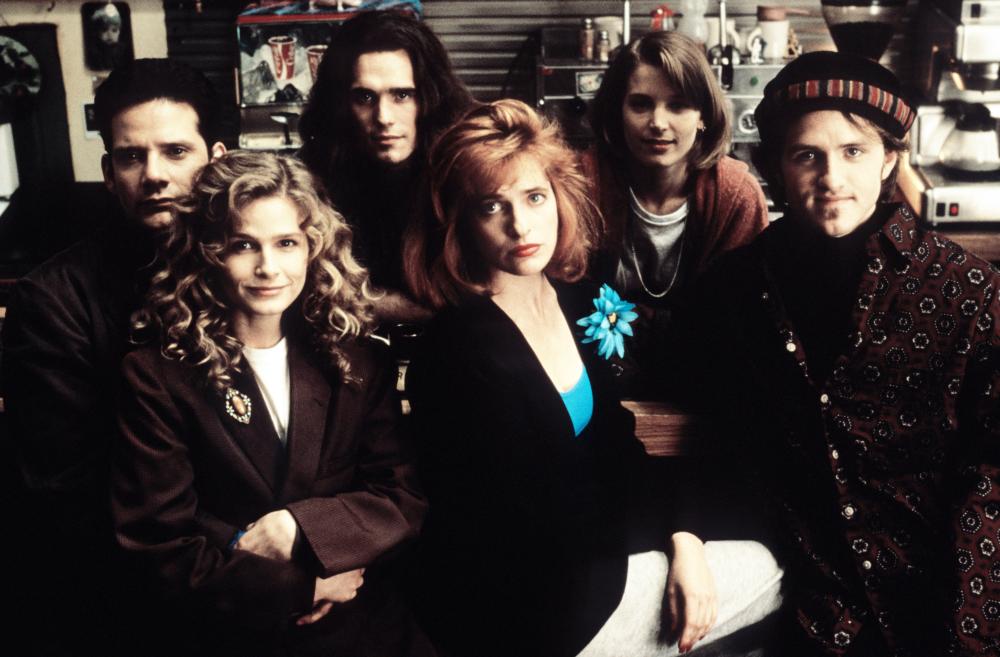
The film’s protagonists — Bridget Fonda’s Janet, Matt Dillon’s Cliff, Kyra Sedgwick’s Linda, and Campbell Scott’s Steve — are not rebels or revolutionaries, but ordinary young adults navigating jobs, relationships, and self-doubt. Dillon’s Cliff, a struggling musician in a band called Citizen Dick (with cameos by Pearl Jam members), is both a parody of and tribute to the local scene. Sedgwick and Scott, as environmentally conscious singles, provide the film’s tender core, fumbling toward intimacy in an era suspicious of commitment.
Music as Narrative
More than any other element, Singles is remembered for its soundtrack — one of the great compilations of the decade. Featuring Pearl Jam, Soundgarden, Alice in Chains, and Paul Westerberg, it captured a sound before it was commodified, when grunge still carried the rawness of the underground. The soundtrack sold millions, helping launch the genre onto suburban radios worldwide.
In this sense, Singles was both document and accelerant: it preserved Seattle’s music culture while simultaneously contributing to its mainstreaming. By the time the film was released, Nirvana’s Nevermind had already exploded, and Seattle’s authenticity was already being packaged for export.
Reception and Legacy
Critics in 1992 were ambivalent. Some found the plot diffuse, the tone uncertain. Yet for many viewers — especially those tuning into MTV, wearing flannel, and feeling detached from 1980s consumer optimism — the film resonated. It offered representation not through slogans but through atmosphere: awkward dates, self-help tapes, answering-machine confessions.
In retrospect, Singles looks like a bridge: between the communal optimism of the late ’80s and the ironic detachment of the mid-’90s. Where Reality Bites sharpened cynicism into a generational ethos, Singles still holds onto a flicker of sincerity, a sense that love, music, and friendship might still redeem uncertainty.
Timeline: Culture Around Singles
- 1990 – Seattle bands begin to dominate indie labels; Sub Pop becomes a cultural export.
- 1991 – Nirvana’s Nevermind and Pearl Jam’s Ten propel grunge to the mainstream.
- 1992 – Singles is released, weaving Seattle’s music culture into a romantic ensemble film.
- 1992 – Soundtrack reaches platinum sales, cementing the film’s cultural afterlife.
- 1994 – Kurt Cobain’s death marks both the apotheosis and the decline of grunge as counterculture.
- 1990s onward – Singles is reappraised as a cultural snapshot, less for its narrative than for the authenticity of its music and setting.
TL;DR
If Reality Bites was about the dilemmas of work and identity for Generation X, Singles was about the mood before those dilemmas fully crystallized — a mood carried in music, in thrift-store style, in Seattle’s rain-washed streets. It is a film less about plot than about atmosphere, less about generational definition than about the sound of a city becoming a metaphor. Seen together, the two films chart the contours of the 1990s: from the earnest search for connection to the ironic negotiation of adulthood.
 My World of Interiors