
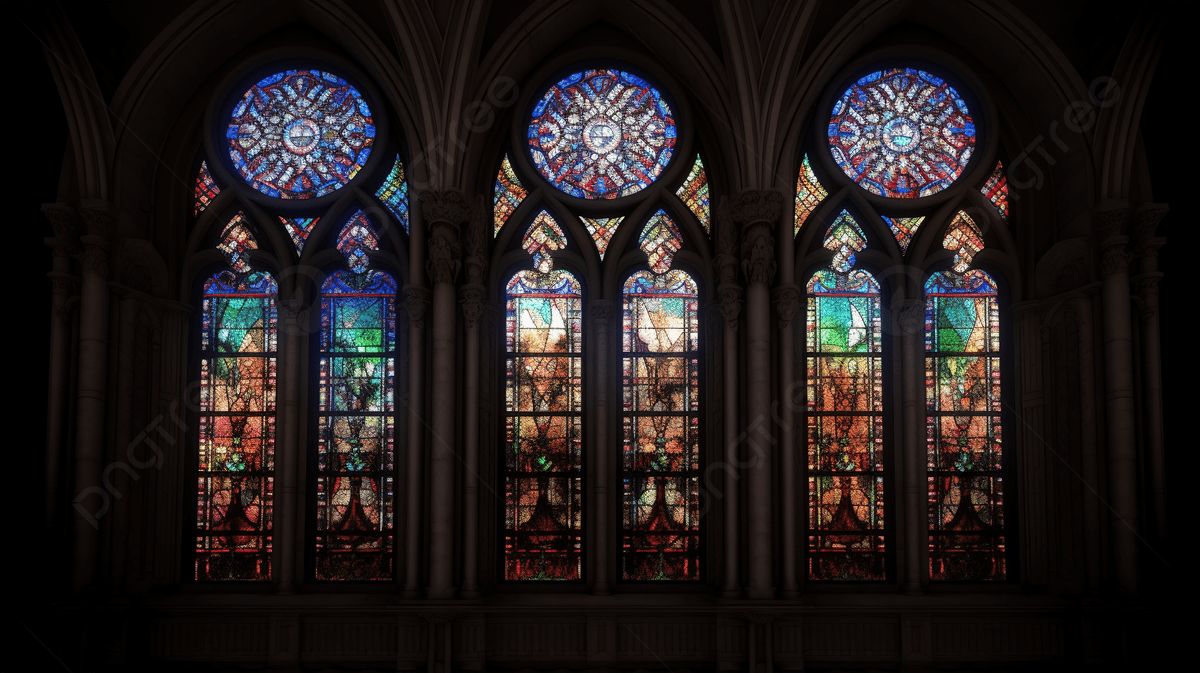
For over a thousand years, stained glass has transformed light into story. From the vast rose windows of Gothic cathedrals to the jewel-like panels of Art Nouveau townhouses, it is a medium that is both art and architecture, both sacred and secular. Its history is a chronicle of craftsmanship, theology, and design — a history written in shards of colored glass.
Origins in Antiquity
The technique of coloring glass stretches back to ancient Mesopotamia and Rome. Archaeological evidence suggests that artisans were experimenting with metallic oxides in molten glass as early as the 1st century CE. Fragments of colored glass windows have been found at Pompeii and Herculaneum, but these were modest in scale. The true flowering of stained glass as an architectural art awaited the Middle Ages.
The Gothic Revolution
In the 12th and 13th centuries, stained glass became inseparable from the rise of Gothic architecture. With innovations such as the pointed arch and flying buttress, cathedral walls could dissolve into windows of unprecedented scale.
- Chartres Cathedral, France (http://www.cathedrale-chartres.org) holds more than 150 original medieval windows, flooding the nave with a kaleidoscope of blues, reds, and golds.
- Sainte-Chapelle, Paris (http://www.sainte-chapelle.fr) appears almost weightless, its upper walls dissolved into shimmering glass narratives of the Bible.
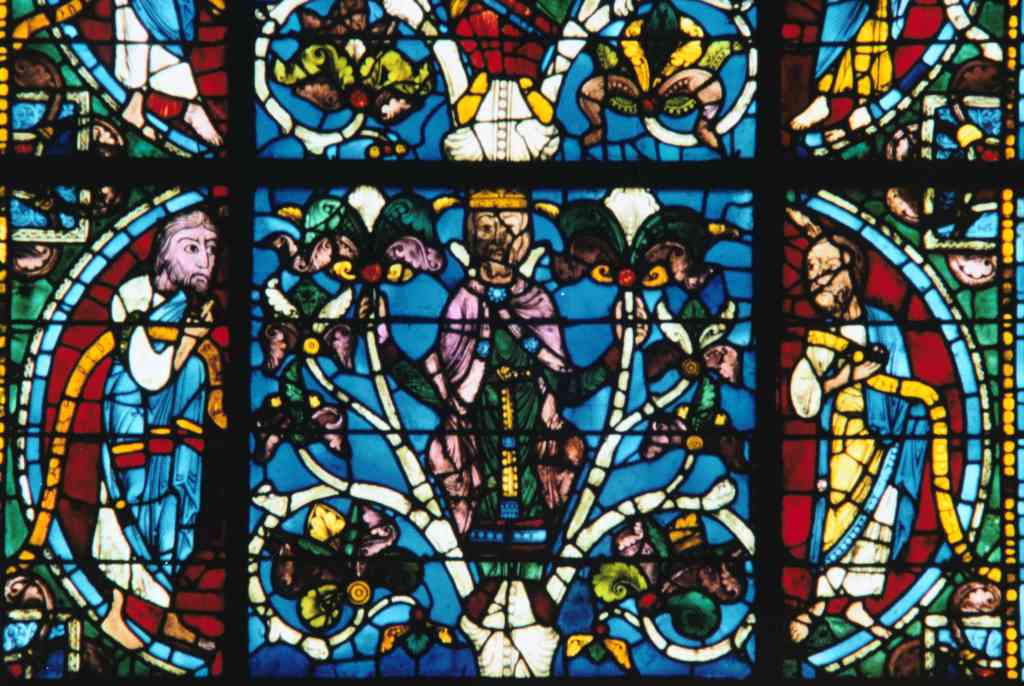
Here, stained glass was not only decorative but didactic: biblical stories, saints’ lives, and allegories unfolded across luminous panes, instructing the faithful who could not read.
The symbolism of color mattered deeply. Blue, associated with the Virgin Mary, dominated French Gothic glass. Red signified the Passion, green renewal, gold divine light. Light itself was understood as a manifestation of the divine: to stand in a Gothic nave was to experience theology in color.
Renaissance and Baroque Shifts
By the 16th century, stained glass declined in prominence as Renaissance architects favored clear glazing to frame views of classical proportions and natural landscapes. Painted glass continued in churches and noble houses, but the monumental cycles of the Gothic age gave way to frescoes and illusionistic ceilings in the Baroque period.
The Nineteenth-Century Revival
Stained glass returned with force during the Gothic Revival of the 19th century. In Britain, Augustus Pugin and workshops such as William Wailes restored medieval grandeur to churches and civic buildings.
In the United States, Louis Comfort Tiffany redefined the medium with his patented Favrile glass — iridescent, richly colored, organic in motif. His windows and lamps brought stained glass into private homes, transforming domestic interiors with jewel-like radiance.
Art Nouveau and Modernism
The turn of the 20th century saw stained glass embraced by Art Nouveau and the Secession. Artists such as Hector Guimard in Paris and Otto Wagner in Vienna designed flowing floral windows, while Frank Lloyd Wright abstracted natural motifs into geometric grids. Stained glass no longer served purely biblical narrative; it became part of an aesthetic of modern life.
The Twentieth Century and Beyond
Modernism’s embrace of abstraction found an ally in glass. In France, Fernand Léger and Henri Matisse experimented with luminous, simplified forms. Marc Chagall created cycles in Metz and Reims, and in Zurich’s Frauenkirche (http://www.frauenkirche-zuerich.ch) he translated his dreamlike figures into radiant panes.
Today, stained glass remains both a heritage craft and an experimental art. Gerhard Richter’s monumental window in Cologne Cathedral and Brian Clarke’s contemporary commissions show how the medium continues to reinvent itself for secular and sacred spaces alike.
Timeline of Stained Glass
- 1st century CE – Colored glass fragments appear in Pompeii and Herculaneum.
- 12th century – Gothic cathedrals embrace stained glass on monumental scale; Chartres and Sainte-Chapelle set the standard.
- 16th century – Renaissance preference for clear glazing leads to decline in large-scale cycles.
- 19th century – Gothic Revival in Britain; Tiffany’s Favrile glass in the United States.
- 1900–1920s – Art Nouveau and Frank Lloyd Wright reimagine stained glass for modern homes and public buildings.
- Mid-20th century – Matisse and Chagall use stained glass for abstract and modern religious expression.
- 21st century – Contemporary artists such as Richter and Clarke push stained glass into new architectural and secular contexts.
Where to Experience Stained Glass
- Chartres Cathedral, France – The most complete medieval stained glass ensemble in Europe. http://www.cathedrale-chartres.org
- Sainte-Chapelle, Paris – A jewel box of 13th-century stained glass. http://www.sainte-chapelle.fr
- York Minster, England – Home to the Great East Window, the largest medieval stained-glass expanse in the world. http://www.yorkminster.org
- The Cloisters, Metropolitan Museum of Art, New York – Panels and fragments that illuminate the craft’s medieval roots. http://www.metmuseum.org
- Frauenkirche, Zurich – Windows by Marc Chagall, completed in 1970. http://www.frauenkirche-zuerich.ch
TL;DR
To look through stained glass is to see more than light. It is to witness centuries of belief, craft, and imagination condensed into color. From medieval cathedrals to modern museums, stained glass continues to shape not just how we see, but how we experience space — reminding us that architecture is never just walls and stone, but also the play of light across time.
 My World of Interiors