
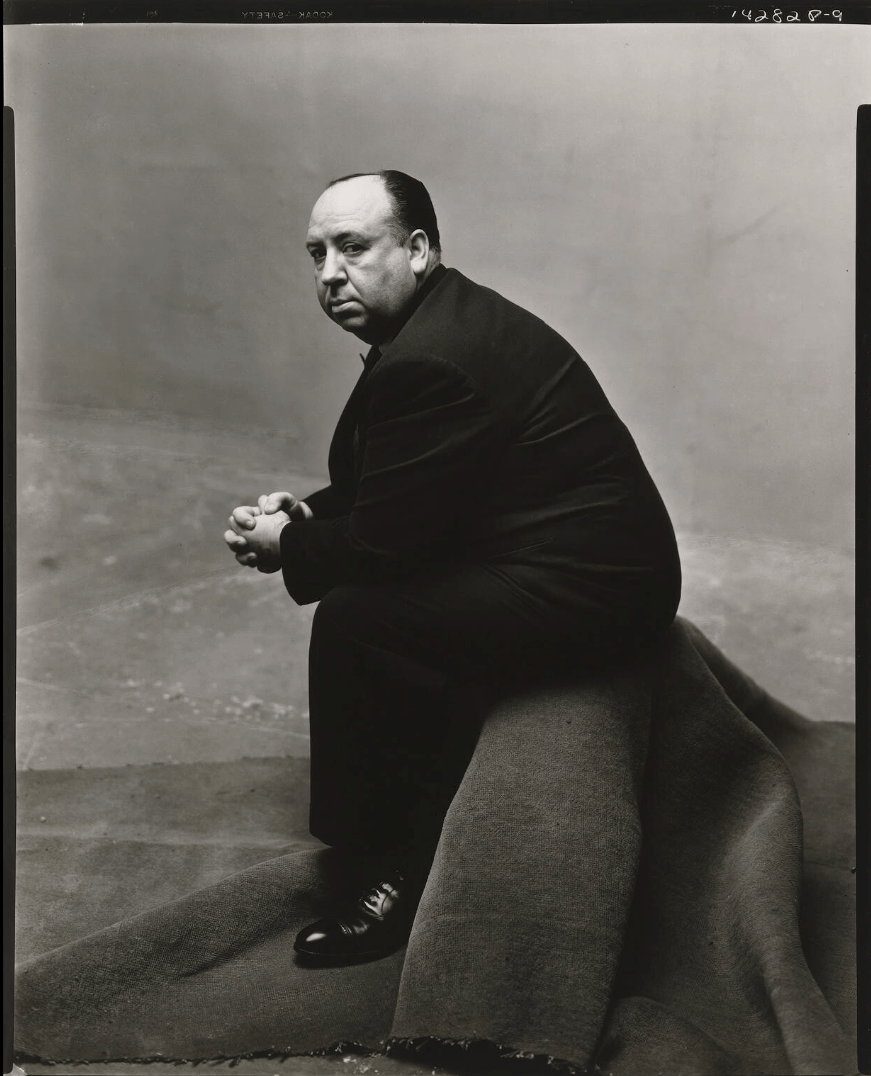
More than four decades after his death, Alfred Hitchcock still looms over cinema like a dark silhouette against frosted glass. He was called the “Master of Suspense,” but that title, flattering as it is, risks understatement. Hitchcock was not merely a director of thrillers; he was the architect of modern visual storytelling. His films changed the grammar of cinema, his characters reshaped archetypes of glamour and menace, and his influence pervades everything from fashion photography to prestige television.
The British Years: Precision and Experiment
Born in London in 1899, Hitchcock began his career in silent film, designing intertitles before moving to direction. The limitations of the era proved formative. In The Lodger (1927), often called the first true “Hitchcock film,” he transformed the Jack the Ripper myth into a study of suspicion and paranoia, experimenting with visual motifs — staircases, shadows, voyeuristic camera angles — that would become signatures.
Throughout the 1930s, working within the British studio system, he refined his craft in thrillers such as The 39 Steps (1935) and The Lady Vanishes (1938). These films established him as a director who could balance wit, suspense, and narrative precision. By the time David O. Selznick invited him to Hollywood in 1939, Hitchcock had already invented much of the cinematic vocabulary we now take for granted.

Hollywood Reinvention
Hitchcock’s first American film, Rebecca (1940), won the Academy Award for Best Picture. It married gothic atmosphere with psychological tension and introduced American audiences to the Hitchcock heroine: elegant, poised, but trembling on the edge of catastrophe.
Over the next three decades, he created an unparalleled string of masterpieces: Shadow of a Doubt (1943), Notorious (1946), Strangers on a Train (1951), Rear Window (1954), Vertigo (1958), North by Northwest (1959), Psycho (1960), The Birds (1963). Each was a technical and narrative experiment, advancing what cinema could do.
Hitchcock himself became a brand. His cameo appearances, his sardonic television introductions, his instantly recognizable silhouette — all made him one of the first directors whose persona rivaled his stars’.

The Grammar of Suspense
Hitchcock’s greatest contribution was a language of suspense. He taught audiences not merely to watch but to anticipate. “There is no terror in the bang,” he explained, “only in the anticipation of it.” His mastery lay in showing viewers what the characters did not know — a ticking bomb beneath a table, a body concealed behind a curtain — and forcing them to endure the tension.
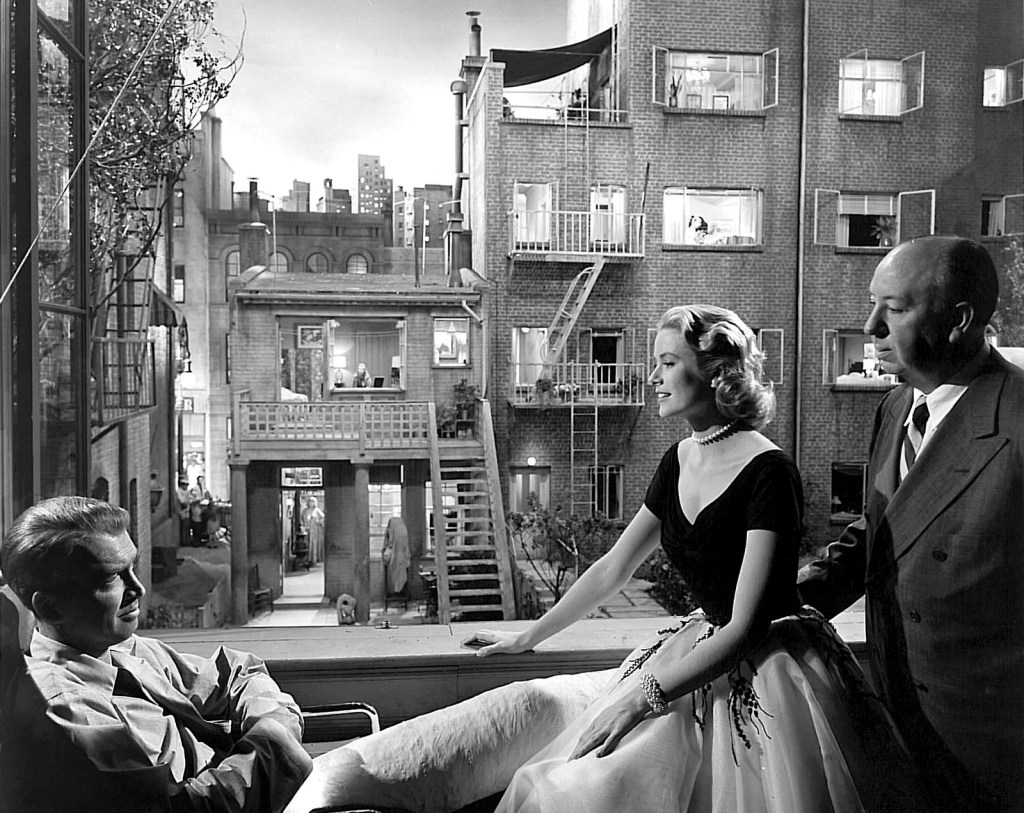
His innovations were visual as much as narrative. The dolly zoom in Vertigo, the fragmented montage of Psycho’s shower scene, the binocular gaze of Rear Window: these were not tricks but structural devices. They entered the DNA of cinema, endlessly imitated, never surpassed.

Sound, Style, and Collaboration
Hitchcock’s legacy is inseparable from his collaborators. Composer Bernard Herrmann gave voice to his images: the shrieking violins of Psycho, the haunting score of Vertigo, the propulsive tension of North by Northwest. Costume designer Edith Head dressed his heroines in silhouettes of elegance — Grace Kelly’s frosted gowns, Tippi Hedren’s impeccably tailored suits — that heightened both glamour and vulnerability.
These collaborations ensured that Hitchcock’s films were not only suspenseful but beautiful. The aesthetic precision of his work — light, costume, music, architecture — shaped not just cinema but fashion editorials, advertising, even music videos.

The Hitchcock Blonde
Perhaps no aspect of his legacy has been more enduring, or more contested, than the archetype of the “Hitchcock blonde.” Grace Kelly, Kim Novak, Eva Marie Saint, Tippi Hedren — all variations on the same theme: icy elegance masking latent passion. Their tailored suits, pale coiffures, and silken restraint remain iconic, endlessly referenced in fashion photography and film.
Yet Hitchcock’s treatment of his actresses has drawn deserved scrutiny. Tippi Hedren, in particular, spoke openly of his harassment and control. To acknowledge Hitchcock’s genius is not to ignore these abuses; rather, it is to recognize that his fixation on power and vulnerability extended beyond the screen. His films’ anxiety about control and submission mirrored his own troubling dynamics.

Influence and Afterlife
Hitchcock’s shadow is everywhere. Brian De Palma borrowed his voyeurism and violence, Steven Spielberg his control of spectacle, David Fincher his cold precision, Jordan Peele his use of genre to probe cultural unease. Fashion photographers from Helmut Newton to Vogue’s contemporary stylists borrow his compositions: the cool blonde framed by menace, the immaculate suit in an unsettling space.
Television too bears his imprint. Alfred Hitchcock Presents (1955–65) made him a household figure, his wry introductions turning suspense into entertainment. Today’s prestige series — from Breaking Bad to The Crown — owe their cliffhangers and visual tension to lessons Hitchcock taught.
Even the language of streaming culture — the “bingeable thriller,” the manipulation of audience anxiety — reflects his insight: suspense is not about surprise, but about elongating time.
The Legacy of Seeing
Hitchcock remains one of the few directors whose name alone is shorthand for a mood: suspenseful, elegant, dangerous. His films remind us that terror is not in the monster but in the gaze, that glamour can conceal menace, and that cinema is at its most powerful when it forces us to look — and keep looking — against our will.
If his legacy is complicated, it is also undeniable. Hitchcock taught us that film could be architecture: frames as rooms, editing as corridors, suspense as the very structure of experience. More than a storyteller, he was a builder of nightmares — and of beauty.
Alfred Hitchcock: A Timeline of Suspense
1899 — Born in London, August 13.
1927 — The Lodger released; widely considered the first “Hitchcock film,” establishing his obsession with mistaken identity and visual suspense.
1935 — The 39 Steps premieres, blending romance, wit, and espionage; consolidates his reputation in Britain.
1939 — Moves to Hollywood under contract with producer David O. Selznick.
1940 — Rebecca, his first American film, wins the Academy Award for Best Picture.
1946 — Notorious showcases Cary Grant, Ingrid Bergman, and a famously long kiss that defied censors.
1951 — Strangers on a Train, with its crisscross motif, becomes a classic study of guilt and doubles.
1954 — Rear Window, a meditation on voyeurism, stars James Stewart and Grace Kelly.
1958 — Vertigo released; initially underappreciated, later voted the greatest film of all time in the Sight & Sound critics’ poll (2012).
1959 — North by Northwest debuts, featuring the crop-duster chase and Mount Rushmore climax — perhaps the quintessential Hitchcock “set-piece.”
1960 — Psycho shocks audiences; the shower scene changes cinematic editing forever.
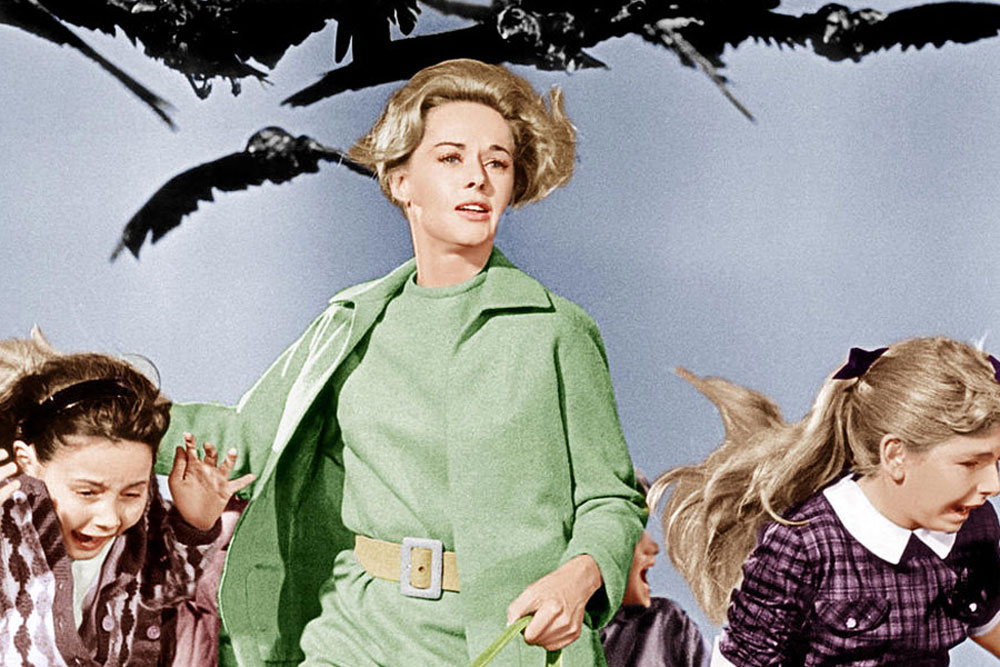
1963 — The Birds introduces apocalyptic dread without explanation, pioneering a new form of horror.
1967 — Receives the Irving G. Thalberg Memorial Award at the Academy Awards.
1980 — Knighted by Queen Elizabeth II.
1980 — Dies in Los Angeles at age 80, leaving behind over fifty films and an unassailable influence on cinema.
Recommended Viewing: Alfred Hitchcock Essentials
The 39 Steps (1935)
A masterclass in wit and suspense, establishing the template for the “wrong man” thriller.
Rebecca (1940)
Hitchcock’s first Hollywood film and an Oscar winner — gothic romance sharpened with psychological menace.
Rear Window (1954)
A meditation on voyeurism and spectatorship, starring James Stewart and Grace Kelly, confined almost entirely to one apartment courtyard.
Vertigo (1958)
Obsession, illusion, and desire entwined in Hitchcock’s most personal — and now most celebrated — film.
North by Northwest (1959)
Cary Grant at his most debonair, chased across America by spies, crop dusters, and Mount Rushmore itself.
Psycho (1960)
The shower scene still jolts, but the film’s deeper brilliance lies in its structural audacity and psychological unease.
The Birds (1963)
Nature turns predator in this apocalyptic fable, its unexplained terror influencing generations of horror filmmakers.

 My World of Interiors