
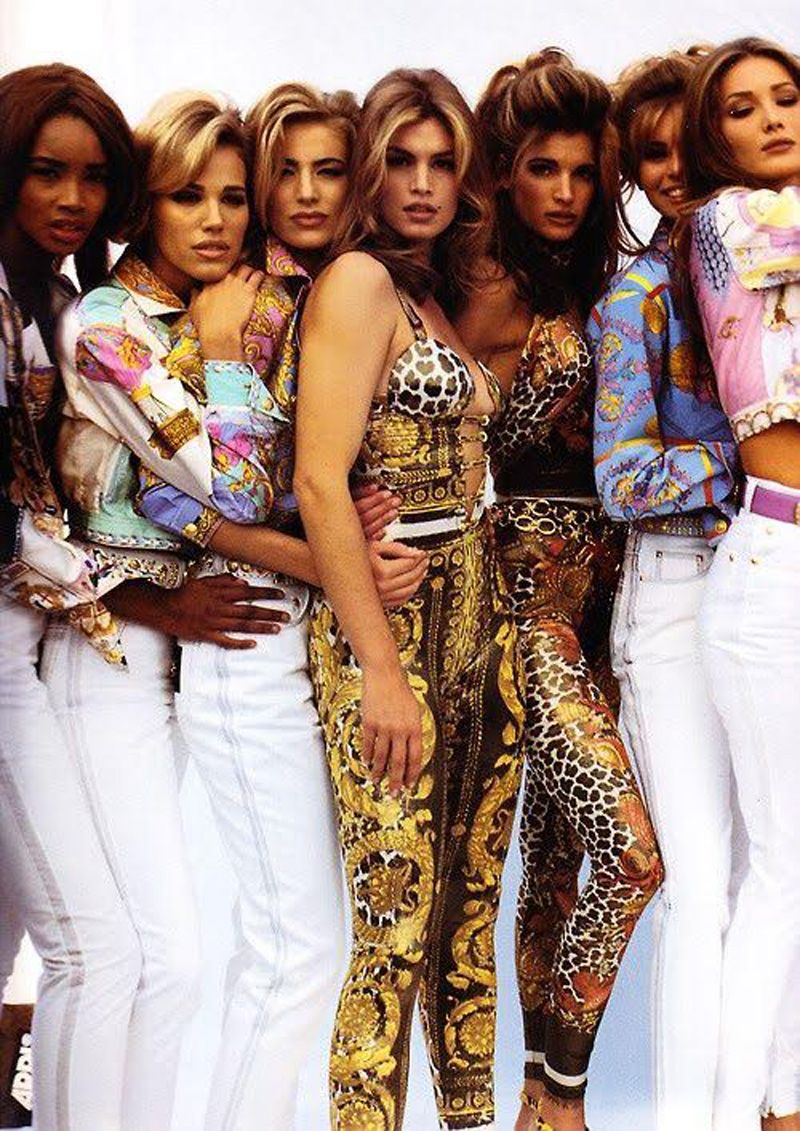
It was the last great age before celebrity eclipsed fashion, before actresses and reality stars took over the covers. The 1990s belonged to the supermodel: women who didn’t just wear clothes, they defined them. For a single decade, Vogue and its peers turned models into icons — and icons into shorthand for an era.
The Pantheon
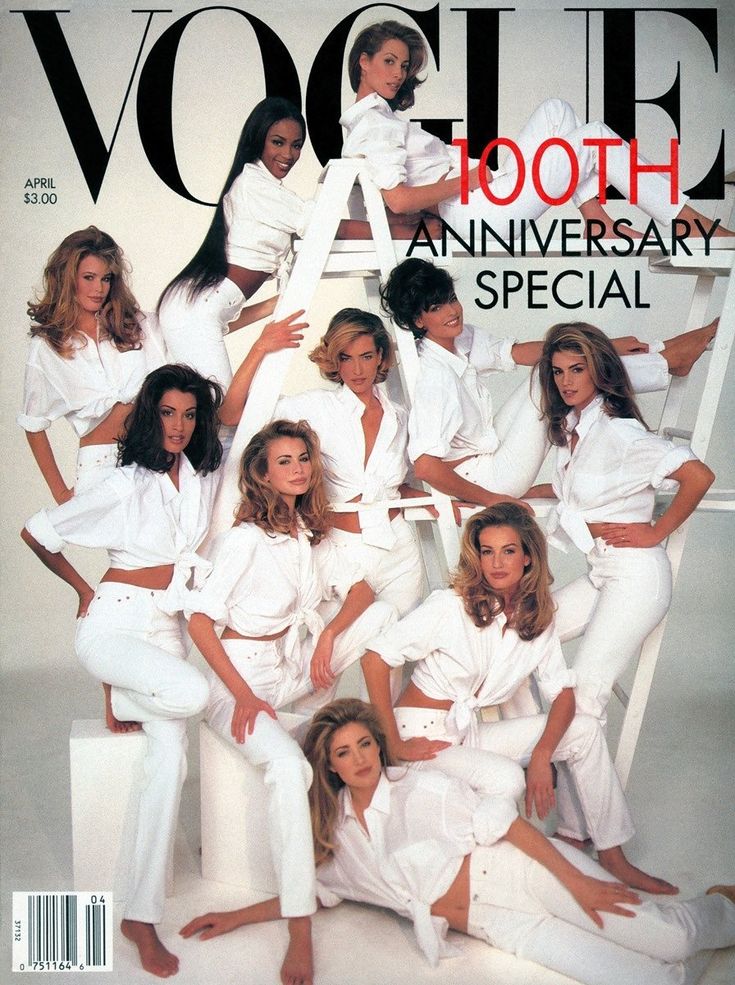
Naomi, Christy, Cindy, Linda, Claudia. By the early 1990s, their names were as recognizable as Madonna or Princess Diana. They were the faces of Vogue, the stars of runways, the muses of designers, and the heroines of George Michael’s “Freedom! ’90” video. The word “supermodel” had existed before, but never like this: it was no longer an industry term, but a cultural currency.
Linda Evangelista’s quip — “We don’t wake up for less than $10,000 a day” — scandalized and enthralled in equal measure. But it also captured a truth: these women wielded power over an industry that had never before granted models so much agency.
Vogue’s Stage
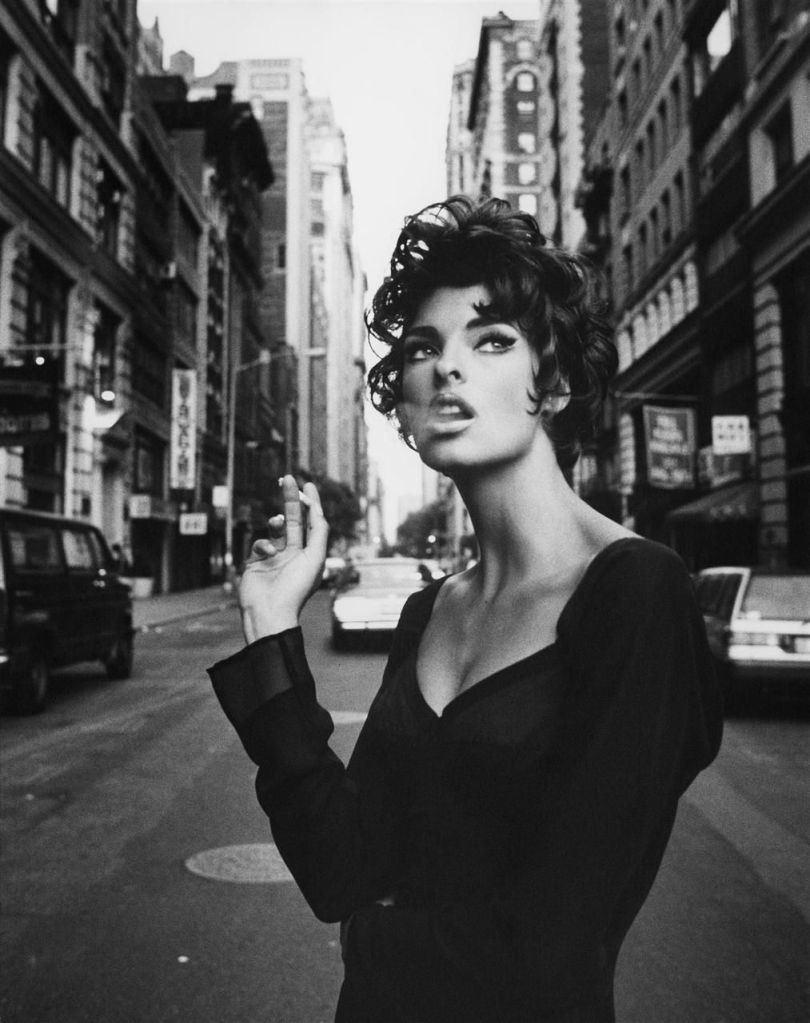
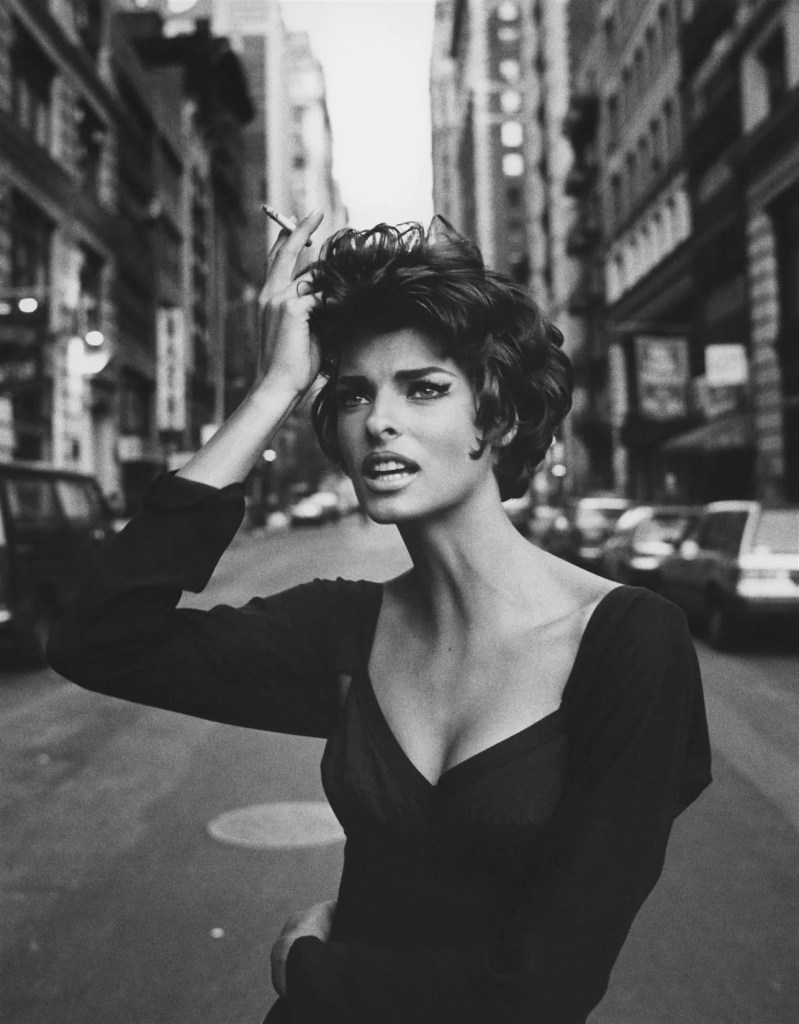
The decade was a golden age for fashion photography.
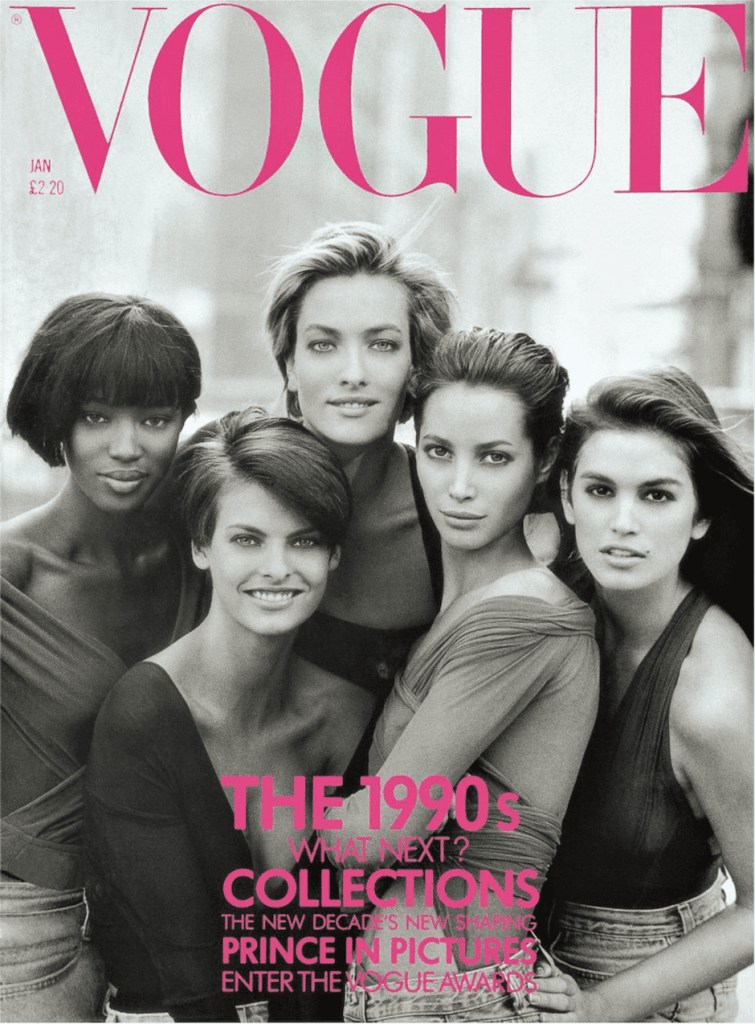
- Peter Lindbergh stripped glamour bare, shooting his models in white shirts and minimal makeup, emphasizing character over cosmetics. His 1990 British Vogue cover of Naomi, Cindy, Christy, Linda, and Tatjana Patitz is widely seen as the birth certificate of the supermodel era.
- Steven Meisel turned fashion into cinema, crafting narrative editorials for Vogue Italia and Vogue US that made models into actresses of high drama.
- Mario Testino gave us glossy, sun-drenched allure, especially in his collaborations with Kate Moss.
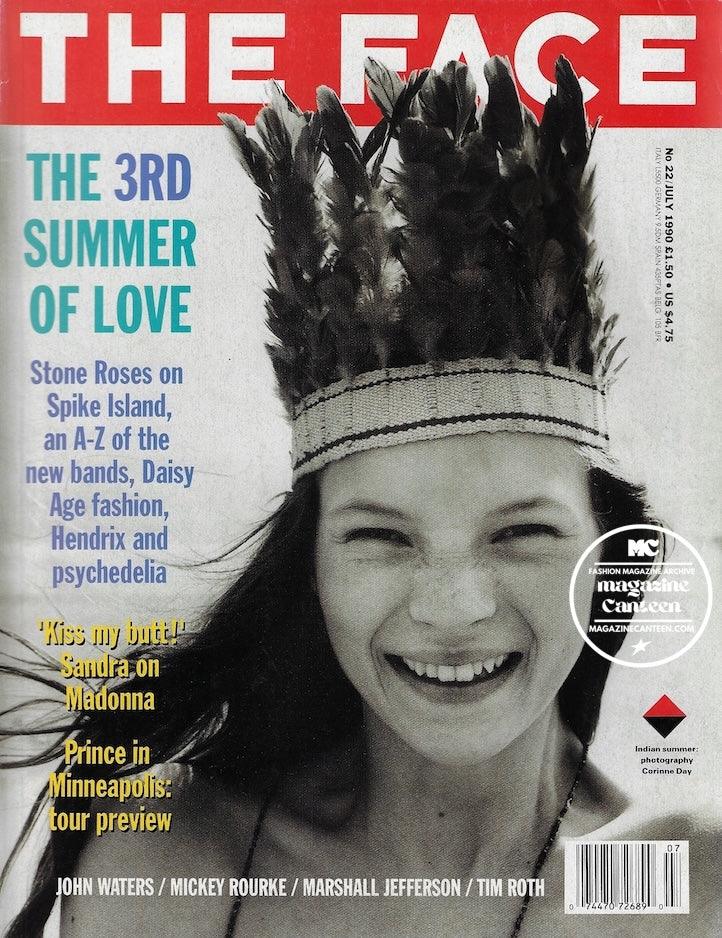
- Corinne Day, in The Face and later Vogue, introduced Moss in unvarnished intimacy, an aesthetic shock that upended the decade’s high-glamour sheen.
Together, they didn’t just photograph clothes — they defined how beauty itself was seen.
Runway as Theatre
Designers understood that supermodels were more than mannequins: they were the main event.
- Gianni Versace staged pure spectacle, sending Naomi, Cindy, Christy, and Claudia down the runway in chorus-line formation.
- Karl Lagerfeld cast Claudia Schiffer as Chanel’s modern-day Brigitte Bardot.
- John Galliano and Alexander McQueen orchestrated theatre: Galliano’s romance, McQueen’s provocation.
- Calvin Klein built intimacy: Kate Moss in slip dresses and bare skin, the anti-Naomi, but just as potent.
The runway in the 1990s was no longer commerce. It was cultural performance.
The Shift: Kate Moss Arrives
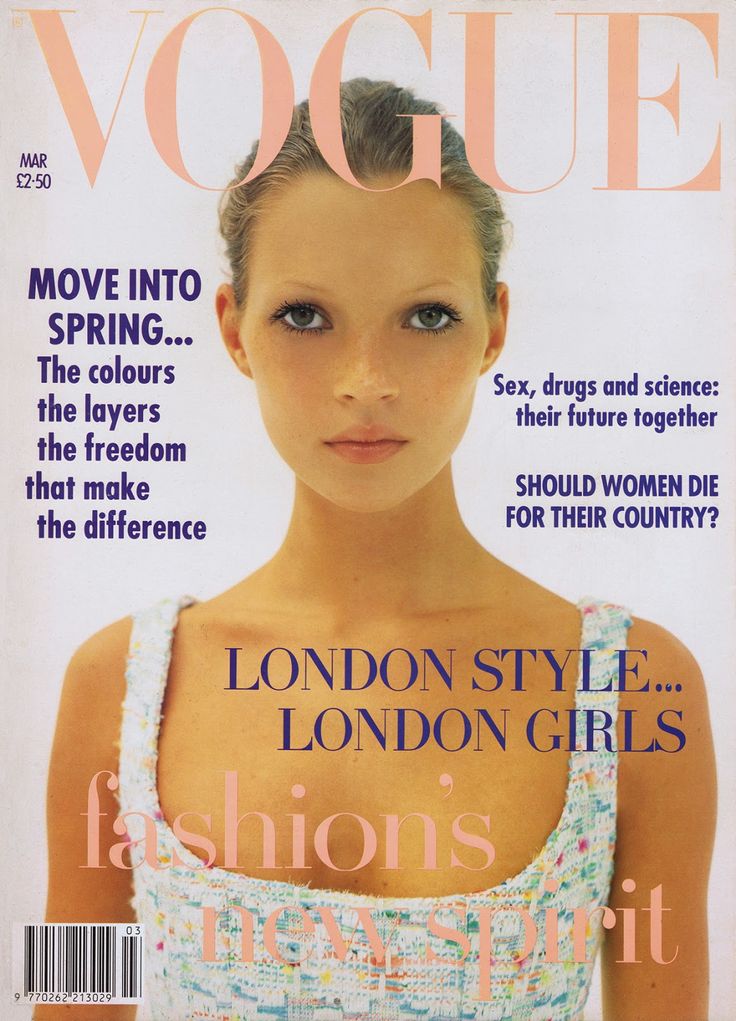
By mid-decade, the statuesque glamour of the “Big Five” was countered by a new face: Kate Moss. Petite, fragile, and defiantly un-super, she embodied an entirely new mood. Corinne Day’s images of Moss in The Face and her Calvin Klein campaigns with Mark Wahlberg defined “heroin chic” — a look that unsettled as much as it seduced.
Moss didn’t dethrone the supermodel era; she expanded it. She proved fashion could hold contradictions: Amazonian goddesses and fragile waifs coexisted in the same glossy pages.
Global Reach
The 1990s supermodels weren’t confined to catwalks. Cindy Crawford hosted MTV’s House of Style, bridging fashion and mass culture. Claudia Schiffer’s Guess campaigns and Chanel work made her Europe’s face of luxury. Naomi Campbell shattered barriers, becoming the first Black model on the cover of Vogue Paris in 1988, and dominated the decade with unapologetic authority.
They were models, but they were also moguls, entertainers, and activists. They proved fashion was not just an industry — it was a stage on which the world was watching.
The Legacy
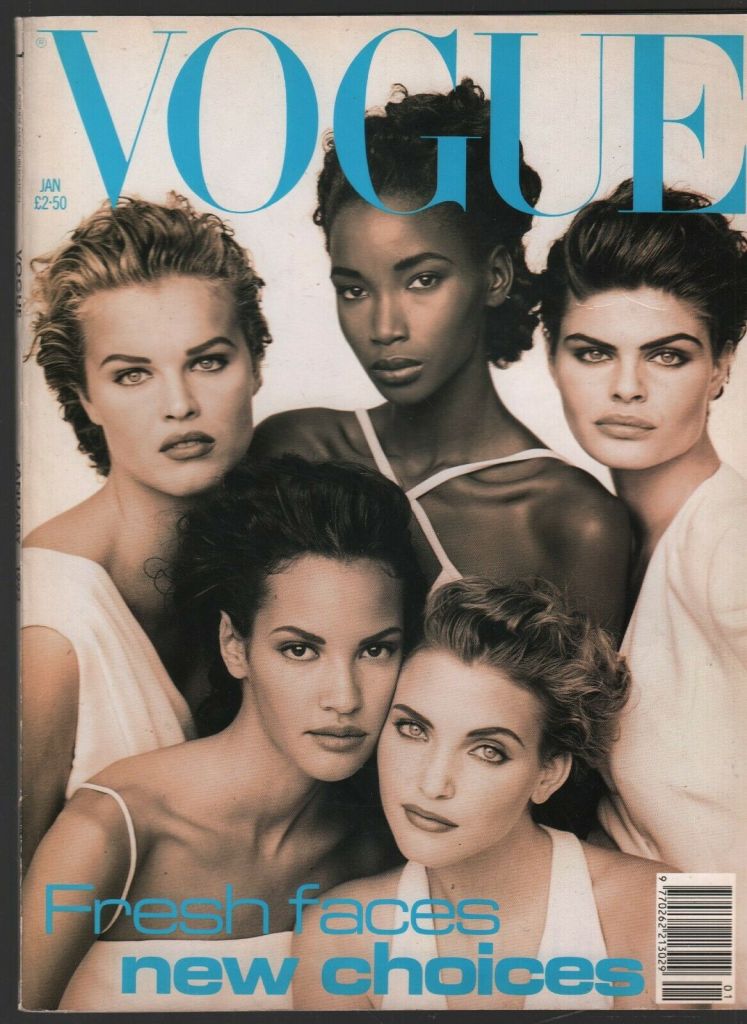
By the late 1990s, the celebrity tide began to rise. Magazine covers shifted from Christy and Linda to Gwyneth and Nicole. Yet the images of the supermodels endure: Lindbergh’s black-and-whites, Meisel’s epics, Testino’s gloss. They feel less like fashion spreads than monuments to an era when models held the world’s gaze.
The 1990s were the last decade when fashion itself produced stars larger than life. And for ten unforgettable years, Vogue was their throne.
A Timeline of Supermodel Power
1990 – British Vogue January cover by Peter Lindbergh (Naomi, Cindy, Christy, Linda, Tatjana) signals the dawn of the supermodel era.
1990 – George Michael’s “Freedom! ’90” video immortalizes the Big Five as cultural icons.
1991 – Gianni Versace’s runway finale with Naomi, Cindy, Christy, and Linda lip-syncing to George Michael.
1992 – Cindy Crawford appears in Pepsi’s Super Bowl ad, becoming America’s supermodel next door.
1993 – Kate Moss emerges with Calvin Klein campaigns, shifting the aesthetic toward minimalism and fragility.
1994 – Shalom Harlow and Amber Valletta rise as part of the new guard.
1995 – John Galliano’s debut at Givenchy signals fashion theatre with supermodels at its core.
1996 – Stella Tennant embodies aristocratic cool on Vogue covers and Chanel campaigns.
1997 – Alexander McQueen’s “It’s a Jungle Out There” show cements fashion’s move into provocation.
1998 – Naomi Campbell closes Versace in chainmail, the last great supermodel finale of the decade.
1999 – Gisele Bündchen appears on Vogue’s July cover — “The Return of the Sexy Model” — heralding a new era.

 My World of Interiors