
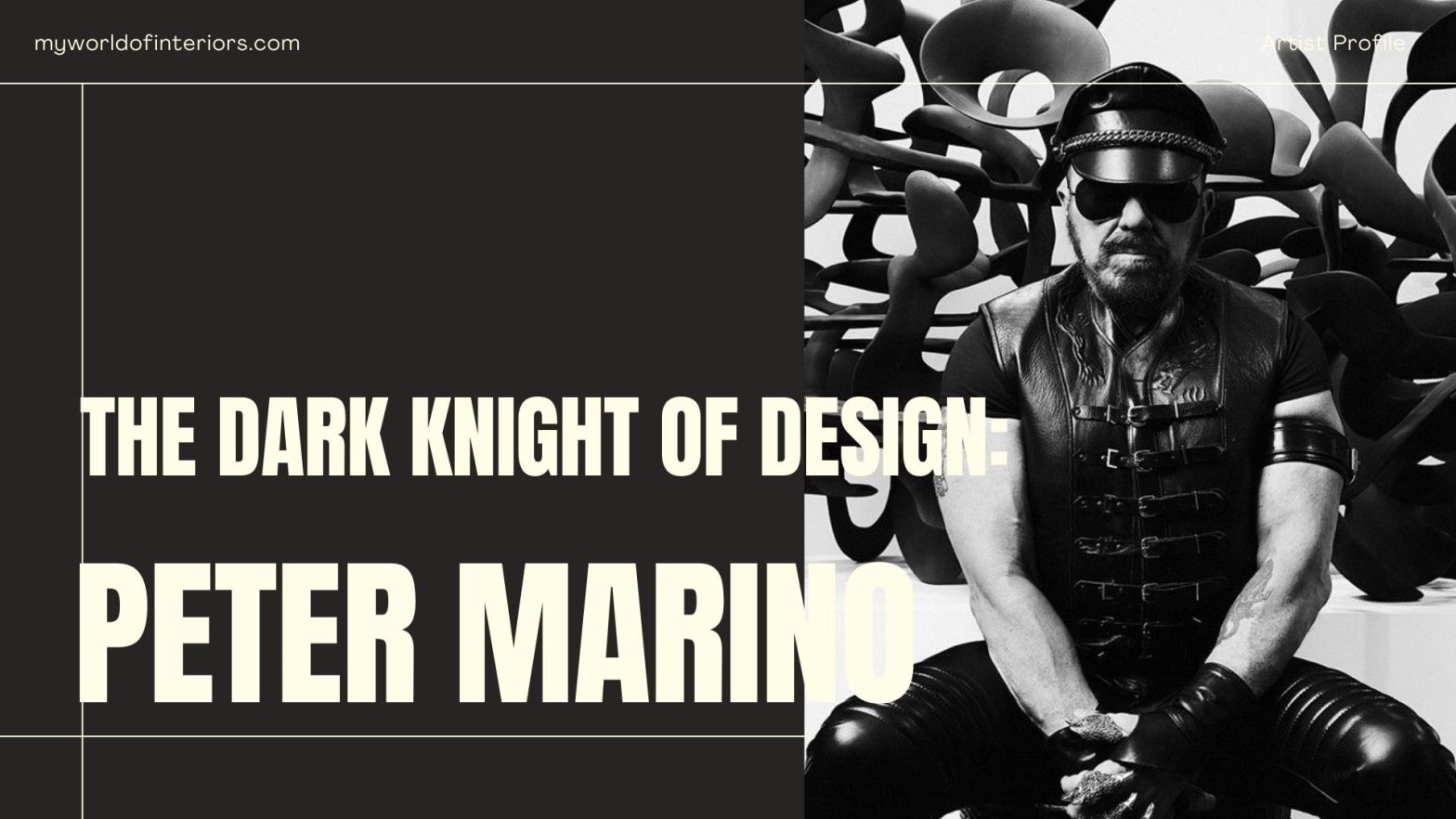
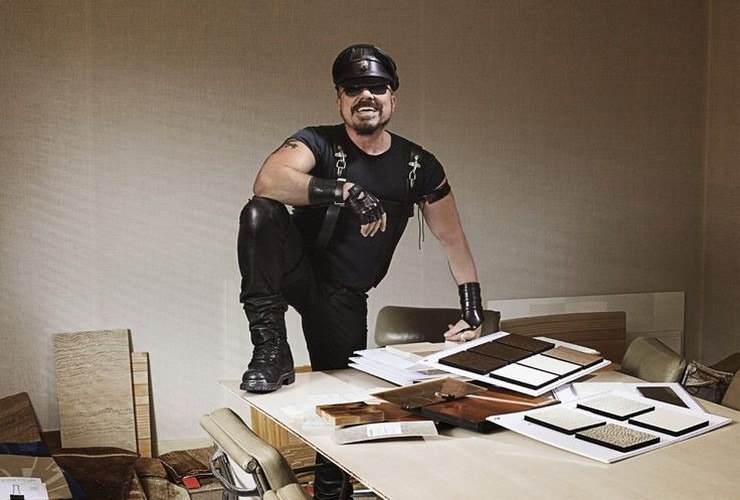
In the world of architecture and interiors, few figures are as instantly recognizable — or as fiercely debated — as Peter Marino. Dressed head-to-toe in black leather, with biker boots, sculptural chains, and tattooed arms, Marino has cultivated an image as a renegade. Yet behind the theatrical armor is one of the most influential architects of contemporary luxury, a designer whose vision has shaped how we experience fashion, art, and retail in the 21st century.
Visit our Amazon store companion piece
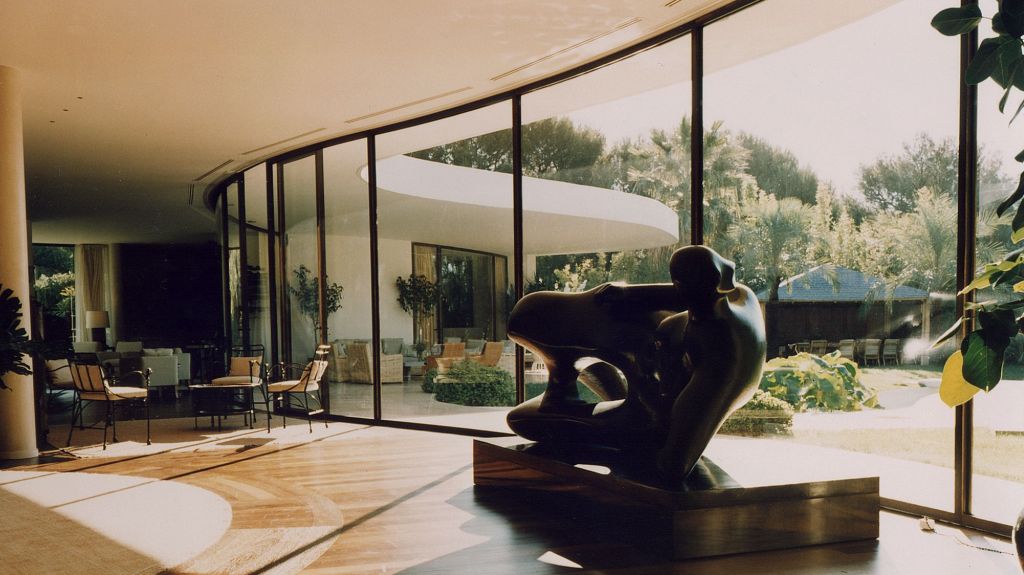
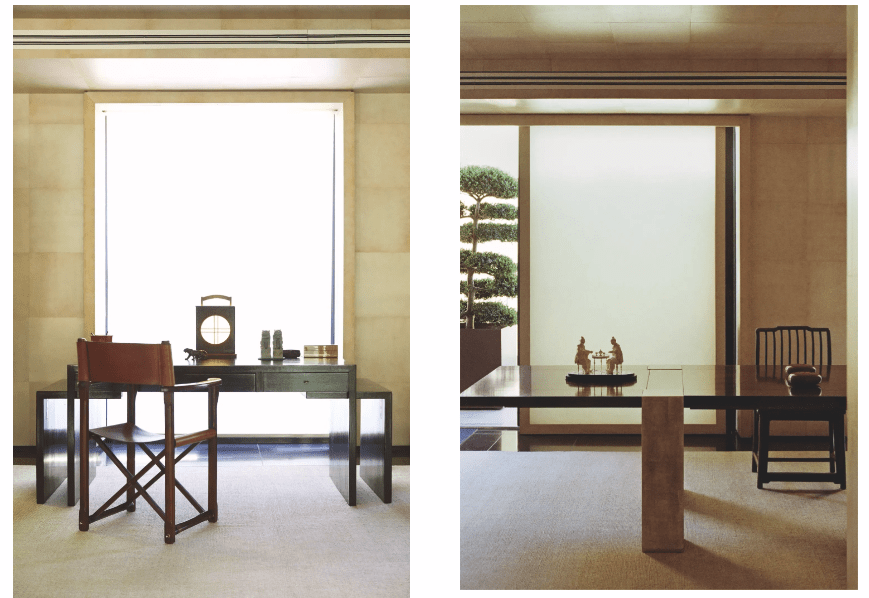
A Career Built on Contrasts
Born in 1949 in Queens, New York, Marino studied at Cornell’s College of Architecture, Art, and Planning before entering the rarefied worlds of New York’s high-end interiors. By the late 1970s, his reputation grew through collaborations with Andy Warhol and the cultural avant-garde.
Marino’s genius lies in contrast: the tough exterior of his personal aesthetic belies interiors that are luminous, sensual, and exquisitely crafted. His design philosophy is rooted in precision — creating immersive worlds where architecture, art, and luxury retail intertwine. As the architect of choice for global fashion houses, Marino has given bricks and mortar a new aura: boutiques that are as much temples of art and atmosphere as they are spaces of commerce.
Signature Works: A Global Portfolio
- Chanel Flagships (Worldwide)
Marino has designed more than 300 Chanel boutiques globally. His stores — in Paris, New York, Tokyo, and Seoul — are sanctuaries of Parisian refinement, with black lacquer, gilded accents, and curated art evoking Coco’s private apartment at 31 Rue Cambon. - Louis Vuitton Maison, Fifth Avenue, New York
Perhaps his most famous retail project, this glass-fronted Manhattan flagship became a benchmark for experiential luxury. Inside, Marino blended warm wood with steel and installed contemporary artworks, creating a space that feels like a gallery as much as a boutique. - Dior, Avenue Montaigne, Paris
The rebirth of Dior’s historic maison was overseen by Marino, who merged neoclassical grandeur with contemporary luminosity. - Bulgari Hotel, London
Marino’s influence extends beyond fashion into hospitality. His design for the Bulgari Hotel in Knightsbridge brings Italian glamour to London with marble, bronze, and Roman-inspired motifs. - Private Residences
From Southampton estates to Manhattan townhouses, Marino’s residential projects fuse rare marbles, hand-crafted furniture, and world-class art collections, all orchestrated with theatrical restraint.
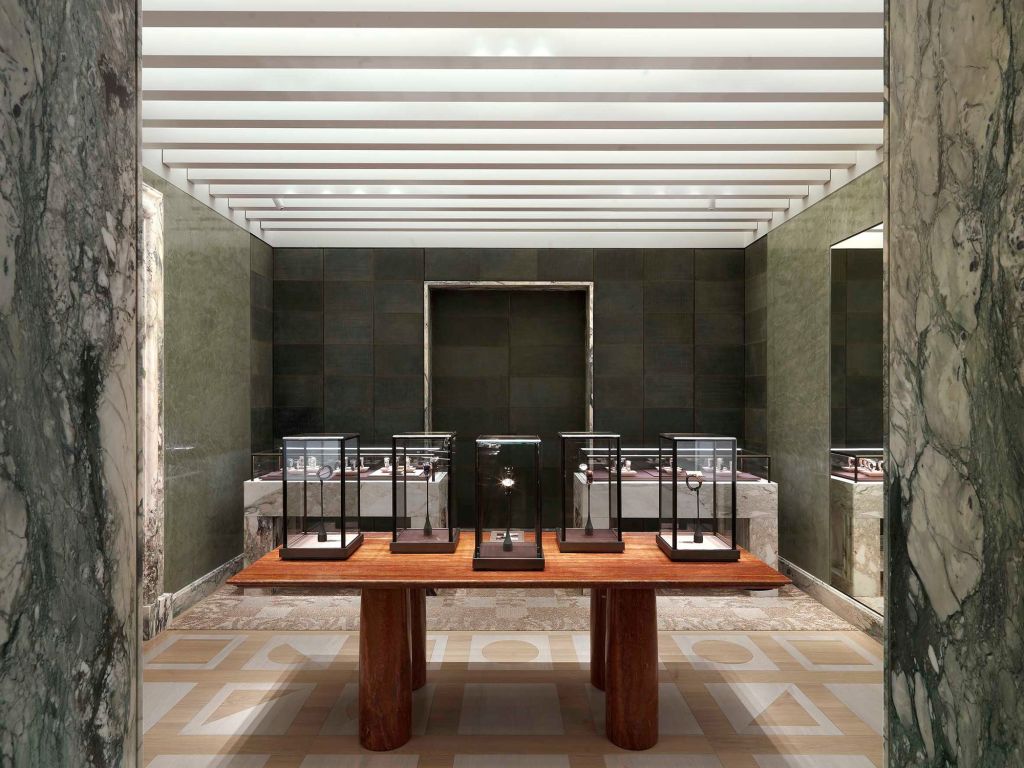
With Giorgio Armani: A Meeting of Minds
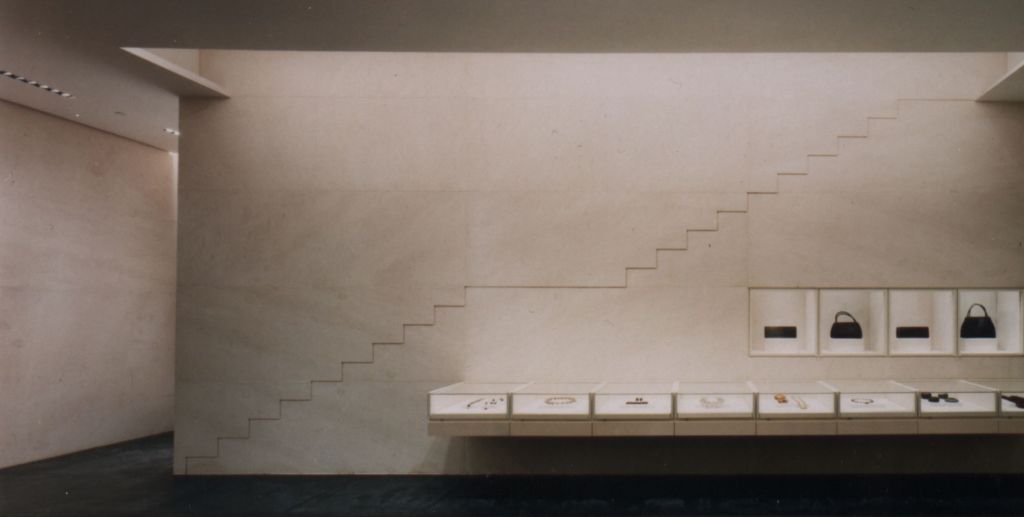
Among Marino’s most poignant collaborations was with Giorgio Armani, the late emperor of Italian elegance. While Armani’s aesthetic was famously understated — neutral palettes, unconstructed silhouettes, timeless refinement — Marino’s architecture provided a complementary canvas.
- Armani Fifth Avenue, New York (2009)
This flagship, designed with Marino, features a sweeping glass staircase spiraling like a ribbon across four levels. Both sculptural and functional, it became a signature of Armani’s understated drama married to Marino’s theatrical precision. - Armani Teatro, Milan
Marino also collaborated on Armani’s cultural spaces, reimagining fashion presentations as architectural experiences.
Their partnership symbolized the fusion of two seemingly opposing sensibilities: Armani’s minimalism and Marino’s flamboyant theatricality. Together, they created spaces where discipline and drama found equilibrium.
Peter Marino Today
Now in his seventies, Marino remains a dominant force in luxury architecture. His practice, Peter Marino Architect, continues to design for Chanel, Dior, Louis Vuitton, and Bulgari, while also expanding into museums, cultural foundations, and residential projects.
In 2021, he opened the Peter Marino Art Foundation in Southampton, a museum dedicated to his personal collection of Renaissance bronzes, contemporary paintings, and classical antiquities. It represents his dual passions: art and architecture, preservation and provocation.
Marino’s significance is more than architectural. He has redefined what a luxury environment can be: not merely a place to shop or stay, but a cultural destination where art, fashion, and architecture converge.
Where to Experience Marino
Chanel Flagship, 31 Rue Cambon, Paris
A reimagining of Coco Chanel’s historic maison, blending legacy with modernity.
- Address: 31 Rue Cambon, 75001 Paris
Louis Vuitton Maison, Fifth Avenue, New York
One of Manhattan’s most iconic luxury flagships, defined by art and architectural drama.
- Address: 1 East 57th Street, New York, NY 10022
Dior, Avenue Montaigne, Paris
The newly reborn Parisian flagship: part boutique, part museum, part salon.
- Address: 30 Avenue Montaigne, 75008 Paris
Bulgari Hotel, London
Italian glamour in the heart of Knightsbridge, merging hospitality with jewel-like interiors.
- Address: 171 Knightsbridge, London SW7 1DW
- Website: bulgarihotels.com
Armani Fifth Avenue, New York
A landmark collaboration with Giorgio Armani, defined by a sculptural glass staircase.
- Address: 717 Fifth Avenue, New York, NY 10022
Peter Marino Art Foundation, Southampton
A museum housing Marino’s personal art collection, inside a restored 19th-century building.
- Address: 11 Jobs Lane, Southampton, NY 11968
- Website: petermarinoartfoundation.org
- Books from our Amazon affilliate store:
Peter Marino: Ten Modern Houses Hardcover – June 5, 2024
The Architecture of Chanel Hardcover – November 24, 2021
Adrien Dalpayrat: The Peter Marino Collection Hardcover – Illustrated, December 2, 2020
Ernest Chaplet: The Peter Marino Collection Hardcover – March 22, 2023
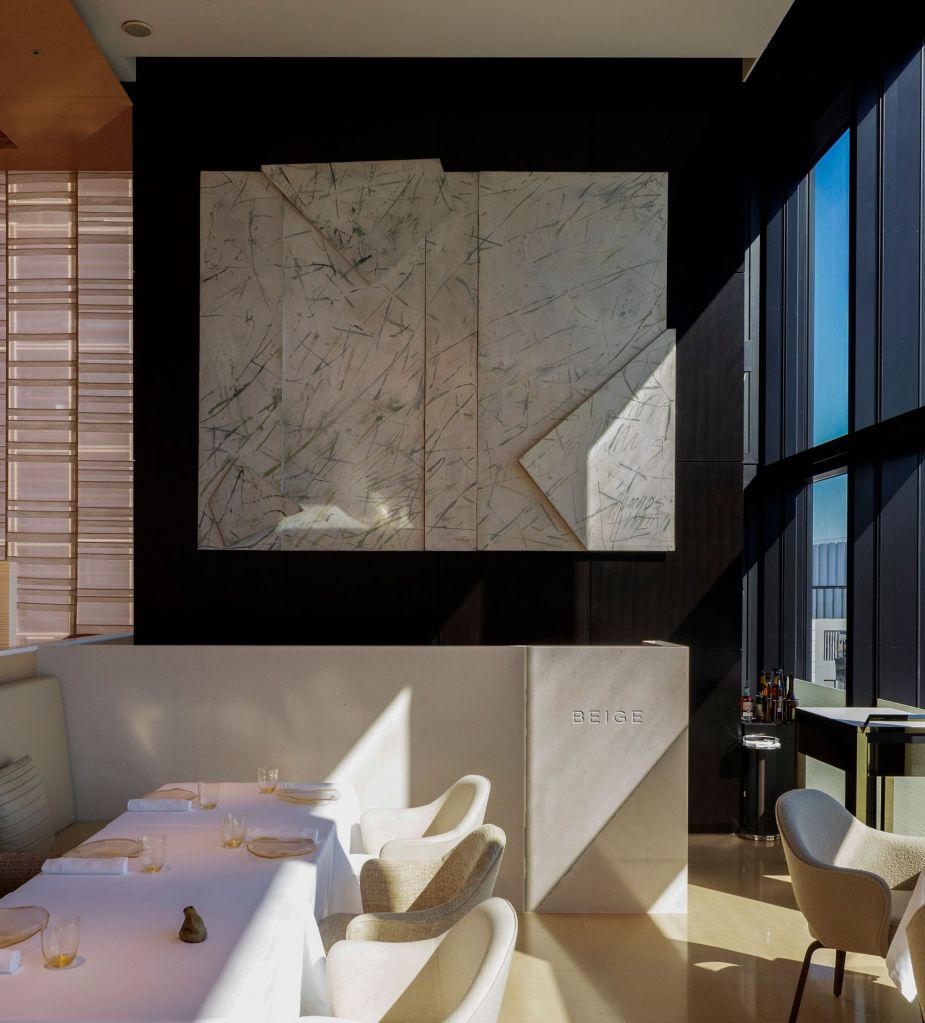
Peter Marino remains a paradox: the leather-clad biker designing Chanel salons, the provocateur shaping Dior flagships, the maximalist building temples of minimalism for Armani. In bridging fashion and architecture, art and commerce, he has reshaped the global language of luxury.
 My World of Interiors
One thought on “Peter Marino: The Dark Knight of Design”