
The swimming pool is more than a reservoir of water: it is an architectural statement, a cultural symbol, and a mirror of shifting ideals of leisure, health, and luxury. Its evolution—from ancient communal baths to mid-century suburban icons, from Riviera resorts to infinity-edge marvels—charts the trajectory of modern life itself. To trace the history of the private pool is to read a story of technology, architecture, and aspiration, where water becomes both a functional resource and an aesthetic medium.
Antiquity: Collective Rituals of Water
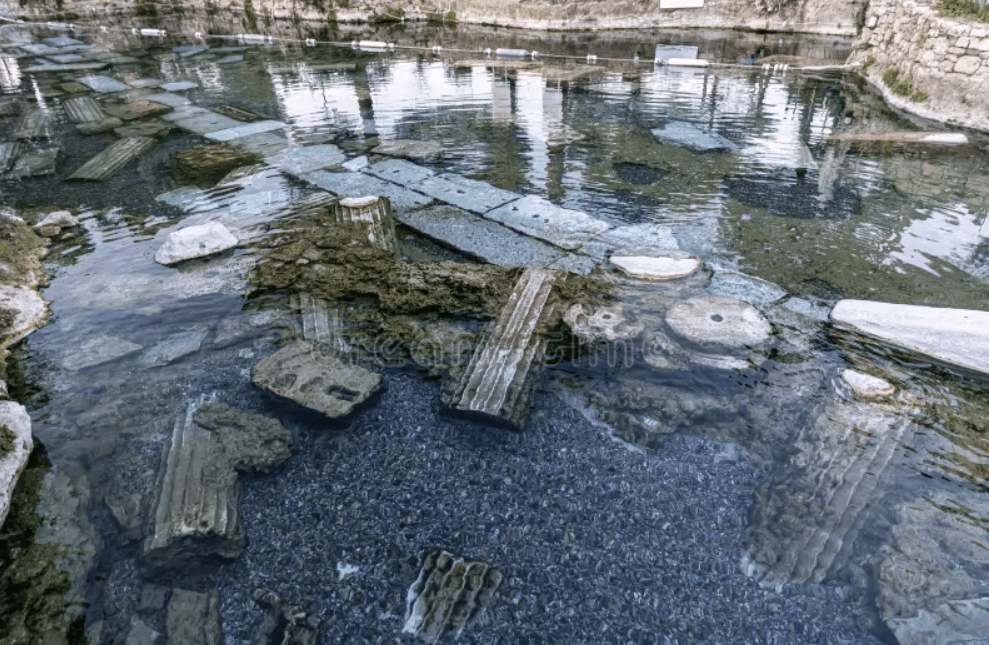
The earliest pools were not private luxuries but civic necessities. The Great Bath of Mohenjo-Daro (3rd millennium BCE) suggests ritual immersion as an early form of social and spiritual practice. In Rome, the thermae elevated water into a cultural theatre: vast natatio (open-air swimming basins) were embedded within complexes that combined hygiene, athleticism, and civic pride. Here, the pool was never solitary; it was collective, public, and performative.
Early Modern Europe: The Aristocratic Precursor
Renaissance villas celebrated water through fountains and ornamental basins, yet swimming remained tied to rivers and spas. In aristocratic estates, water was a symbol of control over nature—reflected in canals and cascades—rather than a setting for private leisure. Only with Enlightenment ideals of health and bodily discipline in the 18th century did water begin to enter the private garden as a therapeutic, rather than purely ornamental, feature.
The 19th Century: Hygiene, Hydrotherapy, and Technology
The Industrial Revolution reshaped water’s role in domestic life. Advances in pumping and filtration made controlled swimming basins feasible. Pools in private estates began to appear in Europe and North America as symbols of medical progress and status. Hydrotherapy—popular in spa towns—fused scientific rationality with aristocratic leisure, legitimizing the private pool as both curative and indulgent.
The 20th Century: From Elite Novelty to Suburban Dream
By the early 20th century, the private pool had emerged as a marker of modernity. In California, climate and culture converged: modernist architects integrated pools seamlessly into houses, dissolving boundaries between domestic interior, garden, and horizon. The pool was no longer ancillary; it was central to the architectural composition.
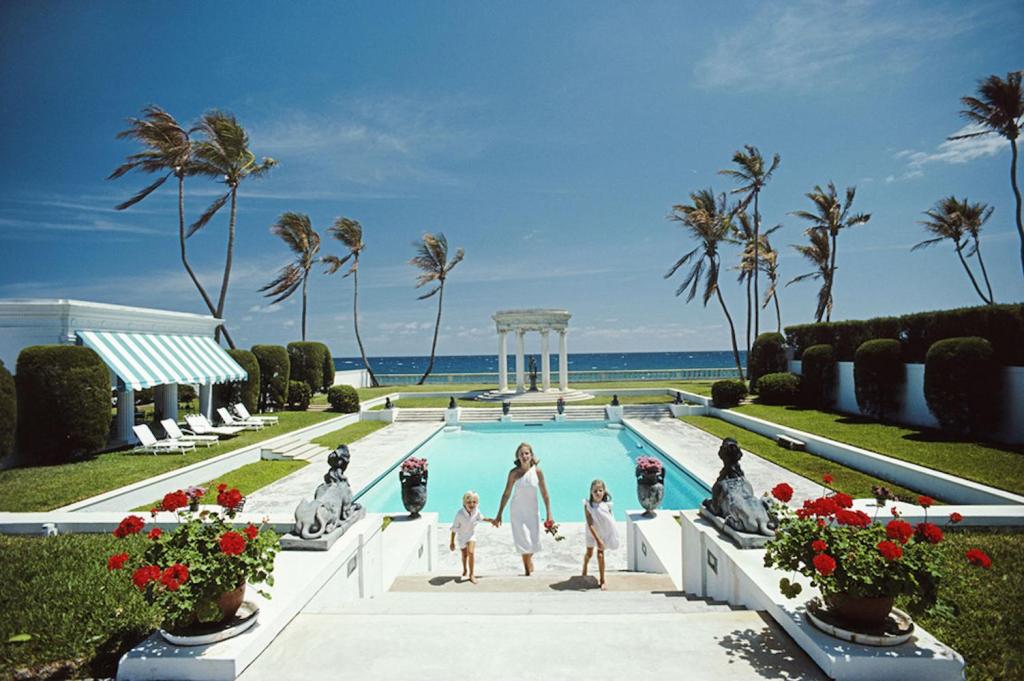
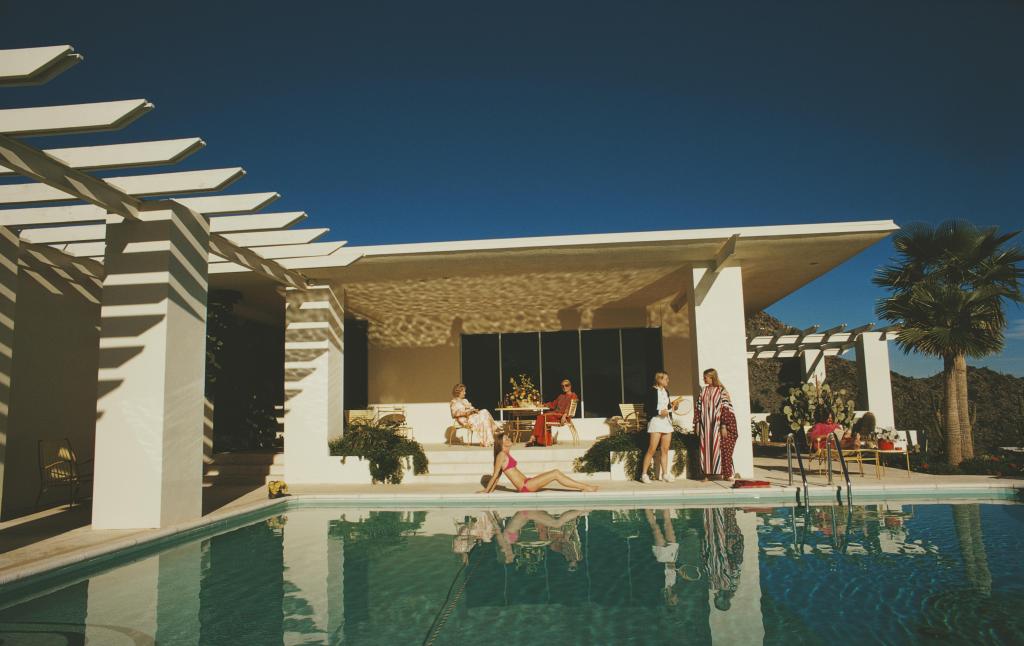
Postwar prosperity democratized this symbol. Prefabricated liners, gunite concrete, and suburban expansion in the U.S. made pools attainable for the middle class. What had been an elite novelty became a feature of the American Dream. Slim Aarons’s photographs of bathing beauties and tanned socialites immortalized the pool as the stage of aspirational leisure—domestic, glamorous, and distinctly modern.
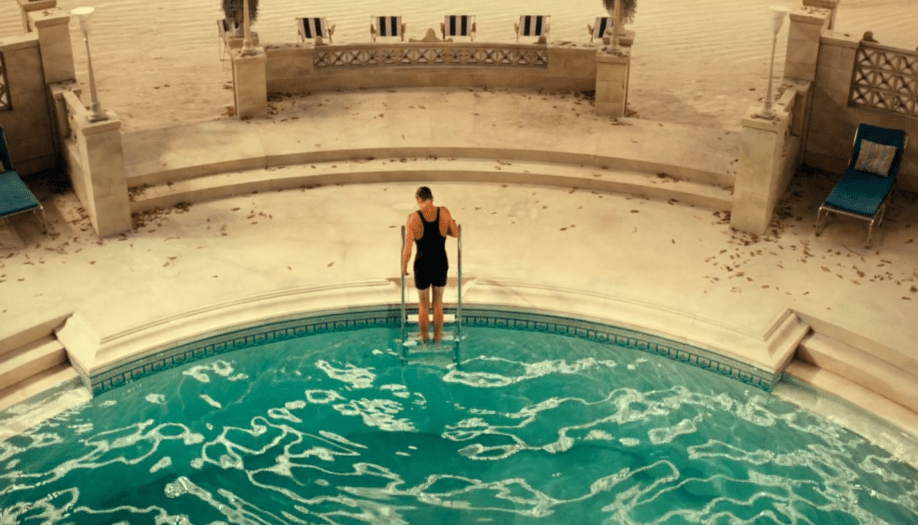
Case Studies: The Pool as Architectural Statement
Philip Johnson’s Glass House (1949, New Canaan, Connecticut)
Although best known for its radical transparency, Johnson’s estate includes a pool pavilion (added in 1955), a circular basin set within the rolling landscape. Its geometric simplicity echoes the Glass House itself, making water a reflective counterpoint to glass. Here, the pool operates less as a site of athleticism than as an architectural punctuation—an abstract gesture inscribed upon the lawn.

John Lautner’s Sheats–Goldstein Residence (1961–63, Los Angeles)
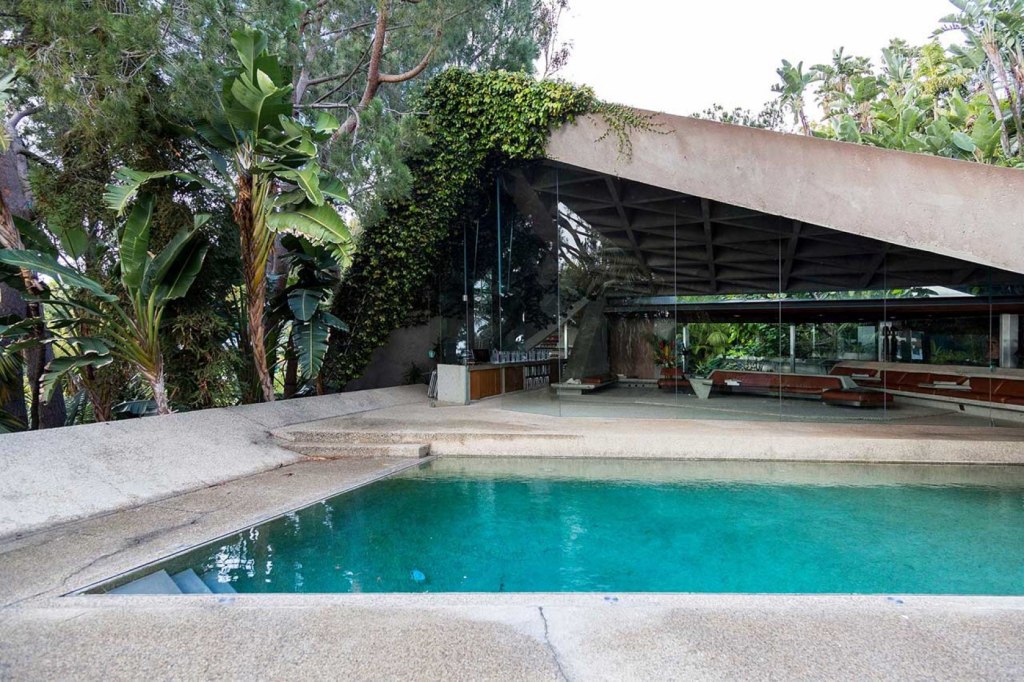
Few houses better exemplify the pool as living sculpture. Lautner’s hillside design dissolves thresholds between built form and landscape. The pool cantilevers into the view, its edges bleeding into the horizon, prefiguring the infinity pool. A glass window within the pool wall connects to the interior, making water both spectacle and structure. It is at once functional and theatrical—a stage for Los Angeles glamour and an extension of Lautner’s organic architectural philosophy.
Mid-Century Suburban Pools (1940s–1960s)
In contrast to architectural landmarks, the suburban pool epitomized democratization. Concrete pools installed in postwar backyards symbolized prosperity and family leisure. They were practical rectangles, but culturally significant: water as a badge of comfort, a domestic theatre for barbecues, birthday parties, and neighborhood gatherings.
The Late 20th and 21st Centuries: Spectacle and Sustainability
Infinity Pools and Media Culture
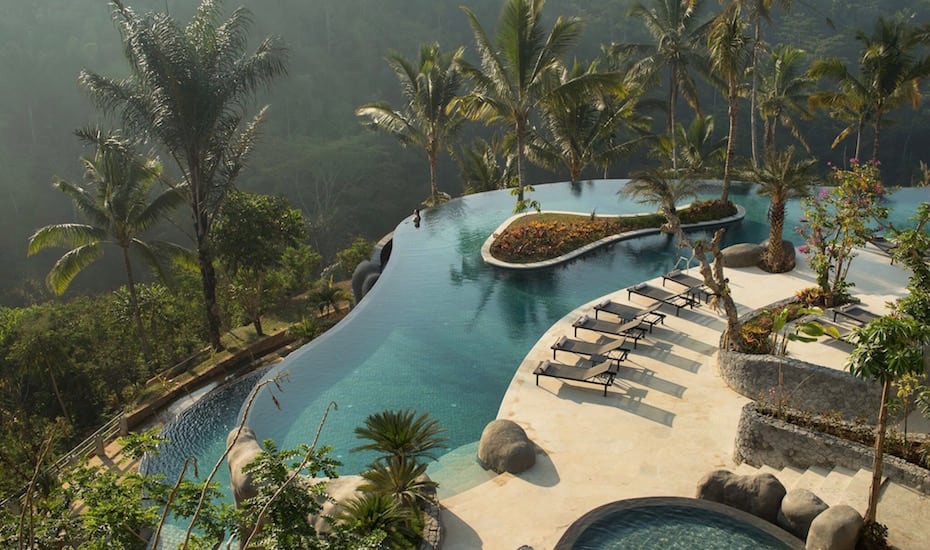
The late 20th century witnessed the rise of the infinity-edge pool, pioneered in luxury resorts and then transplanted to private villas. These pools dissolve visual boundaries, transforming water into an illusion of endlessness. They embody the late-capitalist aesthetic of limitlessness, often serving as cinematic backdrops in films, advertisements, and social media feeds.
Ecological Consciousness
In the 21st century, sustainability reshapes pool design. Natural swimming ponds, saltwater systems, and energy-efficient heating address environmental critiques of private pools as wasteful luxuries. These designs reimagine the pool not as spectacle but as ecosystem—integrating aquatic plants, filtration through gravel beds, and ecological stewardship into leisure architecture.
The Pool as Cultural Mirror
The private swimming pool reflects more than sunlight. Its history embodies our evolving relationship with water, leisure, and luxury. From Roman baths to suburban dreams, from Lautner’s hillside masterpiece to ecological ponds, pools mirror cultural ideals: health and hygiene, glamour and spectacle, status and sustainability.
Ultimately, the swimming pool is a paradoxical modern artifact—simultaneously democratic and exclusive, natural and artificial, practical and symbolic. In its shifting forms, it reveals how architecture frames not only space but desire itself.
Technologies that Changed the Pool:
1. Filtration & Chlorination (Early 20th c.)
Before mechanical filtration, pools had to be drained and refilled frequently. The introduction of sand filters and chemical chlorination in the 1910s–20s made permanent private pools viable.
2. Gunite Concrete (1930s–40s)
The invention of pneumatically applied “gunite” concrete allowed freeform shapes and faster construction. This technology enabled California’s curvaceous mid-century pools.
3. Prefabricated Liners (1950s)
Vinyl liners and fiberglass shells lowered costs and reduced construction time, democratizing the backyard pool.
4. Infinity Edge Engineering (Late 20th c.)
Originating in luxury resorts, the vanishing-edge system relies on hidden catch basins and pumps to recycle water. Adapted to private villas in the 1980s–90s, it epitomized architectural spectacle.
5. Eco-Pools (21st c.)
Advances in biofiltration and saltwater chlorination allow “natural pools” without harsh chemicals. Coupled with solar heating and efficient pumps, these systems reframe the pool as environmentally responsible.
Timeline: Key Moments in the History of the Private Pool
- c. 3000 BCE – The Great Bath at Mohenjo-Daro, among the earliest known constructed pools, used for ritual immersion.
- c. 250 BCE – Roman thermae introduce the natatio: vast communal swimming basins in civic bath complexes.
- 18th Century – Aristocrats experiment with ornamental garden basins; Enlightenment ideals promote hydrotherapy and controlled water.
- 19th Century – Advances in hydraulics and pumping bring pools into private estates; linked to health and hygiene.
- 1920s – René Lacoste and Californian elites popularize tennis and outdoor sport culture, nudging swimming into leisure lifestyles.
- 1930s–40s – Gunite concrete enables modern freeform pools; first wave of California modernist homes integrate pools into design.
- 1950s–60s – Pools proliferate in U.S. suburbs; Slim Aarons immortalizes “beautiful people” by the poolside.
- 1970s–80s – Pools become global lifestyle symbols; infinity-edge engineering pioneered in luxury resorts.
- 1990s – Sheats–Goldstein Residence and other architectural icons appear in films and fashion editorials, reinforcing the pool as cultural stage.
- 2000s–present – Sustainability reshapes the pool: natural filtration, saltwater systems, and ecological awareness redefine luxury.
The Pool in Art & Media
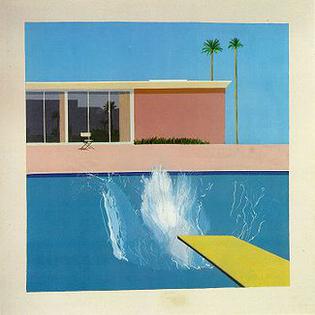
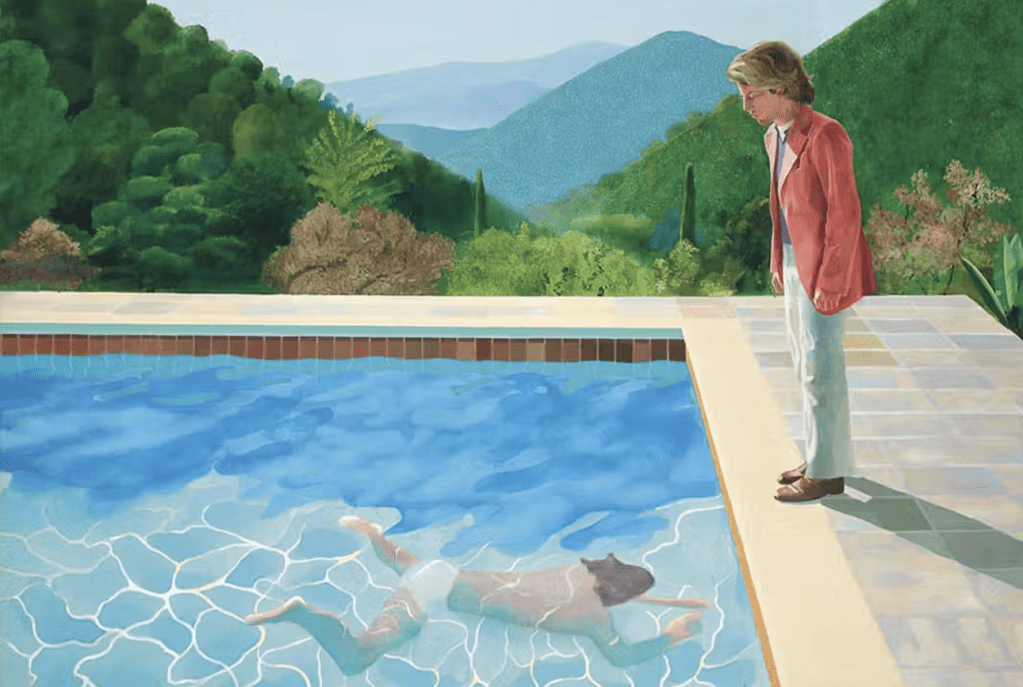
- David Hockney’s “A Bigger Splash” (1967) turned the suburban California pool into an emblem of modern painting.
- Slim Aarons’ photography of 1950s–70s poolside elites framed the pool as a cinematic stage of aspiration.
- Hollywood films (from Sunset Boulevard to The Big Lebowski) use pools as metaphors for glamour, excess, or decay.
 My World of Interiors
One thought on “The Evolution of the Private Swimming Pool”