
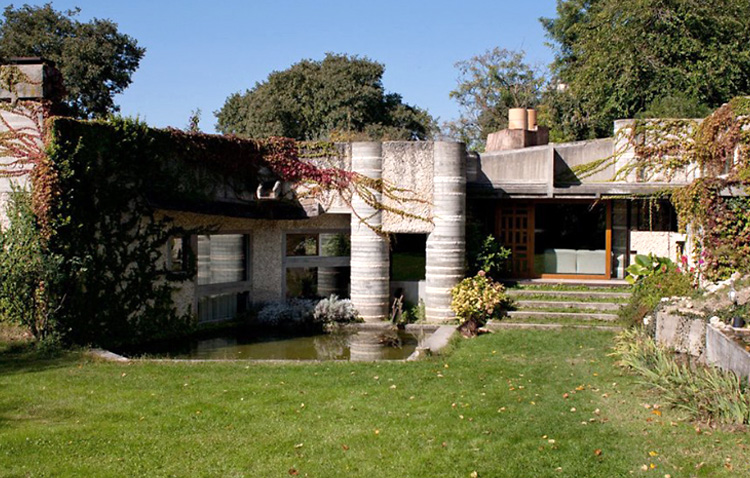
Nestled among the vineyards of Bardolino, overlooking Lake Garda, Villa Ottolenghi represents Carlo Scarpa’s final architectural statement—a masterful interplay of nature, materiality, and design.
Carlo Scarpa in our Amazon store
A Final Chapter in Craft
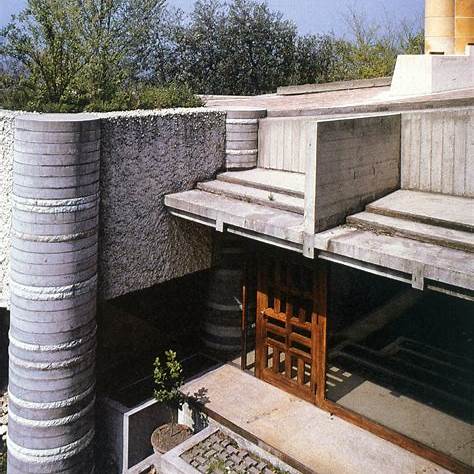
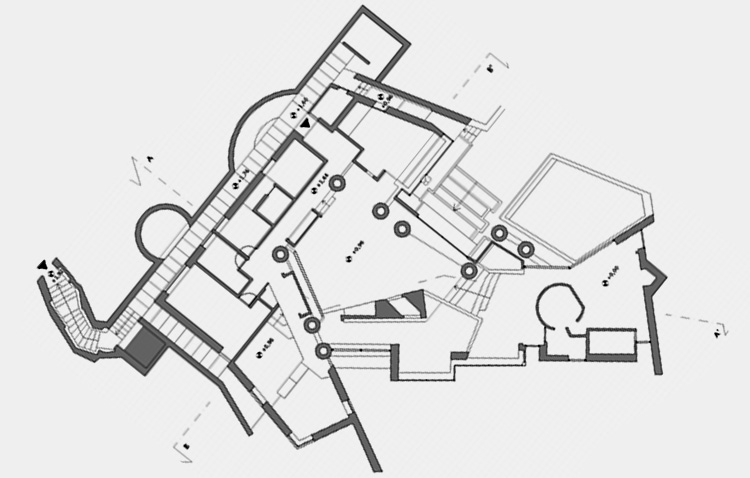
Commissioned by the Ottolenghi family in the mid-1970s and completed between 1974 and 1978, the villa unfolds as a dialogue between architecture and terrain. Scarpa responded to the steep vineyard slope by partially embedding the residence, limiting its above-ground presence and allowing the landscape to define the architecture.
Landscape as Framework
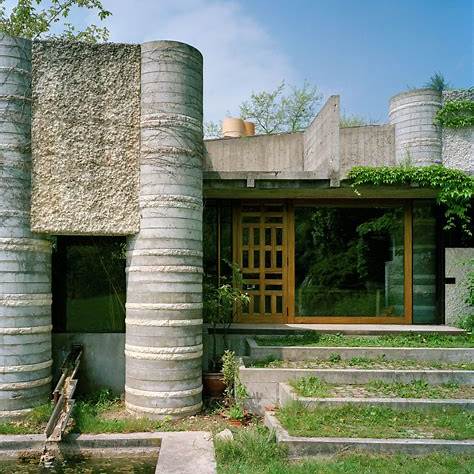
The villa spans five distinct volumes—the main residence, guest quarters, gardens, swimming pool, and stables. Each has its own identity yet all are unified through Scarpa’s spatial choreography. Terraced gardens cascade down the slope, while olive trees and vines weave agricultural history into the built environment.
Light, Material, and Atmosphere
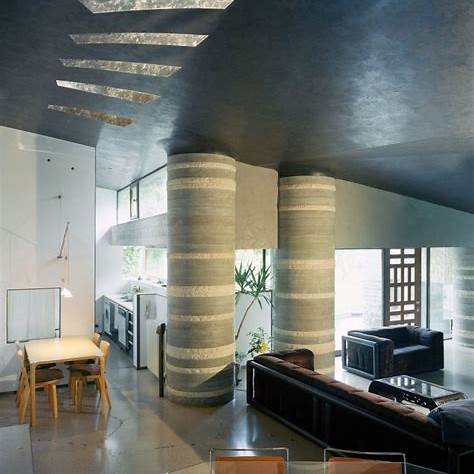
Scarpa’s genius lies in his orchestration of light and texture. Concrete, stone, glass, wood, and water combine in careful transitions. Sloped floors, curved walls, shallow pools, and reflective glazing blur the boundary between interior and exterior. Rooflines emerge as poetic horizons, suggesting the sky itself as the villa’s ultimate canopy.

Craftsmanship as Architecture
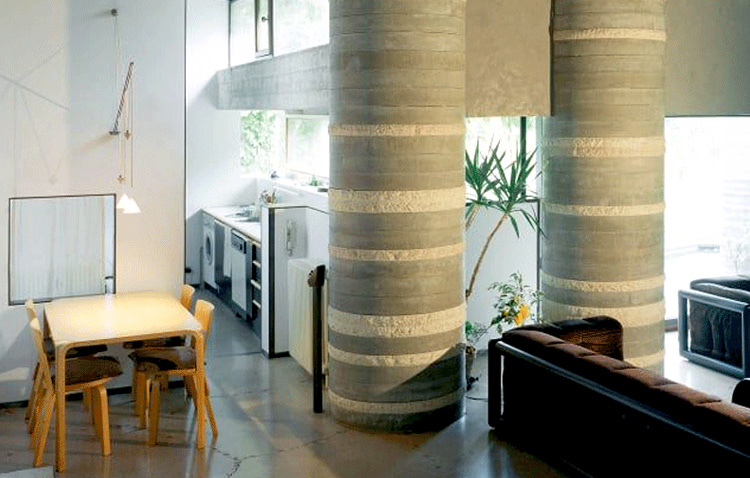
Cylindrical columns, clad in Trani stone, punctuate the spaces and anchor the structure. Each gesture is deliberate: the placement of openings, the framing of Lake Garda, the rhythm of thresholds. Scarpa’s attention to craft elevates material detail into architectural expression.

Legacy and Significance
As one of Scarpa’s final works, Villa Ottolenghi distills his philosophy: architecture as negotiation with landscape, history, and human experience. It is not an imposition but a mediation, where precision and atmosphere coexist.
Why It Matters
For the design-minded traveler, Villa Ottolenghi offers more than visual pleasure. It is a living essay in spatial poetry, a place where light, material, and landscape converge. For architects and historians, it remains a vital study in Scarpa’s craft, a final testament to his singular vision.
Books:
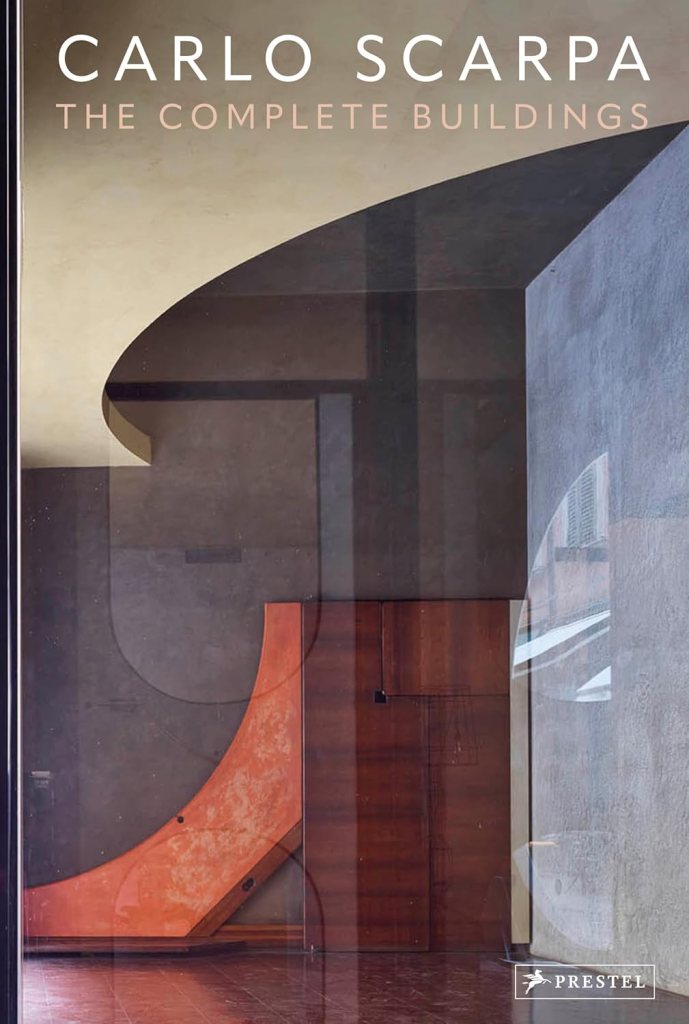
Carlo Scarpa: The Complete Buildings Hardcover – 13 April 2024
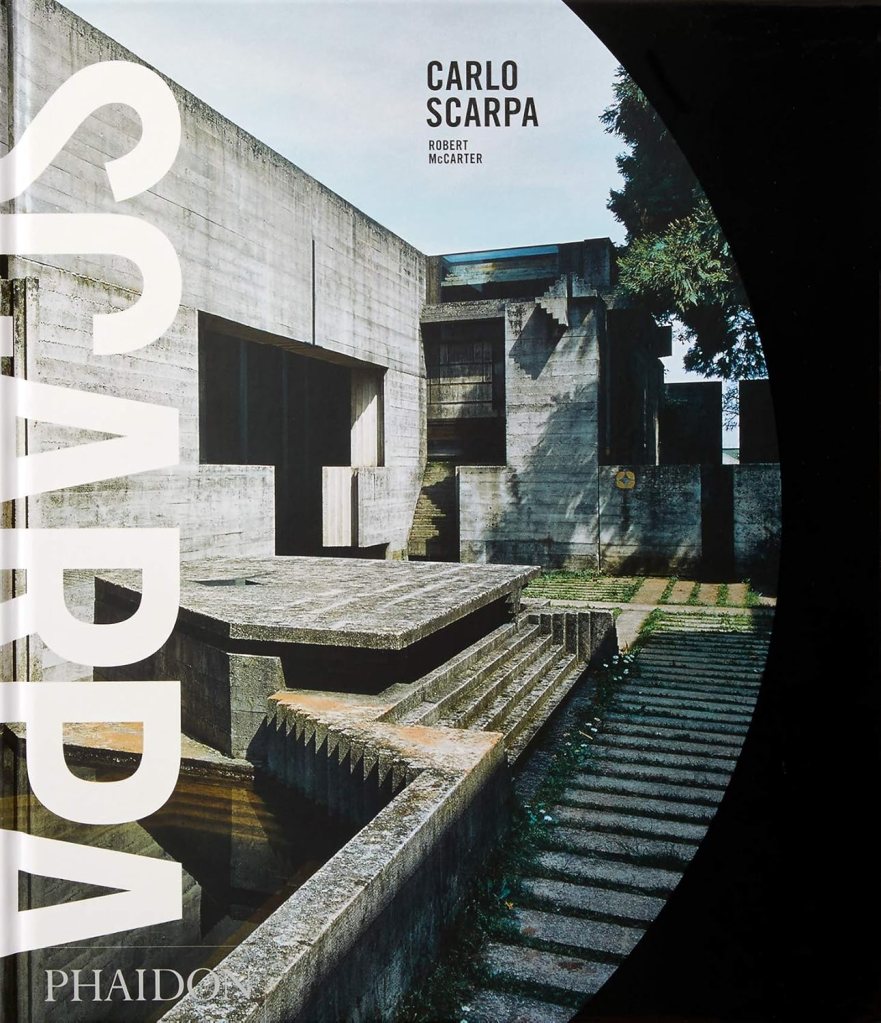
Carlo Scarpa: Classic format Hardcover – Illustrated, 15 May 2024
 My World of Interiors