

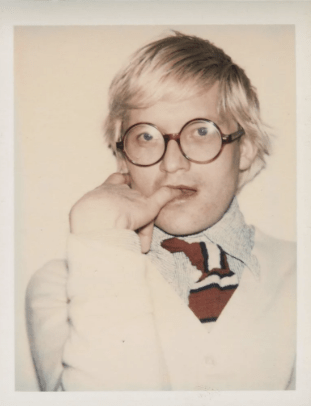
Few living artists have captured the spirit of modern life as vividly as David Hockney. Yorkshire-born, Los Angeles-made, Hockney transformed swimming pools, sunlit interiors, and intimate portraits into icons of art history. His works, defined by crystalline blues, acid yellows, and unflinching intimacy, stand at the intersection of fine art, architecture, and lifestyle — making him as much a designer of mood as a painter of pictures.

From Yorkshire to California Dreaming
Born in Bradford in 1937, Hockney came of age at the Royal College of Art, emerging alongside Britain’s Pop generation. But unlike his contemporaries, who gravitated toward consumerist critique, Hockney’s concerns were personal and aesthetic. In the early 1960s, he left the drizzle of England for Los Angeles, a place of stucco villas, turquoise pools, and endless light. Here, he found not just subject matter but an entire visual language: modernist houses, Hollywood glamour, and the freedom of openly gay life in sunlit suburbia.
The Pool as Icon
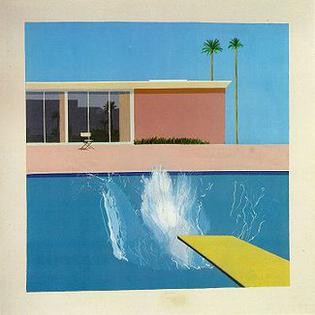
Los Angeles gave Hockney his defining motif: the swimming pool. A Bigger Splash (1967) — that turquoise plane, that flat stucco villa, that sudden white eruption of water — distilled Californian modernity into a single, unforgettable image. The pool became both subject and metaphor: leisure framed by geometry, intimacy staged against architectural modernism, desire expressed through absence.
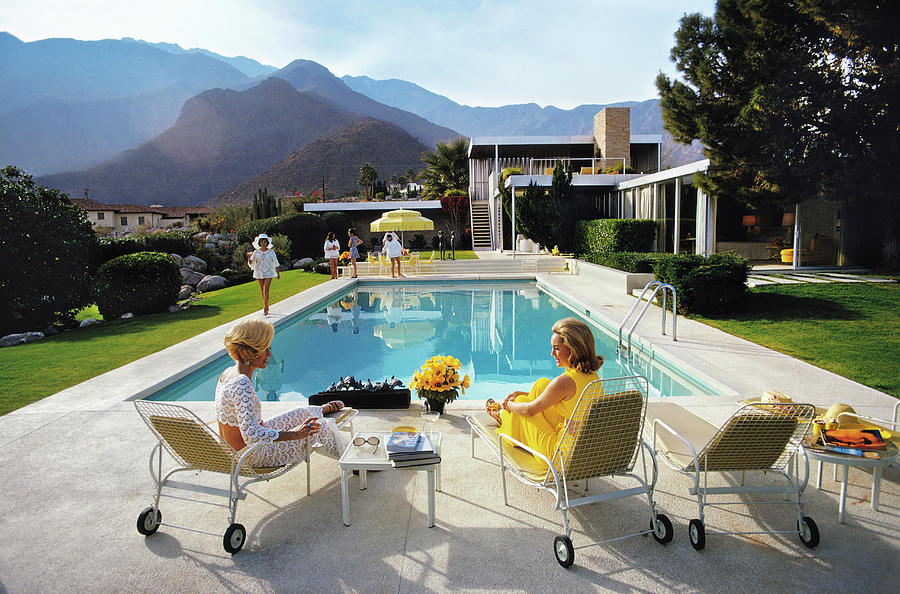
In these canvases, the influence of mid-century design is palpable. The clipped lawns, the Neutra-inspired houses, the glass panes and patio furniture: Hockney painted not just water, but a lifestyle. He turned the suburban backyard into a worthy successor of the European landscape tradition — Matisse reimagined through the lens of Beverly Hills.
Portraits and Interiors
If pools made him famous, Hockney’s portraits cemented his reputation. His double portraits — such as Mr and Mrs Clark and Percy (1970–71) — explore the psychological drama of interiors. Here, figures sit at a table, light falls through sheer curtains, a cat perches on a lap. The spaces are as important as the people: every rug, plant, and chair forms part of the narrative.
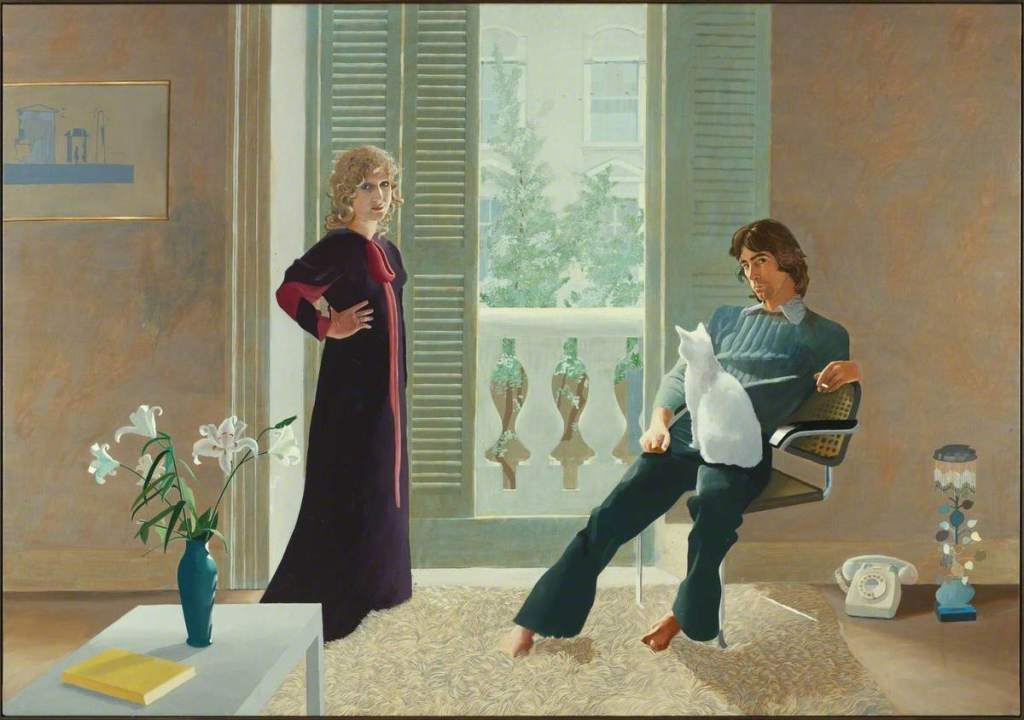
In Hockney’s world, the domestic becomes monumental. The living room, the studio, the patio — all are elevated into tableaux of intimacy, as carefully composed as any Renaissance fresco.
Restless Experimentation
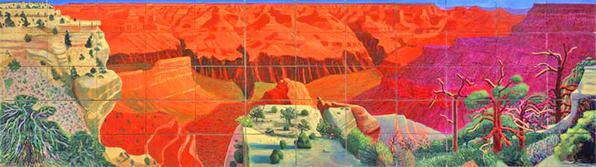
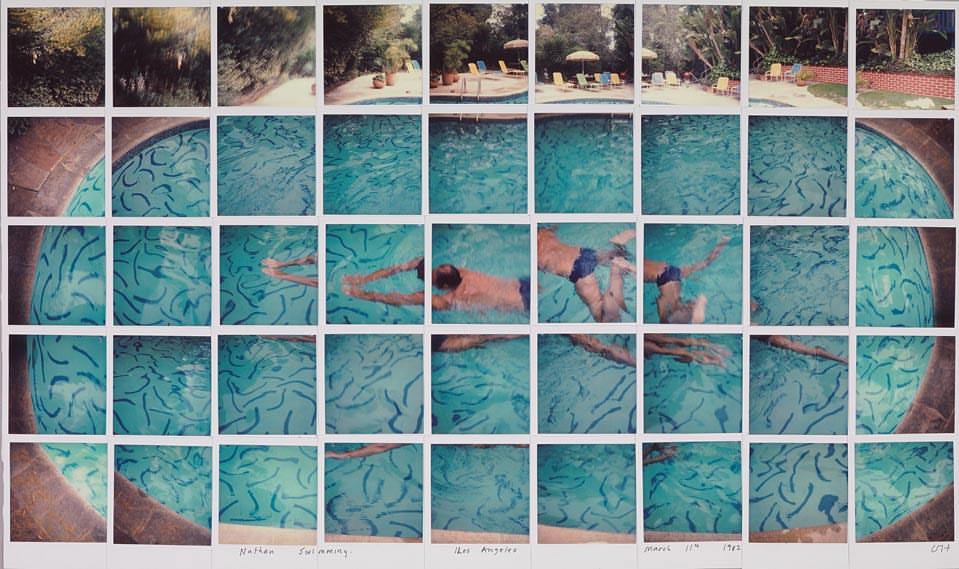
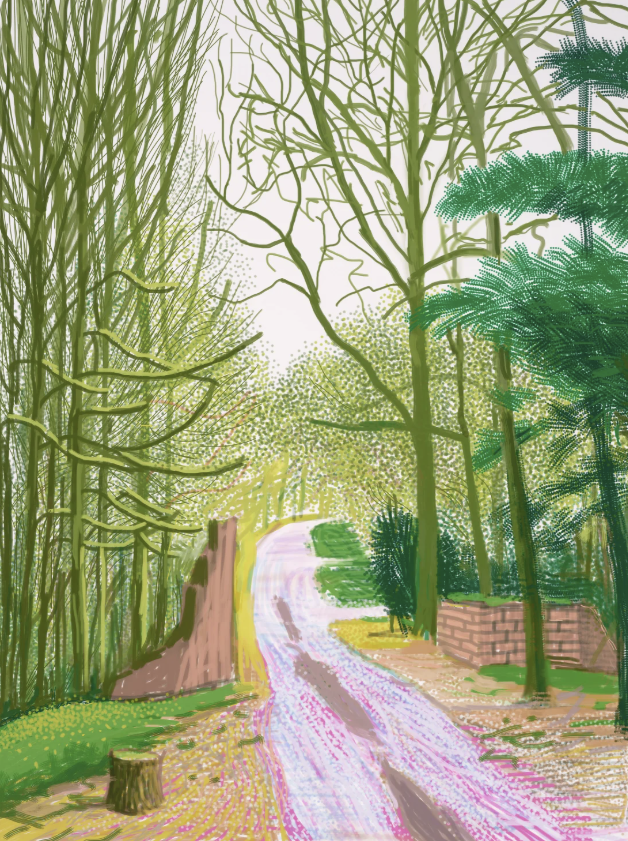
Hockney has never been content to repeat himself. He has embraced photocopiers, fax machines, Polaroid composites, and most famously, iPads — turning every new tool into a painterly device. His monumental Yorkshire landscapes of the 2000s show a return to pastoral roots, while his immersive digital exhibition Bigger & Closer (not smaller & further away) proves his ongoing commitment to reimagining how we see.
Even into his eighties, Hockney remains both an icon and an innovator, balancing heritage with experimentation, nostalgia with immediacy.
Collector’s Guide: Iconic Works by Hockney
- A Bigger Splash (1967, Tate, London)
A cool, sunlit pool interrupted by an anonymous splash. Pop art meets California minimalism. - Portrait of an Artist (Pool with Two Figures) (1972, Private Collection)
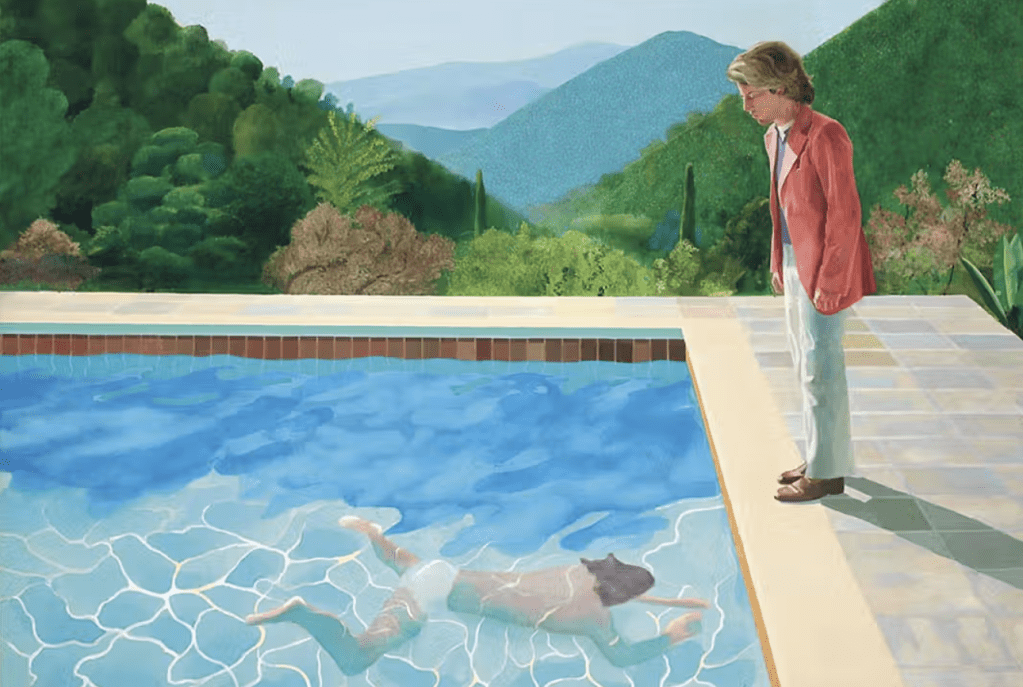
Sold for $90.3 million in 2018, this masterpiece depicts a suited man gazing at a swimmer below the surface — intimacy framed by architecture. - Mr and Mrs Clark and Percy (1970–71, Tate Britain)
A study in bohemian London: fashion designer Ossie Clark, Celia Birtwell, and their white cat, rendered in acid tones and domestic light. - Mulholland Drive: The Road to the Studio (1980, LACMA)
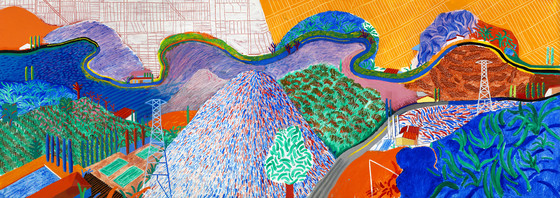
A monumental, fractured map of Los Angeles, elevating the banal daily drive into a psychedelic landscape. - The Arrival of Spring in Woldgate, East Yorkshire (2011, Series)
iPad drawings enlarged to monumental canvases: bold, joyful, experimental, and deeply English. - Bigger & Closer (not smaller & further away) (2021–23)
A digital exhibition, recasting his drawings into immersive projections — a new way to “walk inside” Hockney’s vision.
Design Moodboard: Living with Hockney
Hockney’s influence extends far beyond galleries — into interiors, fashion, and design.
- Color Palette: Cerulean blues, shocking pinks, lemon yellows, and lush greens. Perfect for accent walls, textiles, or poolside ceramics.
- Forms: Geometric clarity softened by organic presence — think glass walls offset with tropical planting.
- Textures: Painted wood, woven cane, crisp linen, punctuated by lacquered surfaces.
- Mood: Playful intimacy; leisure elevated into lifestyle. The Hockney interior is as much about conversation as composition.
Designers from Jonathan Adler to India Mahdavi have nodded to Hockney’s palette, while countless poolside villas pay homage to his crisp geometry. To live with Hockney — whether through his work or its influence — is to inhabit a space where joy and elegance coexist.
Why Hockney Endures
Hockney is not merely a painter of pools or portraits. He is a chronicler of seeing — of how light refracts through water, how intimacy unfolds in a room, how technology reshapes perception. Like Picasso or Matisse, he remains endlessly experimental yet unmistakably himself.
For art lovers, collectors, and aesthetes, Hockney represents more than a canonized name: he is an ethos. A reminder that modern life, rendered with wit and color, can still be deeply beautiful.
 My World of Interiors
One thought on “David Hockney: The Artist Who Made Modern Life Look Effortless”