
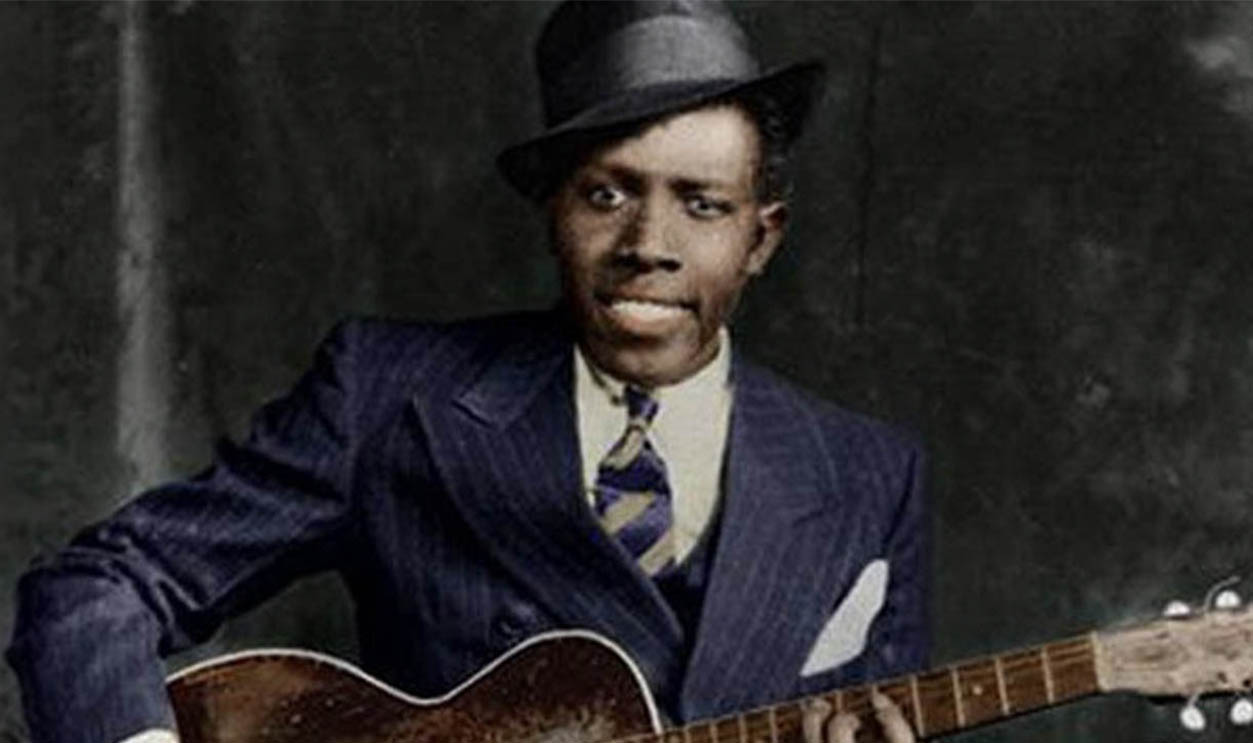
The blues is more than a musical form; it is a cultural inheritance, a body of expression born of sorrow and survival, migration and transformation. To speak of the blues is to trace the story of Black America itself: the displacement of slavery, the endurance of Reconstruction, the Great Migration, and the uneasy promise of modernity. Few genres have carried so much history in so deceptively simple a structure.
Roots in Bondage and Survival
The blues begins in the fields and spiritual traditions of enslaved Africans in the American South. Work songs, hollers, and call-and-response chants formed a collective means of endurance. These were not yet the blues, but they contained the DNA: the flattened “blue notes,” the sliding vocal intonations, the syncopated rhythms that evoked both lament and resilience.
After Emancipation, Black communities carried forward these traditions into secular spaces. The Delta—the floodplain of the Mississippi River—became the crucible. Here, in the juke joints of Clarksdale and Dockery Farms, itinerant musicians distilled fragments of African rhythms, Baptist cadences, and folk balladry into something recognizably new.
The Delta Sound
By the 1910s and 1920s, what we now call “the Delta blues” had emerged. It was a music of raw intensity: one voice, one guitar, conjuring entire worlds. Charley Patton’s percussive strumming, Son House’s anguished sermons, and Robert Johnson’s haunting slide guitar gave form to longing, lust, and loss. The archetypal twelve-bar structure—three chords, endlessly reshaped—was less a restriction than a vessel, a way of giving coherence to chaos.
In its earliest decades, the blues was not written down. It was oral tradition, improvisational and fluid, traveling along railroads and rivers. When the first commercial blues recordings appeared in the 1920s—most famously Mamie Smith’s Crazy Blues (1920)—they introduced a broader American public to a sound that was already fully formed.
The Classic Blues Women
The 1920s also saw the rise of the “classic blues” singers, often women who commanded vaudeville stages with orchestral backing. Bessie Smith, the “Empress of the Blues,” brought grandeur and gravity to themes of love and hardship. Ma Rainey, Gertrude “Ma” Rainey, infused her performances with theatricality and defiance, her lyrics often asserting female agency and queer desire. These women transformed the blues from rural vernacular into urban spectacle, expanding its reach to national audiences.
Migration and Transformation
The Great Migration (1916–1970), in which millions of African Americans moved from the rural South to industrial cities like Chicago, Detroit, and New York, transformed the blues. In Chicago, musicians plugged in. Muddy Waters, arriving from Mississippi, electrified the Delta tradition, adding drums, harmonica, and amplified guitar. The result—Chicago blues—was louder, grittier, and built for urban dance halls.
Here, the blues became a commercial force. Chess Records, run by Polish immigrants Leonard and Phil Chess, became the epicenter, recording Waters, Howlin’ Wolf, Willie Dixon, and Little Walter. Their sound laid the foundation for rock and roll, later adopted and adapted by white musicians from Elvis Presley to the Rolling Stones.
Intellectual Recognition
By the mid-20th century, the blues was no longer just popular music but a subject of academic study. Folklorists like Alan Lomax recorded field performances for the Library of Congress, ensuring the preservation of voices like Lead Belly and Muddy Waters before fame found them. Writers and critics framed the blues as both folk art and modernist expression, noting its connection to African oral traditions and its resonance with existential philosophy.
The repetition and variation of the twelve-bar form, critics argued, mirrored the condition of Black life in America: a cycle of hardship punctuated by improvisation, humor, and fleeting transcendence. In this way, the blues was not merely entertainment—it was testimony.
Beyond the Delta and Chicago
Regional styles proliferated. Texas blues, with Lightnin’ Hopkins and T-Bone Walker, emphasized fluid guitar lines. The Piedmont blues of the Carolinas introduced ragtime rhythms. In Memphis, Beale Street was alive with hybrid forms. Each style retained the essence of the blues—melancholy laced with resilience—while reflecting local conditions.
By the 1960s, the blues had become transatlantic. British musicians like Eric Clapton, John Mayall, and the Rolling Stones idolized American bluesmen, often introducing them to larger audiences abroad than they had ever enjoyed at home. The paradox of the blues, then and now, is that it achieved global recognition while its creators often remained marginalized.
The Blues Today
Today, the blues lives on in many forms: in the neo-traditionalists who keep Delta sounds alive, in crossover artists blending blues with soul, hip-hop, and jazz, and in the countless musicians who may never call themselves “blues players” yet build upon its legacy. The genre’s influence is visible in rock, R&B, country, and even electronic music.
Yet its essence remains tied to authenticity and lived experience. As B.B. King once said, “The blues is an expression of anger against shame and humiliation.” That expression continues to resonate, a reminder of both historical suffering and enduring creativity.
Legacy of a People’s Music
The blues is not a relic. It is a living archive of Black experience, a sound that has carried the weight of centuries yet still bends toward the moment. It has given birth to entire genres, inspired countless performers, and served as a lingua franca of longing and survival.
To hear the blues is to hear history made audible: the echo of work songs in the Delta, the glamour of Harlem’s stages, the electricity of Chicago’s clubs, the reinvention in London basements. Its legacy is proof of art’s paradoxical power: born of suffering, yet life-affirming; grounded in particular histories, yet universal in its capacity to move.
The blues remains, at its heart, a simple song with infinite depth—twelve bars that contain the story of a people, and, in their sorrow and resilience, the story of us all.
 My World of Interiors