
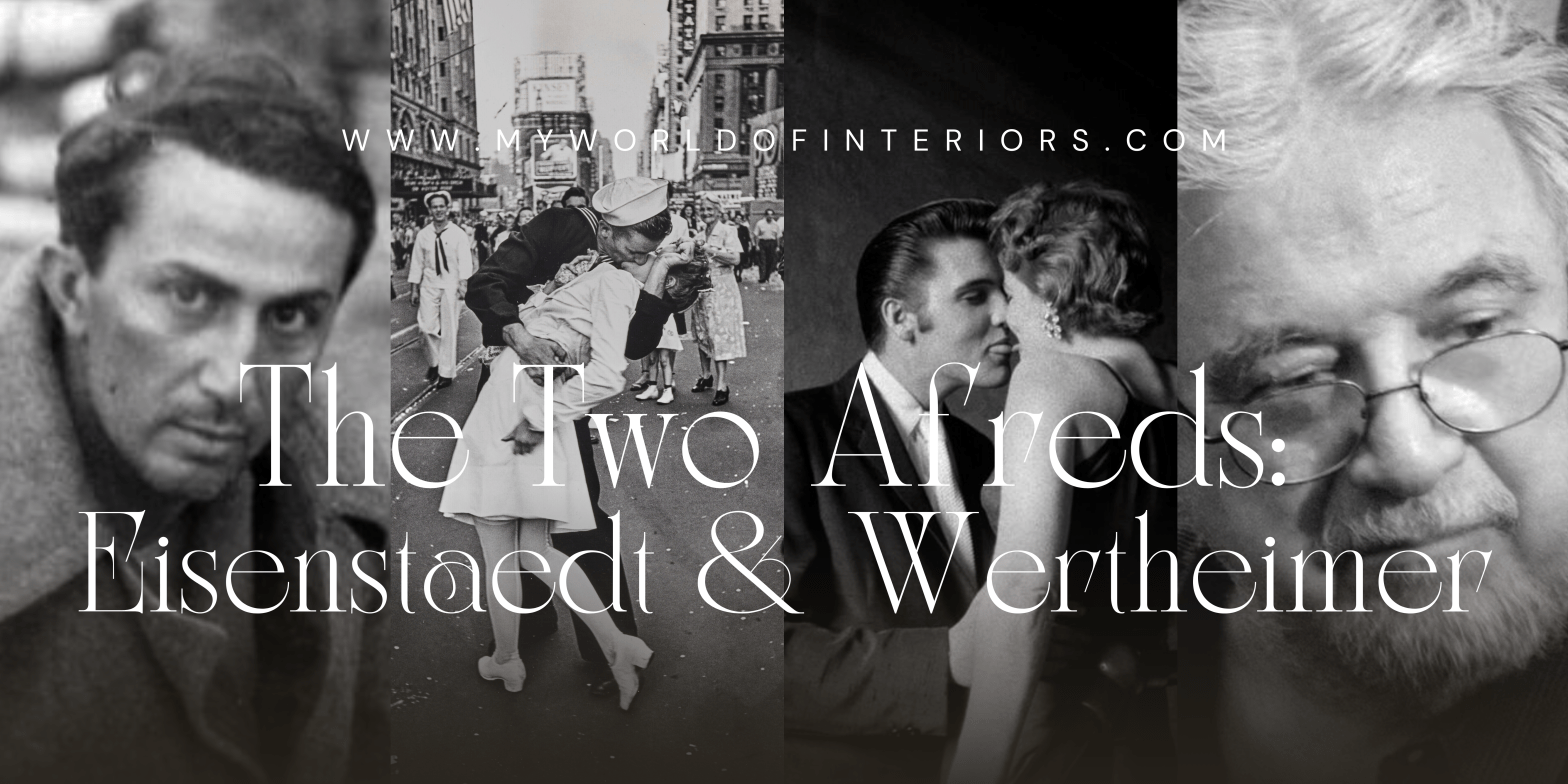
In the vast history of twentieth-century photography, two Alfreds stand out for the way they captured the essence of their time: Alfred Eisenstaedt, the German-born émigré whose elegant eye helped define Life magazine’s golden era, and Alfred Wertheimer, the Brooklyn-based photographer whose intimate portraits of a young Elvis Presley gave the world its first candid glimpse of a myth in the making.
Though they worked in different contexts — Eisenstaedt as a seasoned photojournalist of global affairs and Wertheimer as a relative unknown with a singular commission — both men understood photography not merely as documentation but as revelation. Their lenses froze moments that distilled modernity, celebrity, and the shifting dynamics of power and culture.
Alfred Eisenstaedt: The Poetry of Public Life
Alfred Eisenstaedt (1898–1995) arrived in America as a refugee from Nazi Germany. He brought with him a European sense of form and composition, honed in Berlin, and applied it to the emerging medium of photojournalism. When he joined Life magazine in 1936, he became one of the architects of its visual grammar.
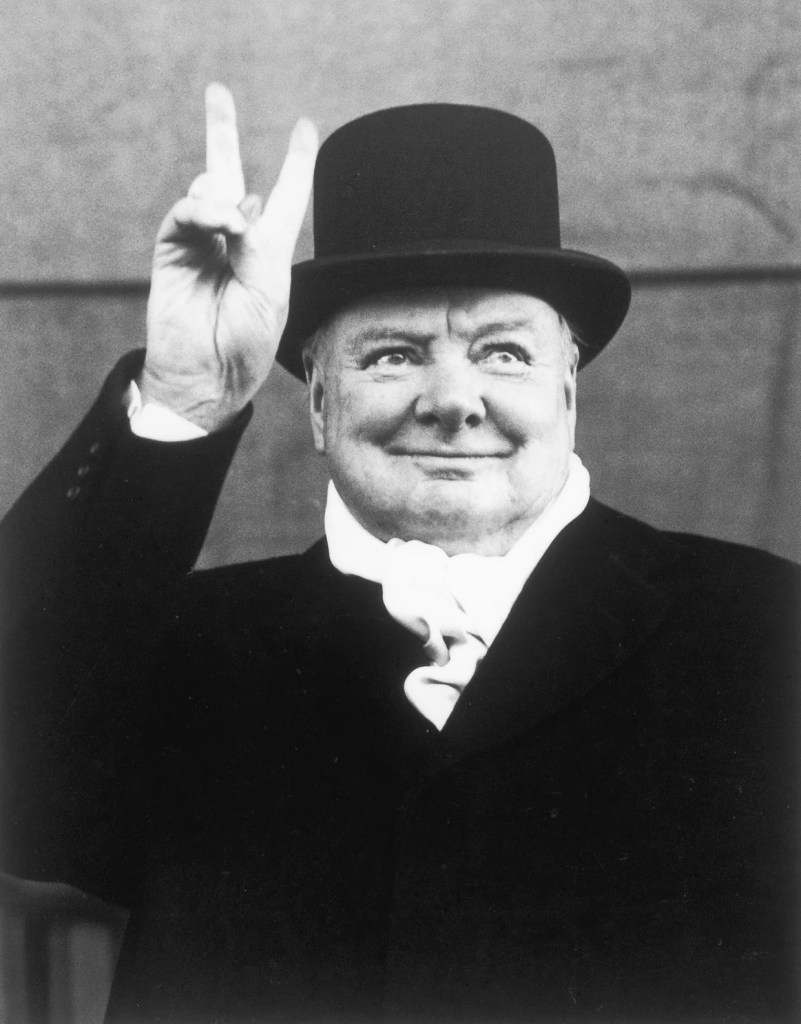
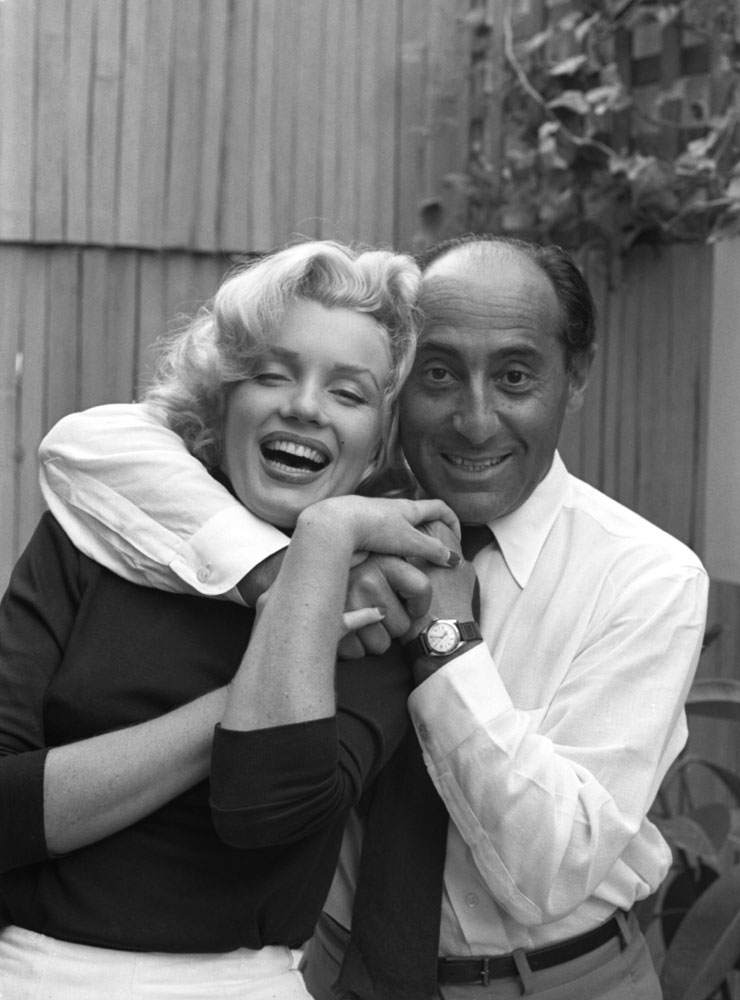
Eisenstaedt’s genius lay in his ability to humanize the monumental. His most famous photograph — the sailor kissing a nurse in Times Square on V-J Day, 1945 — became an emblem of victory and relief at the end of World War II. But beyond this iconic image, his body of work reveals a subtler artistry. He photographed world leaders — Hitler, Mussolini, Churchill, Kennedy — and cultural figures — Sophia Loren, Albert Einstein, Marilyn Monroe — always with an eye for the candid gesture that revealed personality beneath power.
Unlike the stark realism of contemporaries like Robert Capa, Eisenstaedt’s style was graceful, almost lyrical. He prized spontaneity, waiting for the moment when form and feeling aligned. His photographs were not confrontational but invitational, allowing viewers to enter a scene as participants. In doing so, he helped elevate photojournalism into an art of storytelling.
Alfred Wertheimer: The Intimacy of Becoming
If Eisenstaedt captured the public face of the twentieth century, Alfred Wertheimer (1929–2014) captured its private moment of transformation. In 1956, RCA Victor assigned Wertheimer, then a young freelancer, to photograph a 21-year-old singer from Memphis who had just signed with the label. That singer was Elvis Presley.
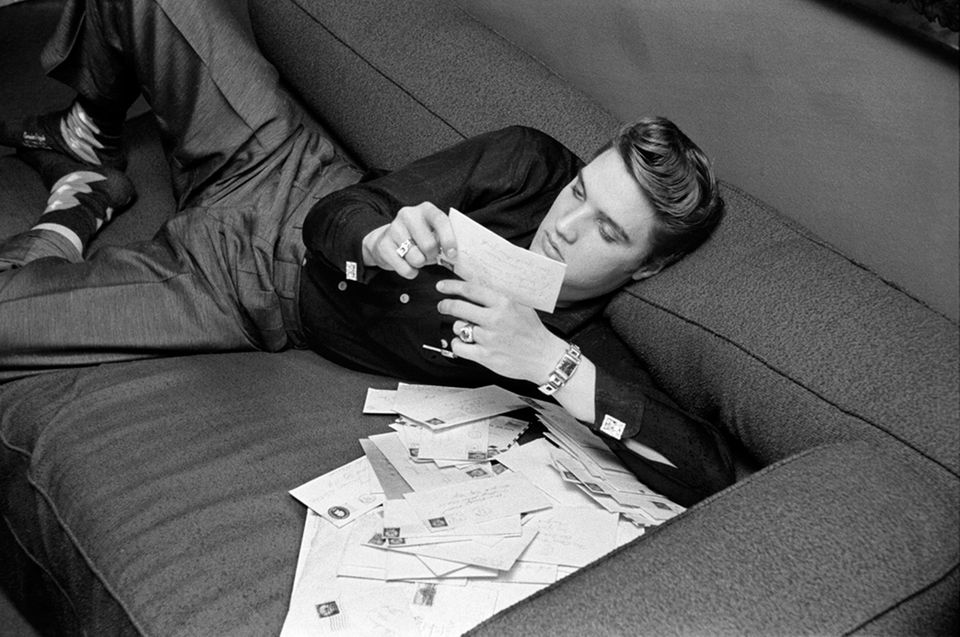
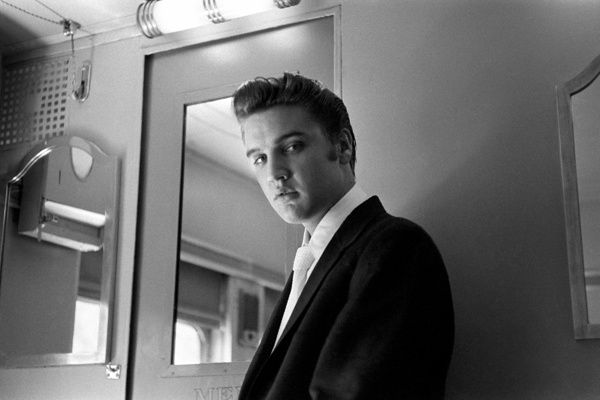
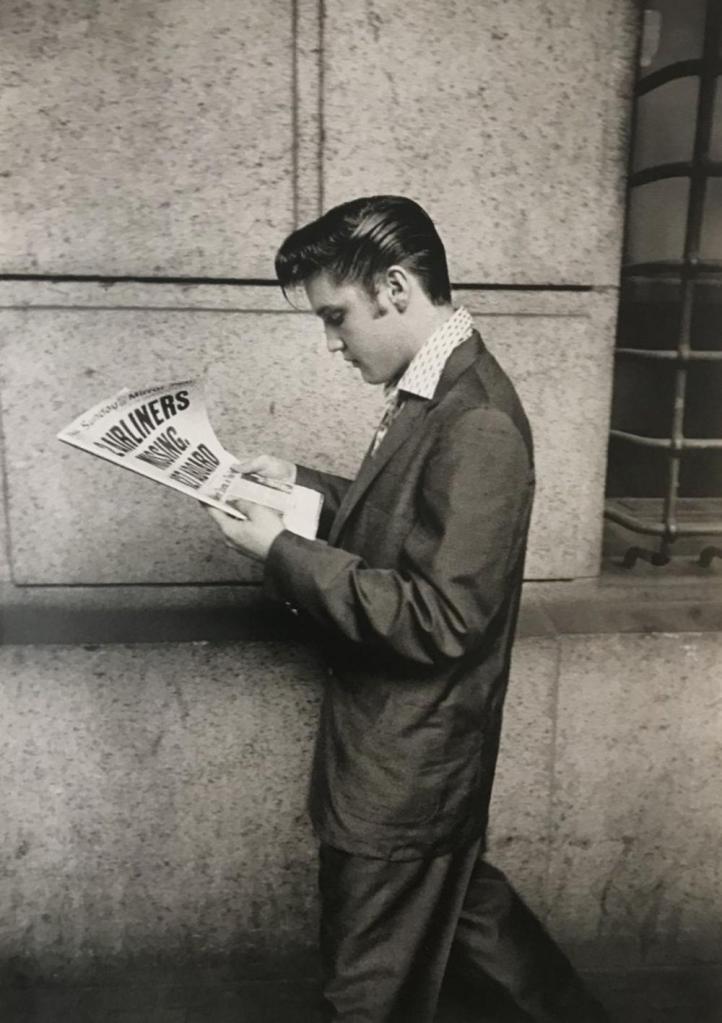
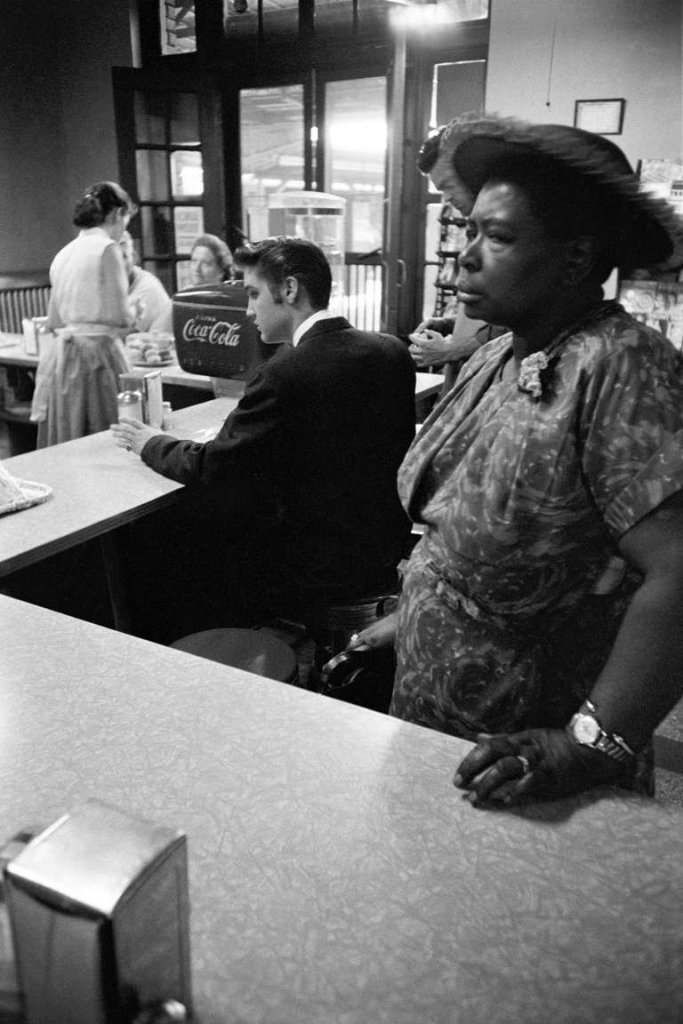
Wertheimer followed Elvis during a liminal summer — rehearsals, train rides, backstage moments, encounters with fans. The resulting photographs are extraordinary not only for their access but for their intimacy. Wertheimer caught Elvis in unguarded states: eating a sandwich, kissing a fan in a stairwell, staring pensively before a performance.
These images preserve the moment before Elvis became Elvis — before the choreography of fame hardened into ritual. Wertheimer’s Elvis is still porous, accessible, improvisational. Unlike Eisenstaedt, who photographed established icons, Wertheimer documented the genesis of celebrity, the fragile cusp when ordinariness begins to dissolve into myth.
Public Image vs. Private Becoming
Placed side by side, the two Alfreds embody complementary poles of twentieth-century visual culture.
- Eisenstaedt chronicled power as it already existed. His photographs domesticated leaders and icons, showing humanity within the machinery of public life.
- Wertheimer chronicled power as it was being born. His photographs revealed the vulnerability of a future icon, still unguarded, not yet disciplined by fame.
In Eisenstaedt we see the consummation of public spectacle; in Wertheimer we see its inception. Together, they mapped the life cycle of celebrity in the modern age.
Photography as Historical Text
Both men, in different ways, reveal the role of photography as a historical text. Eisenstaedt’s images belong to collective memory: V-J Day, the rise of fascism, the glamour of Hollywood, the corridors of political power. They are part of what we think history looked like. Wertheimer’s Elvis photographs, by contrast, feel like recovered fragments of an origin story — documents of how history felt before it was codified.
In academic terms, Eisenstaedt offered the visual canon; Wertheimer offered the apocrypha. One worked at the level of myth-making for a mass public; the other, almost accidentally, produced an archive of intimacy that would later become myth itself.
Legacy of the Two Alfreds
Today, Eisenstaedt’s work endures in museums, archives, and the visual DNA of journalism. His images remind us of a time when photography was trusted as witness, when a single frame could unite a nation in recognition. Wertheimer’s work endures in exhibitions, books, and the endless recycling of Elvis mythology. His candid shots now feel almost impossible in an era of curated celebrity: a record of authenticity before image management closed the gates.
Both Alfreds, in their own way, captured the twentieth century not just as it was but as it would be remembered. One gave us the theater of power, the other the vulnerability of becoming.
Two Lenses, One Century
The story of the two Alfreds is not merely about photography but about modernity itself. Eisenstaedt showed us how power looked once it had crystallized into authority. Wertheimer showed us how power looked in the act of being born. Between them lies the arc of the twentieth century: from the triumphant public square to the private stairwell kiss, from the statesman’s gesture to the young man’s vulnerability.
To study them together is to understand how photography mediates history: by shaping both our collective memory and our sense of intimacy with figures we will never meet. The two Alfreds remind us that images are not reflections but constructions — and that the truth of a century often lies in the tension between what is staged and what is caught unawares.
Selected Works
Alfred Eisenstaedt
- V-J Day in Times Square (1945)
The sailor and the nurse — exuberant, spontaneous, and instantly iconic. A photograph that came to symbolize the emotional release of victory. - Children at Puppet Theatre, Paris (1963)
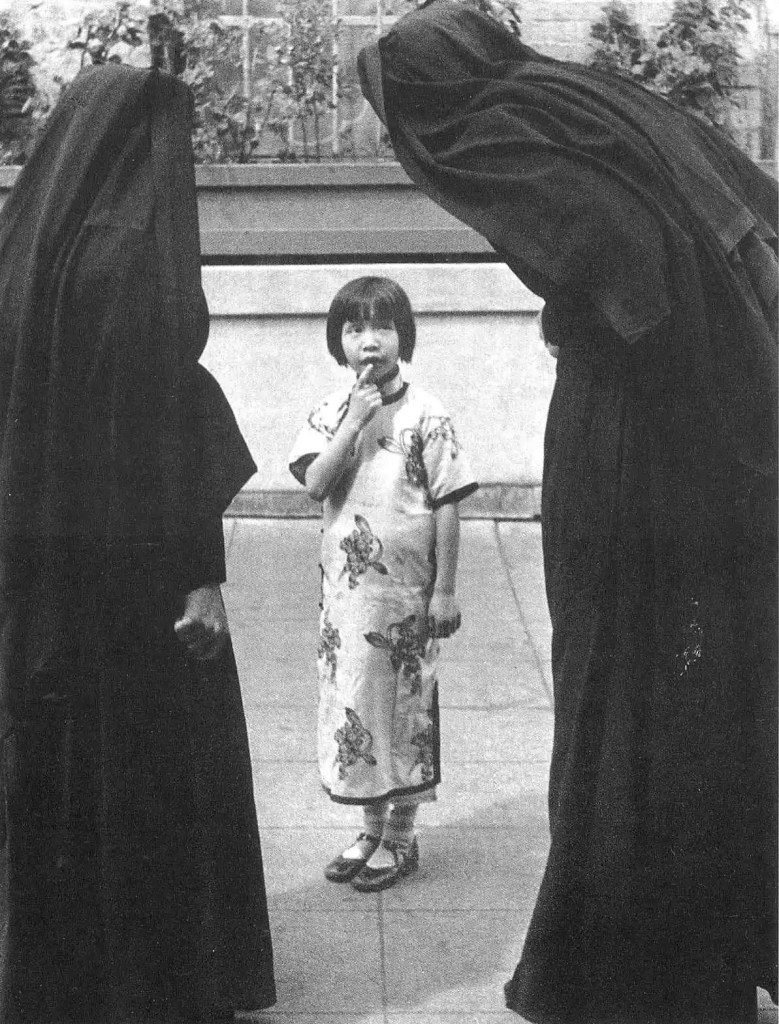
A study in rapture: children’s faces lit with awe and laughter, pure testimony to photography’s ability to capture unfiltered joy. - Goebbels at League of Nations, Geneva (1933)
A chilling portrait of Nazi propaganda minister Joseph Goebbels glaring at Eisenstaedt, embodying menace with a glance. Proof that candid moments could reveal ideology. - Sophia Loren and Jayne Mansfield (1957)
The famous sideways glance: Loren’s disdainful gaze at Mansfield’s plunging neckline, encapsulating gender, glamour, and rivalry in a single frame. - Albert Einstein, Princeton (1947)
Not the stern genius, but a relaxed, almost amused Einstein — demonstrating Eisenstaedt’s gift for humanizing icons.
Alfred Wertheimer
- The Kiss in the Stairwell (1956)
Elvis kissing a fan backstage in Richmond, Virginia. Intimate, unscripted, capturing the collision of desire, fame, and youth. - Elvis on the Train (1956)
A contemplative Elvis riding a train, cigarette in hand, suspended between small-town anonymity and global stardom. - Elvis Rehearsing (1956)
Shirtless, vulnerable, caught in motion — Elvis before performance, the human body preparing for myth. - Elvis with Fans (1956)
Images of Elvis signing autographs, mingling with teenagers, his accessibility already at odds with the aura of celebrity he would soon acquire. - Elvis in the Studio (1956)
At RCA recording sessions, headphones on, absorbed in the music — the artist before the industry fully took hold.
 My World of Interiors