
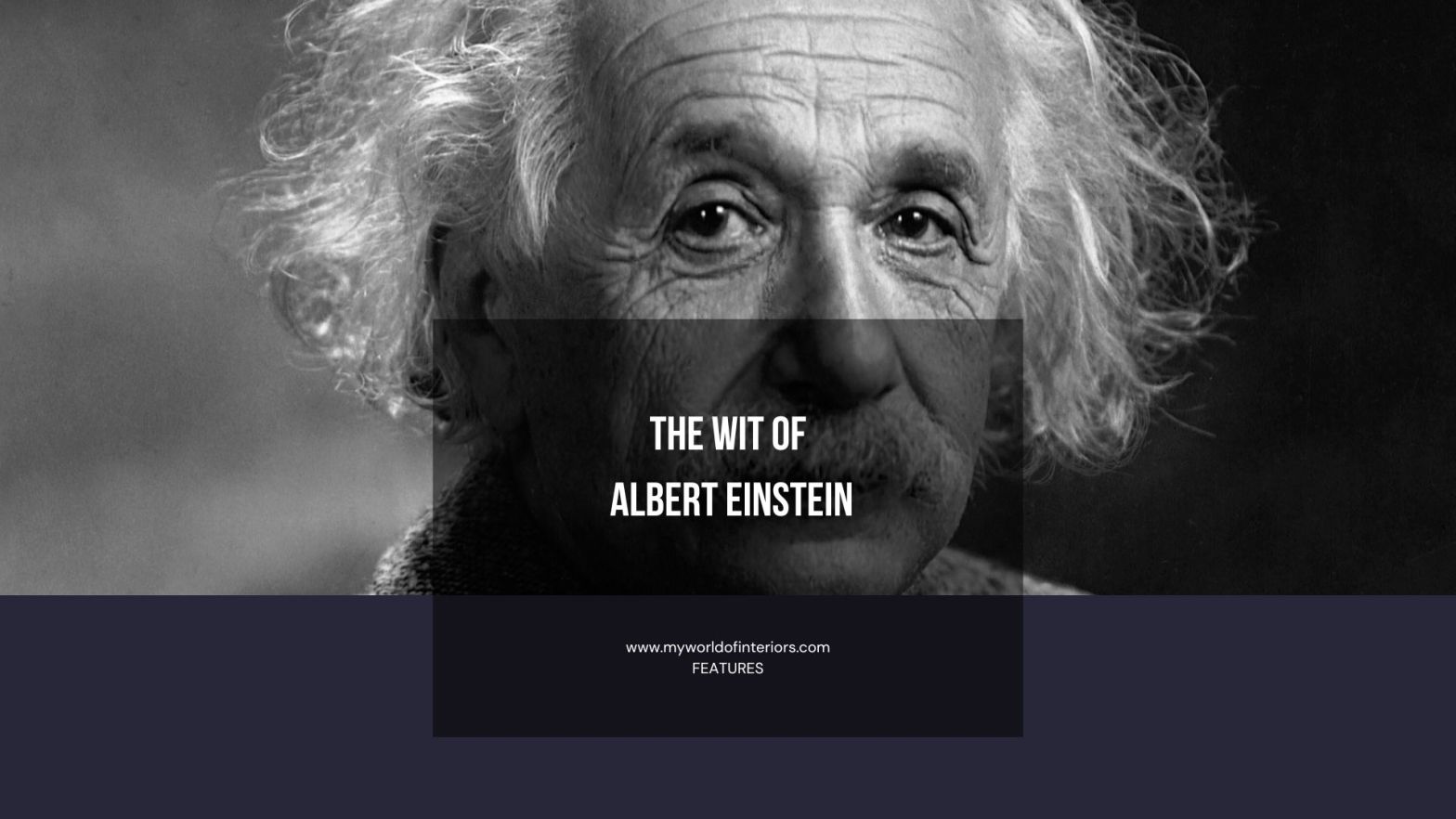
Albert Einstein is remembered as the archetype of genius — the wild hair, the chalkboard equations, the Nobel Prize. But beyond the mythology of relativity lies a less formal legacy: his wit. Einstein’s humor was not incidental; it was constitutive of his worldview. It shaped his public persona, softened his icon, and revealed a mind that understood the absurdities of existence as deeply as its laws.
That Einstein was witty is no surprise. Humor and insight share a structure: both rely on unexpected connections, on seeing the familiar from a new angle. Just as relativity overturned common-sense notions of space and time, Einstein’s jokes reoriented the conventions of everyday life.
The Persona of Play
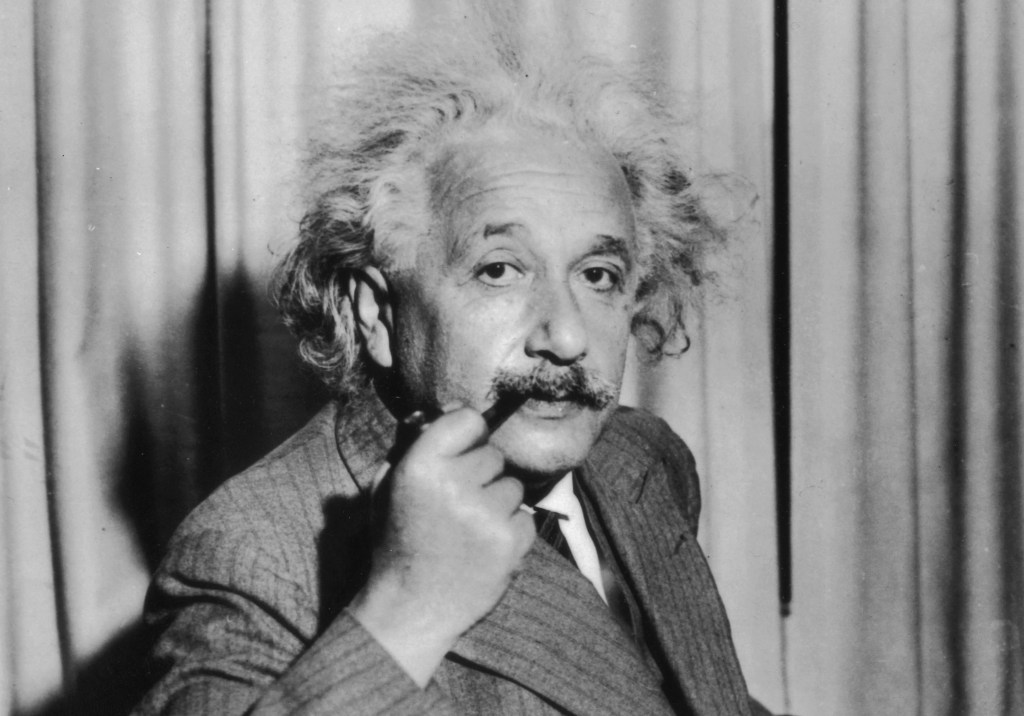
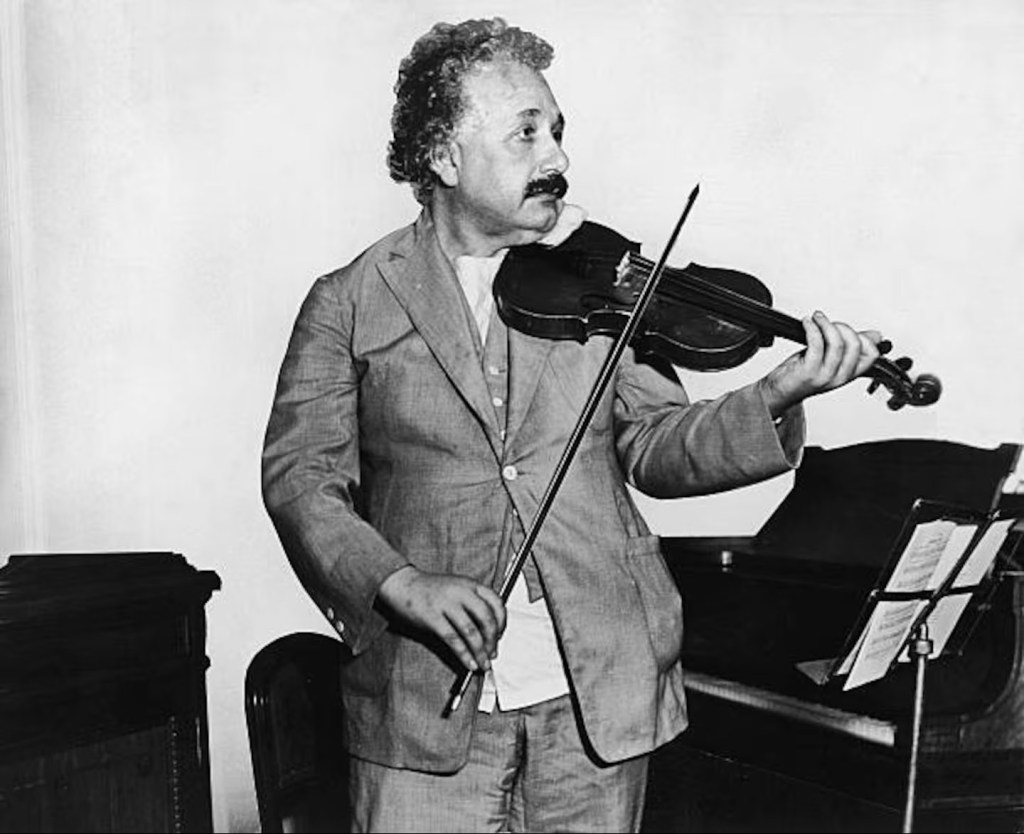
Einstein cultivated an image of genial irreverence. In a world that expected scientists to be austere, he embraced mischief. Photographs of him sticking out his tongue at reporters, playing the violin in crowded rooms, or sailing badly but happily across a lake are as much a part of his myth as E = mc².
This sense of playfulness was genuine but strategic. Humor made him human in the eyes of the public. At a time when his theories were transforming physics into something incomprehensible to lay audiences, his quips served as a bridge. “If you can’t explain it to a six-year-old,” he supposedly said, “you don’t understand it yourself.” The line, whether apocryphal or not, distills his approach: complexity need not preclude clarity, and clarity often thrives on levity.
Humor as Intellectual Method
Einstein’s wit was not confined to bon mots. It pervaded his way of thinking. He was a master of the thought experiment — the gedankenexperiment — which is itself a kind of intellectual joke: a playful scenario (a man chasing a beam of light, an observer in a moving elevator) that exposes the limits of conventional logic. These fictions, whimsical on the surface, revealed truths that rewrote physics.
In this sense, his humor was epistemological. To be witty is to test boundaries, to see whether the frame of reference holds. Einstein’s physics did the same. Relativity was a cosmic joke played on Newtonian certainty: time is not absolute, simultaneity is relative, space itself bends.
Public Jester, Private Ironist
Einstein wielded humor as a form of self-protection. When asked about his celebrity, he replied: “It is not easy to be famous and alive.” When queried about his daily routine, he quipped: “I never think of the future. It comes soon enough.” These remarks, tossed off with apparent nonchalance, reveal an existential irony: beneath the wit is the recognition of human limits.
He could also turn his wit against institutions. To a journalist pressing him on America’s prohibition laws, he remarked: “The prestige of government has undoubtedly been lowered considerably by the Prohibition law. For nothing is more destructive of respect for the government and the law of the land than passing laws which cannot be enforced.” Here humor sharpened into critique, cloaking political dissent in disarming candor.
The Childlike Quality
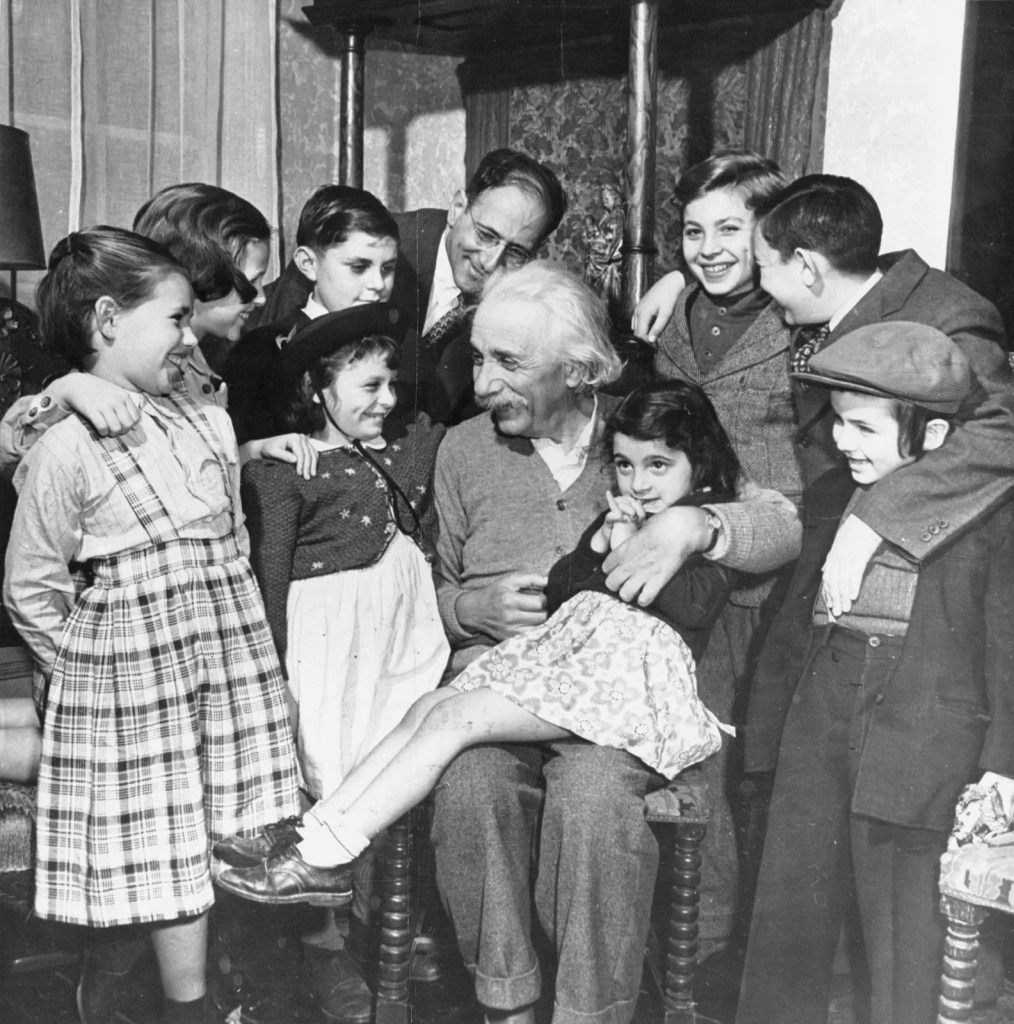
Einstein often described himself as retaining a child’s sense of wonder, and his humor reflected that. He delighted in puns, in wordplay, in silly drawings. This childlike aspect was not frivolous but profound. He understood that seriousness can stifle imagination. “Creativity,” he wrote, “is intelligence having fun.” The line has since been flattened into cliché, but in Einstein’s life it was no slogan — it was practice.
Sidebar: Five of Einstein’s Best Quips
1. On Relativity (Explained to the Public)
“When you sit with a nice girl for two hours, you think it’s only a minute. But when you sit on a hot stove for a minute, you think it’s two hours. That’s relativity.”
— A joke that trivializes his physics, yet captures its essence: experience is relative, bound to perception.
2. On the Future
“I never think of the future. It comes soon enough.”
— An existential shrug in the guise of a quip, suggesting both humility and inevitability.
3. On Education
“Education is what remains after one has forgotten what one has learned in school.”
— A line that undermines rote learning while elevating imagination and curiosity.
4. On Fame
“It is not easy to be famous and alive.”
— A bittersweet observation on the alienation of celebrity, delivered with a dry smile.
5. On Simplicity
“If you can’t explain it simply, you don’t understand it well enough.”
— Perhaps apocryphal, but emblematic of his philosophy: clarity, like humor, is a test of understanding.
Wit as Philosophy of Life
Einstein’s humor expressed not only temperament but philosophy. He saw the world as full of mystery, absurdity, and paradox. In such a world, laughter is not denial but acknowledgment. His quips reveal a man who recognized the limits of knowledge and the inevitability of error.
Legacy of the Laughing Genius
Einstein’s wit has become part of his cultural afterlife. It keeps his memory approachable, making the genius seem less remote, more companionable. His jokes circulate as memes, his tongue-out photo adorns posters and T-shirts, his aphorisms inspire both physicists and entrepreneurs.
But to reduce Einstein’s humor to charm would be to underestimate it. His wit was a way of thinking, a mode of critique, a philosophy of life. It humanized him, yes, but it also reflected the essence of his genius: the ability to see differently, to embrace paradox, to laugh at the world’s incongruities while revealing its truths.
The Seriousness of Humor
Albert Einstein understood that the border between profundity and play is porous. His theories rewrote physics; his jokes rewrote the way we imagine genius. The wild-haired physicist was not only a discoverer of cosmic truths but also a master of comic timing.
In the end, his wit reminds us that humor is not opposed to seriousness but essential to it. To laugh, for Einstein, was not to diminish the world but to acknowledge its strangeness — and in that acknowledgment, to glimpse a deeper order.
 My World of Interiors