
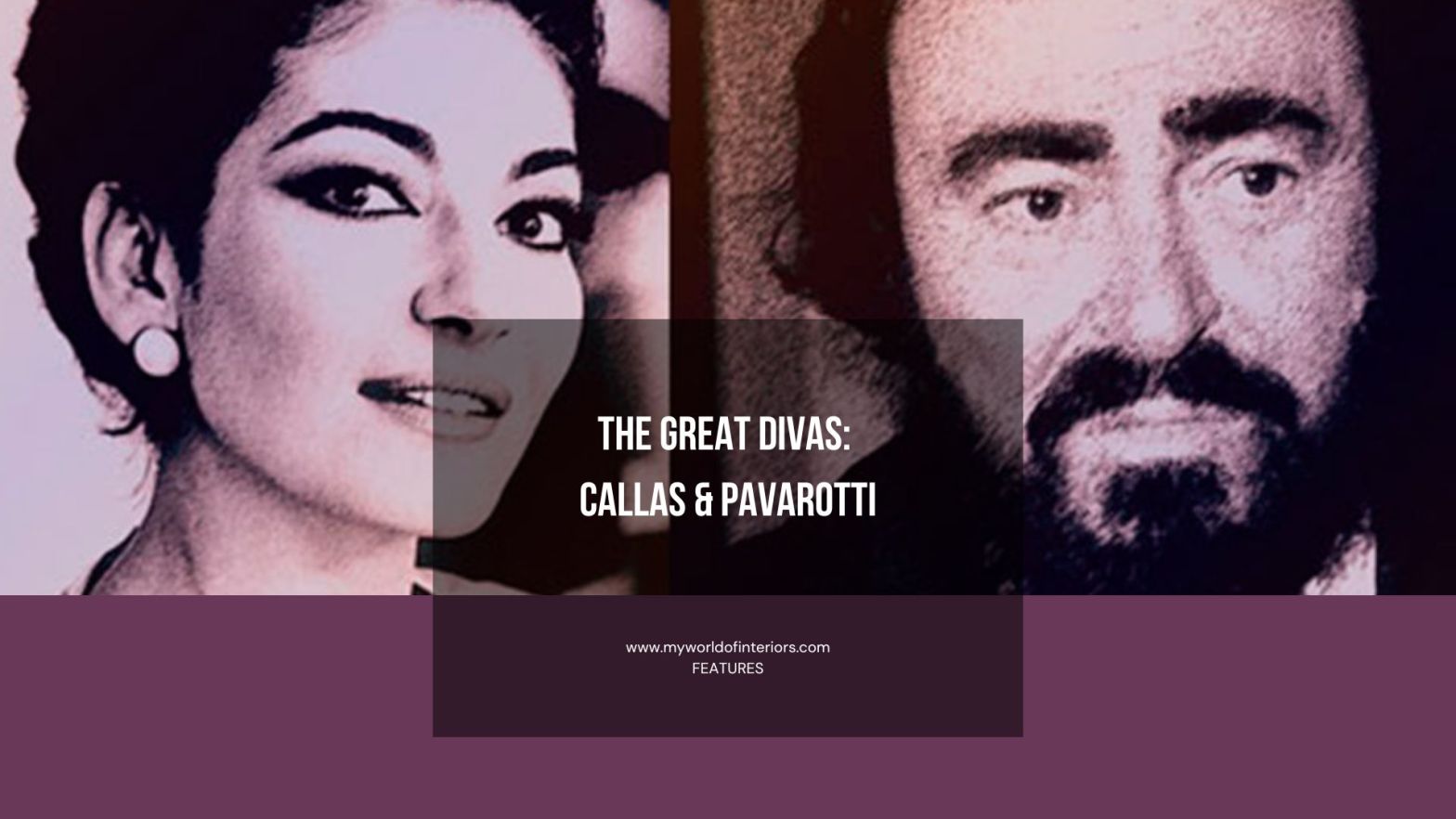
Opera, more than any other art form, thrives on the cult of personality. Its singers are not merely interpreters of music but embodiments of myth: voices that overwhelm, presences that dominate, temperaments that fascinate. To speak of opera’s “great divas” is to conjure not only vocal brilliance but also charisma, drama, and aura. In the twentieth century, two names came to define this larger-than-life category: Maria Callas and Luciano Pavarotti.
Though radically different in temperament and voice, both transformed the public perception of opera. Callas redefined what it meant to be a dramatic soprano, fusing musical intelligence with theatrical intensity. Pavarotti, decades later, brought tenor brilliance into stadiums, crossing into popular culture without diluting artistry. Between them, they made opera matter beyond the opera house.
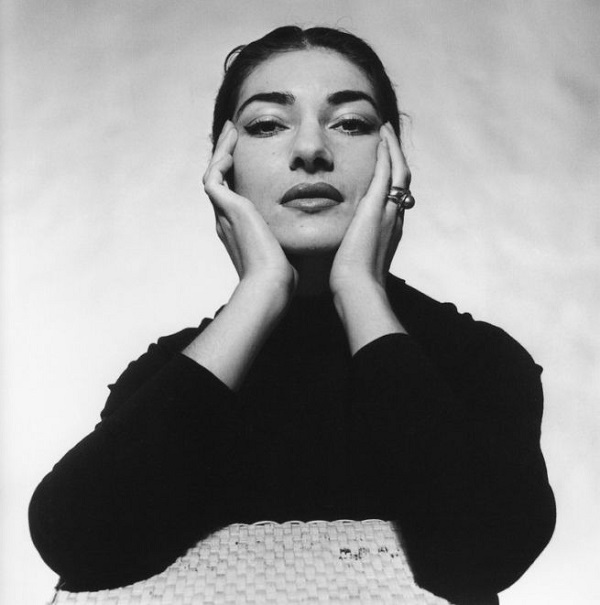
Maria Callas: The Myth of La Divina
Born in New York in 1923 to Greek immigrant parents and raised partly in Athens, Maria Callas was not destined for glamour. Her early years were marked by hardship and discipline. But when she began singing, audiences heard something that transcended circumstance: a voice of astonishing range, capable of both lyric delicacy and volcanic force.
Callas was not the most “beautiful” voice of her generation — in fact, critics sometimes called it uneven, even flawed. What made her unique was the way she wielded it. She treated each note as an act of drama, infusing arias with emotional urgency. For Callas, opera was not about vocal display but about character. In her hands, Norma was not a priestess on a pedestal but a woman torn by conflicting passions. Violetta in La Traviata was not a tragic cliché but a modern woman struggling against fate.
Her intensity reshaped expectations. Before Callas, many sopranos treated opera as vocal athletics; after Callas, singers were judged on their ability to inhabit a role. She revived forgotten works of bel canto composers like Bellini and Donizetti, proving that their operas were not mere showcases of ornamentation but living dramas.
And then there was her life. Callas embodied the diva myth in every sense: tempestuous rehearsals, legendary feuds, a tumultuous affair with Aristotle Onassis. Her public life was inseparable from her art, a melodrama worthy of the stage. When she died in 1977, at just 53, she was already immortal: “La Divina,” the voice of opera’s modern soul.
Luciano Pavarotti: The People’s Tenor
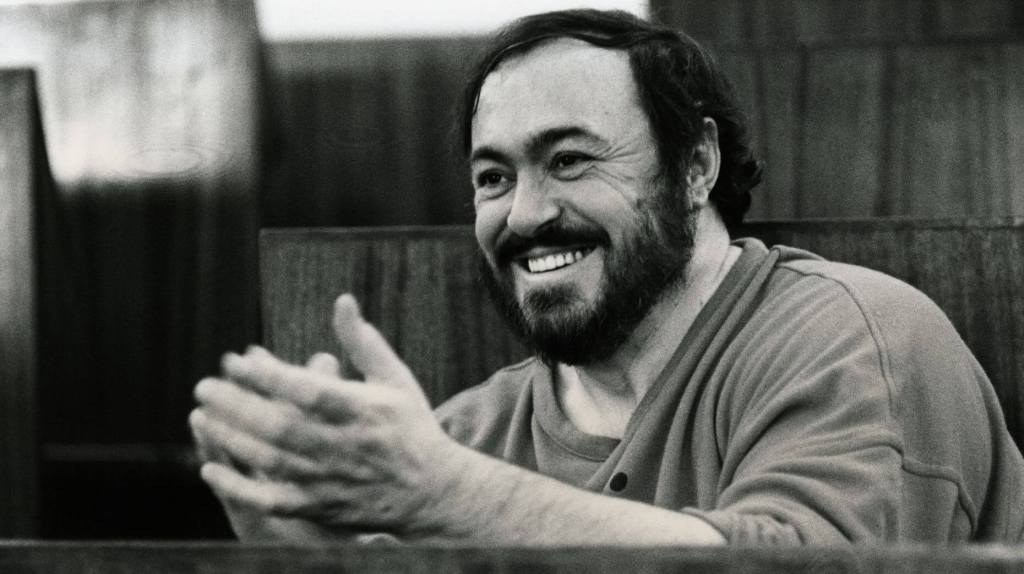
If Callas embodied intensity, Pavarotti radiated generosity. Born in Modena, Italy, in 1935, the son of a baker and an amateur tenor, he carried the traditions of Italian lyric singing into the second half of the century with unmatched warmth. His voice — bright, ringing, effortlessly powerful — seemed designed to soar above orchestras without strain.
Pavarotti’s career was rooted in classical repertoire: Verdi, Puccini, Donizetti. His 1972 performance of “La fille du régiment,” with its nine high Cs tossed off with sunny ease, became legend. But what distinguished him from other tenors was not only technical brilliance but a sense of openness. His sound felt democratic, inviting, capable of reaching both connoisseurs and novices.
That openness extended to his career choices. Pavarotti embraced the stage of television, the stadium, and even pop collaborations. With The Three Tenors (Pavarotti, Plácido Domingo, José Carreras) he helped bring opera to millions during the 1990 World Cup. Critics worried about vulgarity, but audiences thrilled to hear Puccini arias in football arenas. He proved opera could be both art and spectacle.
Like Callas, Pavarotti became larger than life: his handkerchief, his girth, his smile. He made no attempt to disguise himself as an untouchable aristocrat; he was joyfully himself, an emissary of opera’s emotional directness.
Divas as Cultural Figures
What unites Callas and Pavarotti is not their similarity but their singularity. Callas was magnetic in her tragic grandeur; Pavarotti in his radiant generosity. She made opera an art of psychological truth; he made it a public feast of sound.
Both were geniuses at crafting personas that transcended the opera house. They understood that opera, for all its artifice, depends on authenticity — the belief that a voice can carry the weight of human feeling. Their reputations grew because they stood at the crossroads of art and myth, embodying the contradictions of opera itself: fragility and force, excess and sincerity, artistry and celebrity.
Where to Hear Them
- Callas: Her 1953 recording of Tosca with Victor de Sabata conducting is still considered one of the greatest opera recordings ever made. For bel canto, her Norma (1955) remains definitive.
- Pavarotti: His 1972 La fille du régiment at the Met shows his technical ease, while his 1970s Verdi and Puccini recordings capture his voice at its prime. For a taste of his populist genius, the 1990 Three Tenors concert is irresistible.
The Genius of Presence
Opera is an art of voices, but more than that, it is an art of presences. Maria Callas and Luciano Pavarotti remind us that genius in opera lies not only in technique but in the capacity to embody life’s extremes. She was tragedy incarnate; he was joy uncontained.
Together, they remain the twin poles of modern opera: the diva as myth, the tenor as ambassador. To begin with them is to understand why opera, for all its eccentricities, endures. It endures because voices like theirs do not merely perform music — they transform it into human truth.
 My World of Interiors