
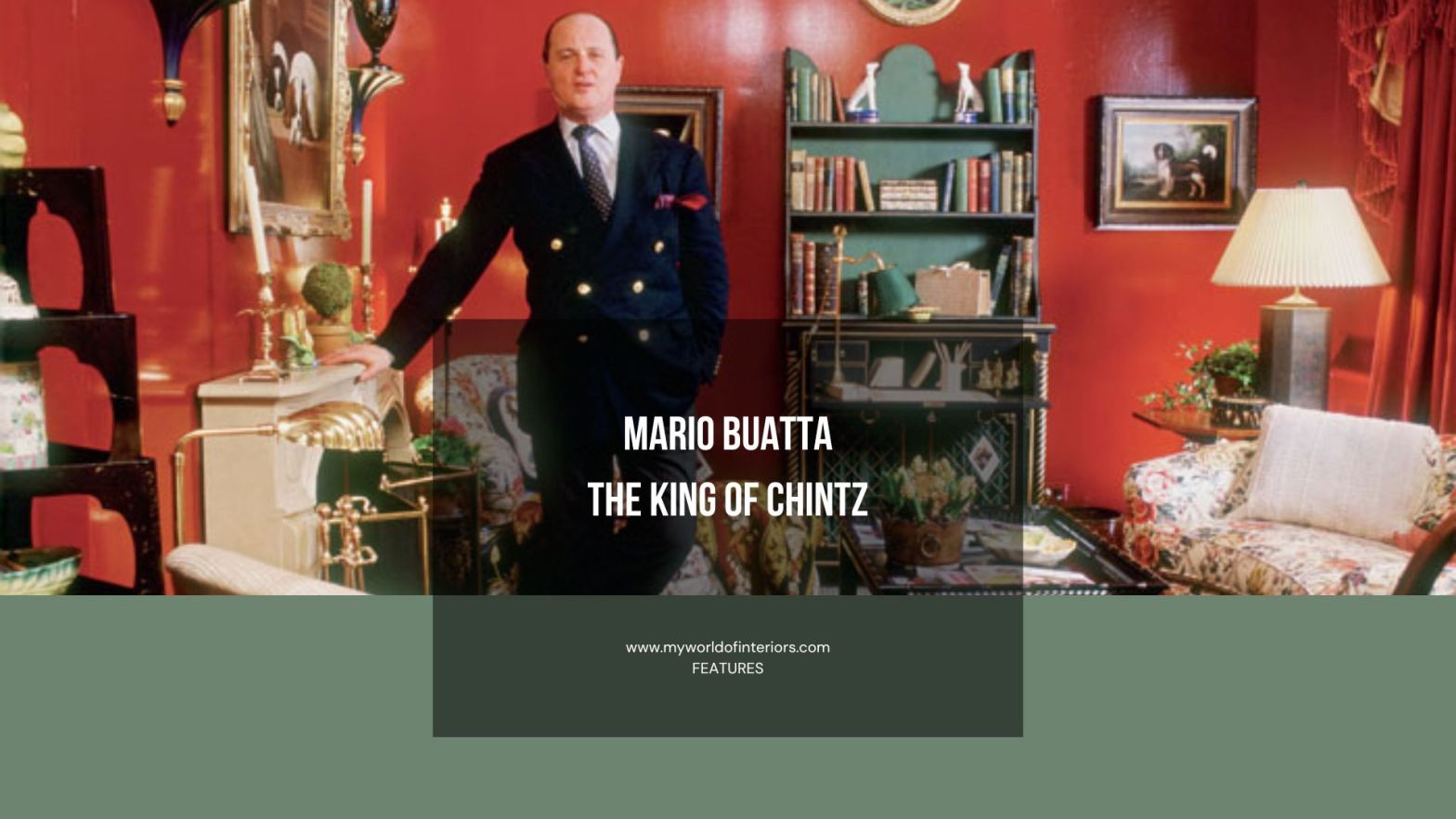
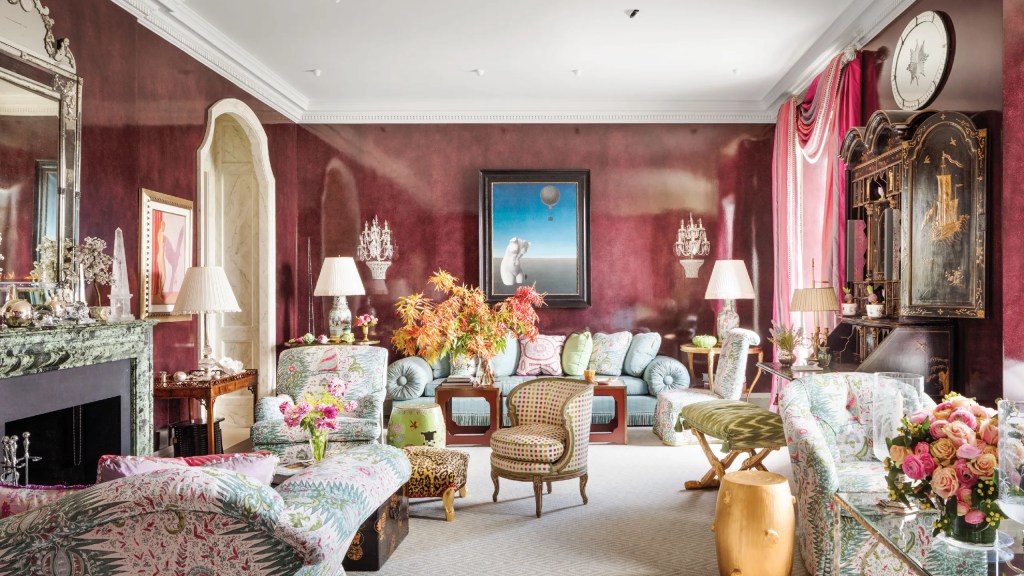
Interior design is often tugged between the poles of austerity and excess, minimalism and maximalism. Mario Buatta — the American decorator who rose to prominence in the 1970s and became one of the most recognizable figures in the field — leaned unapologetically toward the latter. Nicknamed “the Prince of Chintz” (a title he wore with theatrical delight), Buatta embraced flowers, color, whimsy, and layered comfort at a time when pared-down modernism threatened to bleach domestic interiors of personality.
His genius was not simply in choosing fabric swatches but in orchestrating entire environments that felt simultaneously opulent and livable, traditional yet playful. For nearly half a century, Buatta redefined what the Anglo-American country house aesthetic could mean in a New York townhouse, a Fifth Avenue apartment, or a Newport mansion.
Origins of a Tastemaker
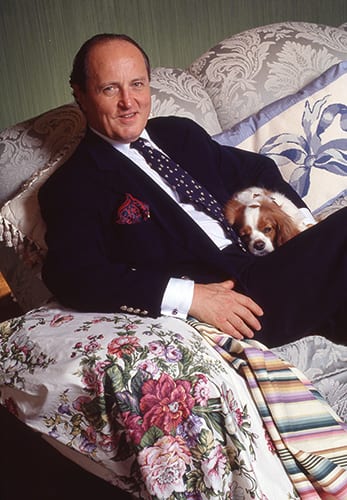
Mario Buatta was born in Staten Island in 1935, into an Italian-American family. His early fascination with decoration was nurtured by visits to the Winterthur Museum in Delaware and by studying the interiors of English country houses. These environments — layered with history, pattern, and comfort — gave him his compass.
After studying at Wagner College and Parsons School of Design, Buatta apprenticed under John Fowler and Sister Parish, absorbing lessons from the English and American grande dames of design. But where they cultivated restraint, he added exuberance. Buatta’s style was never shy.
The Chintz Revolution
Chintz — glazed cotton printed with floral designs — had long been dismissed by modernists as fussy, old-fashioned, even dowdy. Buatta rescued it from ridicule and reimagined it as a vehicle for joy.
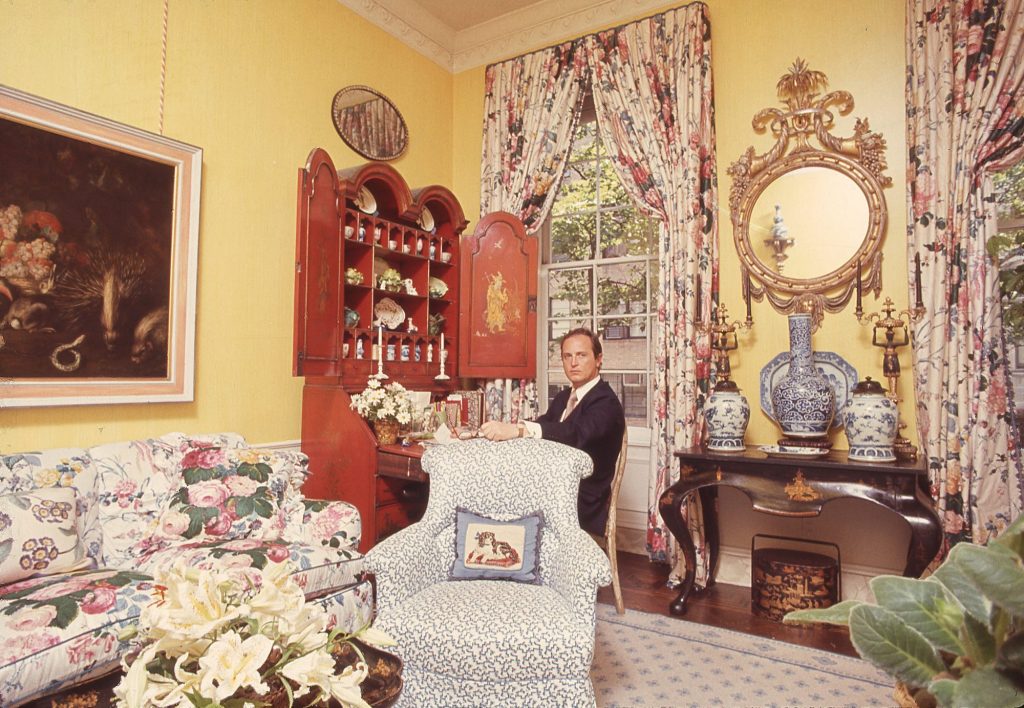
He layered it unapologetically: curtains, upholstery, bed canopies, cushions — sometimes all in the same print. In his hands, repetition became rhythm, and abundance became harmony. His rooms were theatrical but never stiff; he prized comfort as much as beauty. Chairs were meant to be sunk into, sofas to be lived on.
To Buatta, chintz was not kitsch but memory. It recalled English country houses, genteel leisure, and an era when domestic interiors aimed for charm rather than severity. His designs allowed American clients to inhabit that fantasy, enveloping themselves in a floral dreamscape.
Celebrity Clientele
By the 1970s and ’80s, Buatta had become decorator to the rich, famous, and discerning. His clients included Barbara Walters, Henry Ford II, Malcolm Forbes, Mariah Carey, and numerous scions of old money. He was also enlisted for Blair House, the President’s official guest residence in Washington, D.C., cementing his status as a decorator of national importance.
What made Buatta distinctive was that he offered his clients not just rooms but an identity: a space that looked lived in, lush, and storied, even if it had just been installed. His interiors suggested lineage and narrative — a kind of instant heritage.
Humor and Theatricality
Buatta’s reputation extended beyond his rooms. He was a personality, a showman. Famous for arriving late to appointments and armed with jokes, he cultivated an image somewhere between court jester and design genius. He carried toy frogs to leave in people’s houses, insisted that chintz “made people happy,” and styled himself with a tongue-in-cheek flamboyance that kept him both accessible and unforgettable.
This sense of humor was crucial. Buatta understood that maximalism without wit becomes pompous. His genius was to temper extravagance with levity, to create rooms that smiled.
Critical Reception
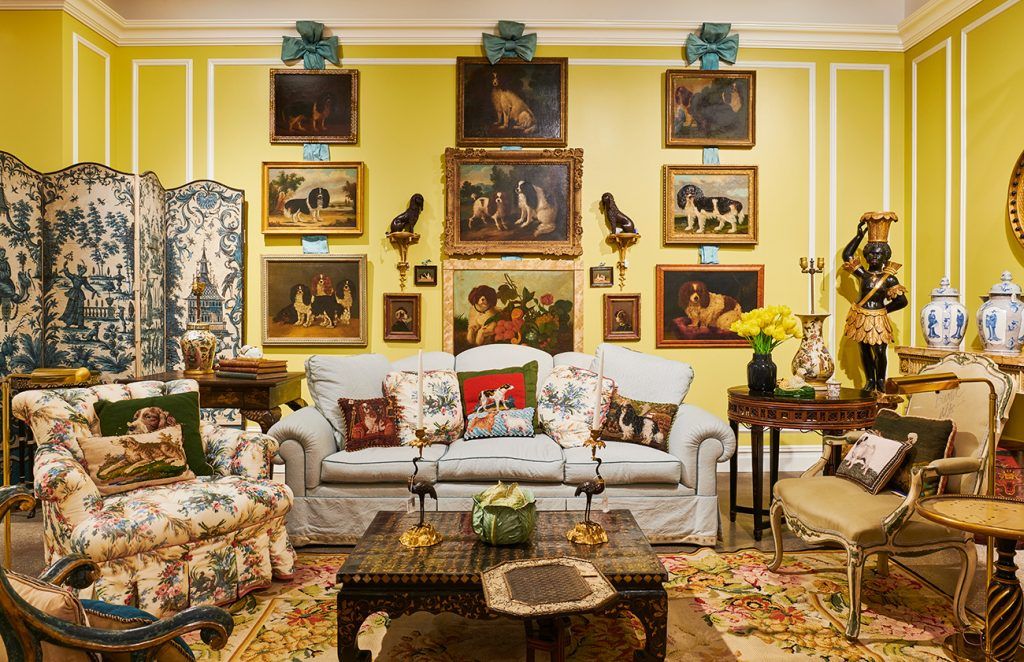
Design critics sometimes dismissed Buatta’s work as nostalgic, a retreat into pastiche. But his defenders rightly argue that he democratized joy. At a time when minimalism and high modernism dominated taste, he insisted that beauty could be lush, romantic, and unabashedly decorative.
Moreover, his influence was lasting. The resurgence of maximalist interiors in the 2010s — layered pattern, bold color, exuberant florals — owes much to Buatta’s unapologetic advocacy. In an age now weary of grey palettes and bare walls, Buatta’s style reads as not old-fashioned but refreshingly optimistic.
A Legacy in Print
In 2013, Buatta finally released a book, Mario Buatta: Fifty Years of American Interior Decoration. The volume is as exuberant as his rooms: more than 400 pages of photographs, anecdotes, and testament to a career that stretched across eras and tastes. It captures not only the visuals of his work but also his wit, his voice, and his singular place in the canon of design.
The Enduring Prince of Chintz
Mario Buatta died in 2018, but his legend endures. He remains a touchstone for designers who want to break free from austerity and embrace decoration as delight. His rooms are remembered not for their restraint but for their warmth; not for their severity but for their embrace of beauty in abundance.
In the pendulum swings of taste, Buatta stands as proof that maximalism, when done with wit and heart, has an enduring place. To enter one of his rooms was to step into a fantasy, one painted in florals, layered in fabrics, and animated by humor.
The King of Chintz was, in the end, also a king of joy.
 My World of Interiors