
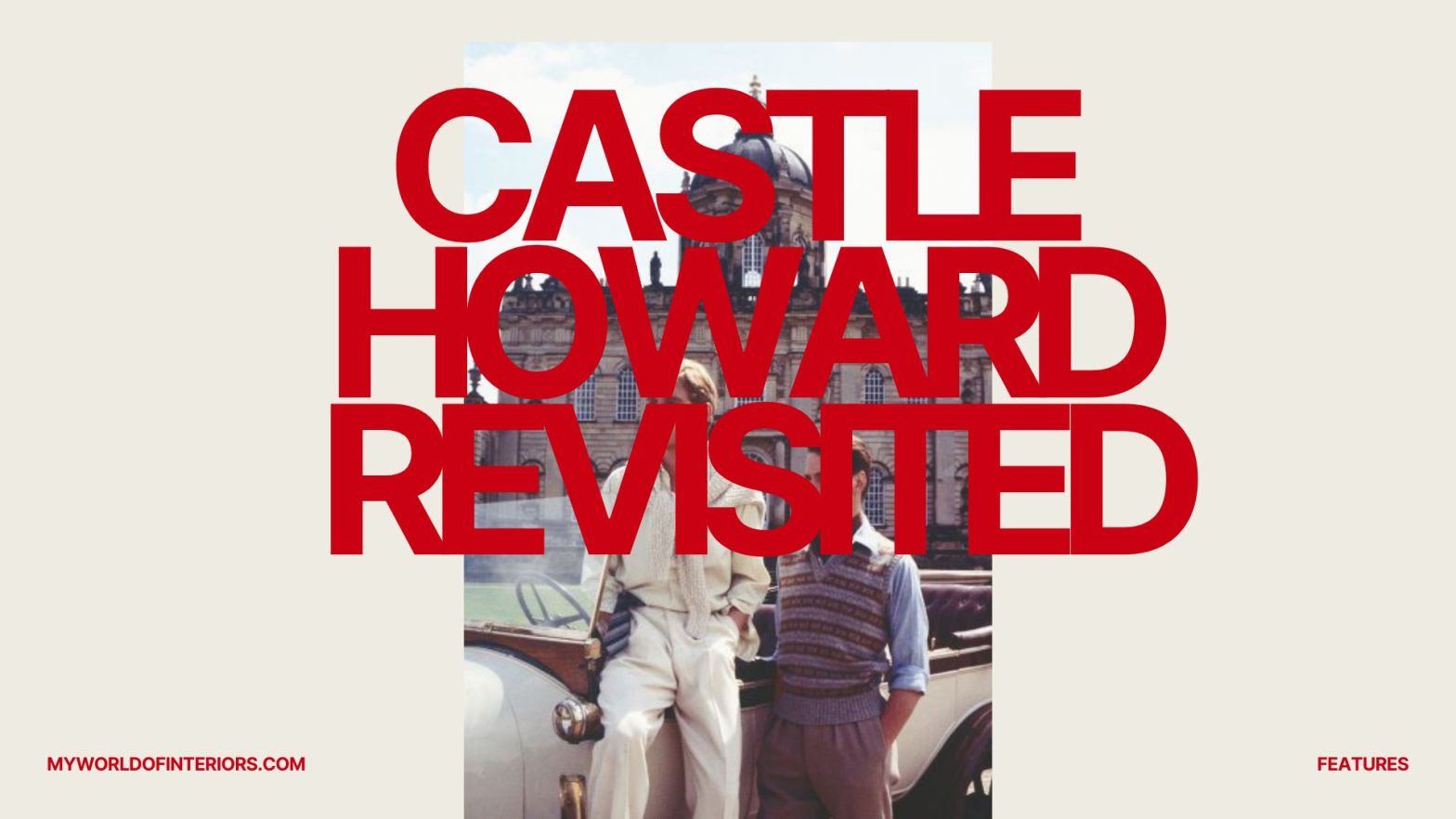
When Remy Renzullo first walked into Castle Howard during a blizzard, he was led on a whirlwind tour of rooms stripped bare, silence echoing through corridors, and snow drifting outside the windows. The client — a stately English house drenched in centuries of art, architecture, and family lore — was asking not simply for renovation, but rebirth. As Renzullo himself quips, in a house like this, “the notion of ‘finished’ doesn’t really exist.”
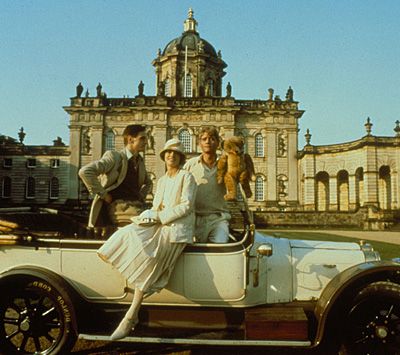
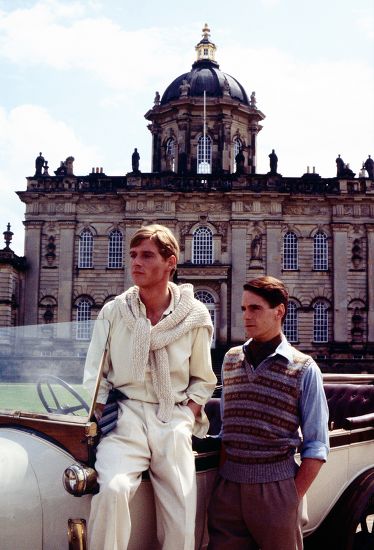
This is the story of how one of Britain’s most iconic country estates — long a stand-in for Brideshead Revisited and the tableau for aristocratic fantasy — is being restored into the 21st century under a fresh vision: one that respects its past, but does not live in its shadow.
A House Steeped in Layers
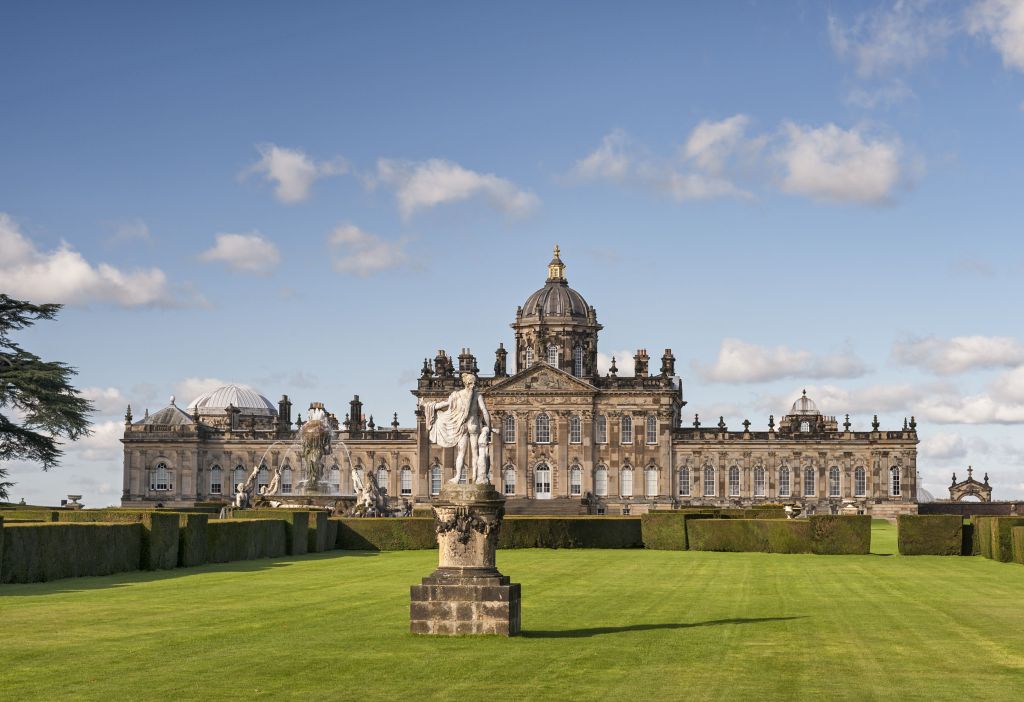
Castle Howard’s inception dates to the early 18th century, when the 3rd Earl of Carlisle commissioned John Vanbrugh (in collaboration with Nicholas Hawksmoor) to build a Baroque monument on the Yorkshire landscape. The result was ambitious, theatrical, and incomplete in parts — over time, successive generations added wings, collections, décor, and idiosyncrasy.
But in 1940, a catastrophic fire gutted much of the central dome, the Great Hall, and key state rooms. Many interiors remained only in fragment or shell for decades. The Tapestry Drawing Room — once the jewel of the state apartments — was one such space: stripped, empty, waiting for resurrection.
The current custodians, Nicholas and Victoria Howard, conceived “Castle Howard’s 21st-Century Renaissance” — a decade-spanning restoration to reimagine, preserve, and revive the house’s interiors and collections.
Renzullo Enters the Frame
When Renzullo came aboard, he was still in his early 30s — a youthful boldness balancing respect for tradition. His introduction to the Howards was almost fated: he reconnected with family during lockdown; when he learned the project was Castle Howard, he journeyed north in winter’s dark and snow.
From day one, Renzullo framed himself as more custodian than decorator. His goal: to let the house feel as though it had always been there in its restored form. “We didn’t want museum period rooms,” says Victoria Howard.
In practice, that meant deep archival research, episodes of detective work, and layering new interventions just lightly enough to feel inevitable. He worked with Alec Cobbe (on hanging and decorative expertise) and architect Francis Terry (known for New Classicism) to orchestrate a coherent dialogue between eras.
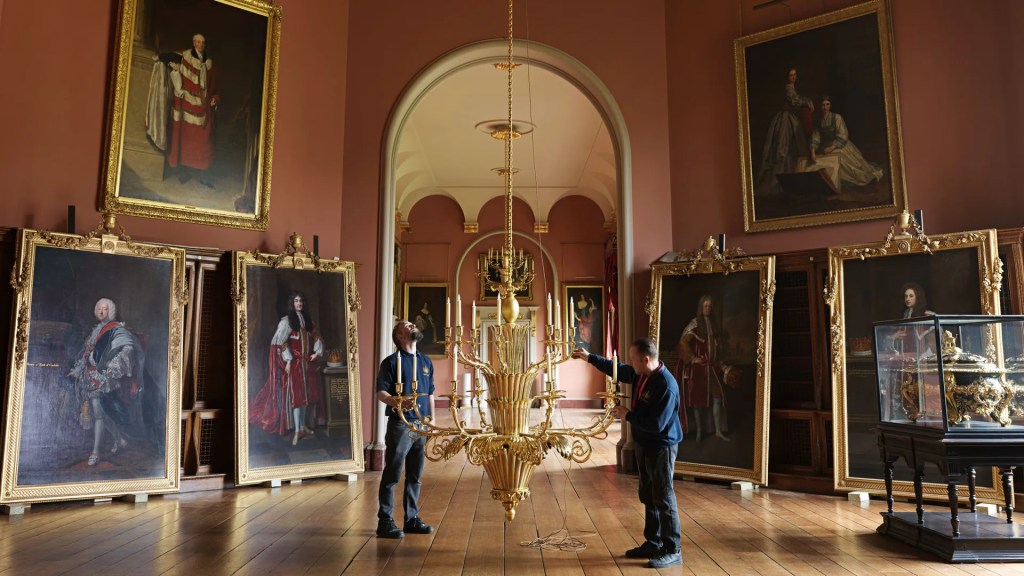
The Tapestry Drawing Room: Resurrection of a Lost Heart
No room better embodies the ambition of this restoration than the Tapestry Drawing Room. Gutted by fire in 1940, it sat as a ruinous shell for 85 years. In 2025, that shell is again inhabited, the tapestries returned to their original display, and the room reinterpreted with care.
Renzullo and team faced enormous gaps in documentation — photographs from the 1920s exist, though the room had already been altered. They looked to Vanbrugh’s broader oeuvre, to continental precedent, and to known decorative vocabularies of the early 18th century to inform design decisions.
The plasterwork in the restored room was modeled in situ by skilled artisans in a historic technique called “running.” One key craftsman, Philip Gaches of Gaches Traditional Plasterers, hand-modeled the new plasterwork inspired by 18th-century stuccatura.
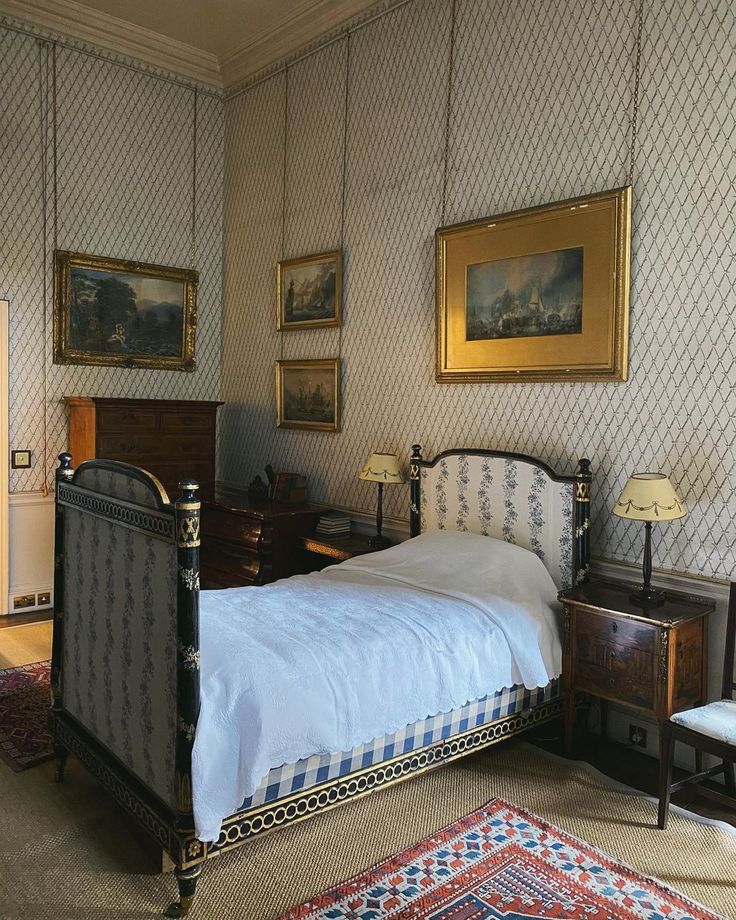
Elsewhere, the Archbishop’s Bedroom was revived with a circa-1780 lit à la polonaise, draped in bronze silk damask from Tassinari & Chatel, while the walls are papered in goose-pattern wallpaper salvaged from the 19th century.
One of the more elegant touches: in the Castle Howard Bedroom, Renzullo sourced archival drawings from the Victoria & Albert Museum (of furniture by John Linnell) and devised bed hangings and gathered-fabric wall treatments that feel long-established, though newly made.
The Rehang, the Long Gallery, the Grand Staircase
The project is not just about interiors, but about narrative — reconnecting art to context. The Long Gallery has been rehung with the castle’s Grand Tour collection, juxtaposing Italian vistas with portraits of the Howard family.
The Grand Staircase, extended as a ceremonial entry, now displays busts and plaster casts alongside original sculpture from the 4th and 5th Earls’ travels. The rehang there introduces the visitor narrative from the entrance itself.
In effect, the restoration reframes the house not as a static museum, but as a theatrical tour — each room a chapter in the story of a living aristocratic house.
Tension, Risk, and the Present Moment
Restoring a house like Castle Howard always carries tension. Do you restore to one moment in time, or allow layering? How do you intervene without overwriting? Renzullo treats the house as a palimpsest — each layer visible yet coherent.
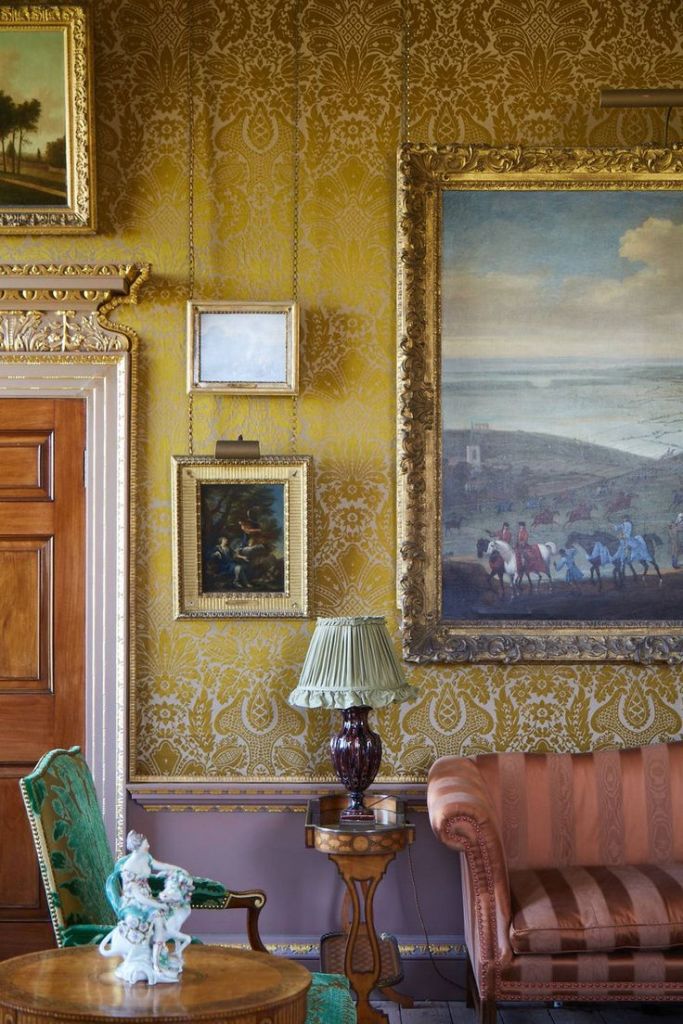
He rejects heavy-handed decoration, instead opting for restraint, texture, and subtle gestures: custom wallpapers, historic weaving techniques, silk draperies that play off soft natural light. The goal: for the rooms to breathe, not suffocate.
The project is also political: in mass appeals to heritage, tourism, and national identity, this country house must belong to public memory as well as private family life. The restoration opens many previously closed rooms to public access starting in 2025.
What It Means for the Future
This reimagining of Castle Howard may set a new standard for how great houses evolve. It shows that ambitious restoration need not mean fossilization. Under Renzullo’s hand, the castle feels both historic and inhabited, serious and joyous.
These are not museum tableaux. These are rooms that wish to breathe. They remind us that heritage is not static admirers behind ropes — it is a living continuum, held by custodians, artisans, and designers who see beauty not as a relic, but as an ongoing proposition.
Renzullo, the Howards, Cobbe, Terry, and a legion of craftspeople have shown that even a 300-year-old house can feel new again — not by erasing time, but by listening to it, then speaking softly back.
 My World of Interiors