
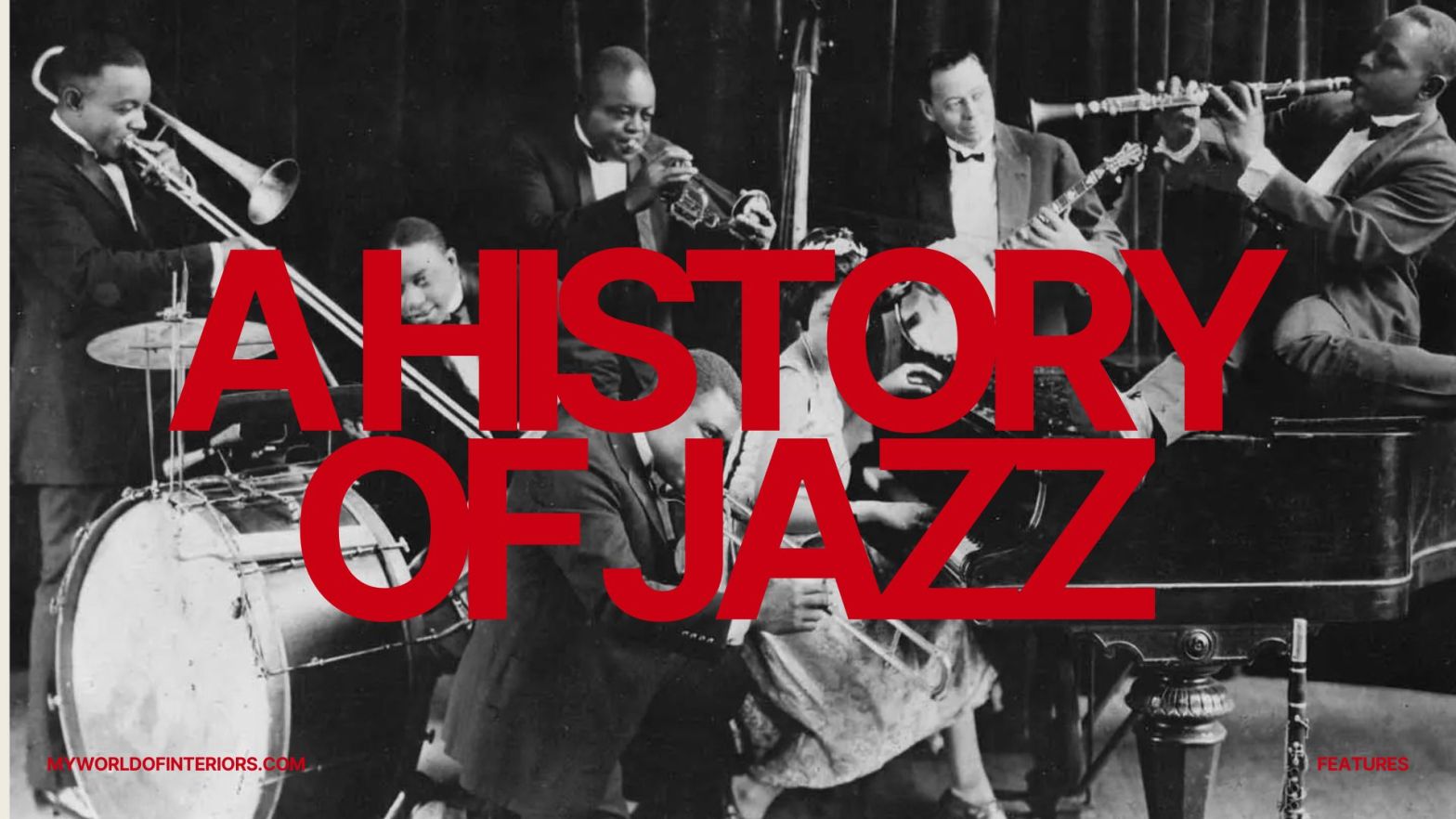
Jazz has always been more than music. It is improvisation, rebellion, conversation, and seduction — the soundtrack of the 20th century’s upheavals and freedoms. Born in the crucible of Black experience in America, it spread across continents, infiltrated fashion, cinema, literature, and politics, and became the lingua franca of modernity. To trace the history of jazz is to trace the history of the modern world itself: syncopated, improvisatory, unfinished, alive.
Roots: New Orleans, Congo Square, and the Blues
The story begins in New Orleans in the late 19th century. Here, African American musical traditions — field hollers, work songs, blues — collided with European harmony and military brass bands. In Congo Square, enslaved Africans and their descendants had once gathered to play drums, dance, and keep alive rhythms that would echo through centuries.
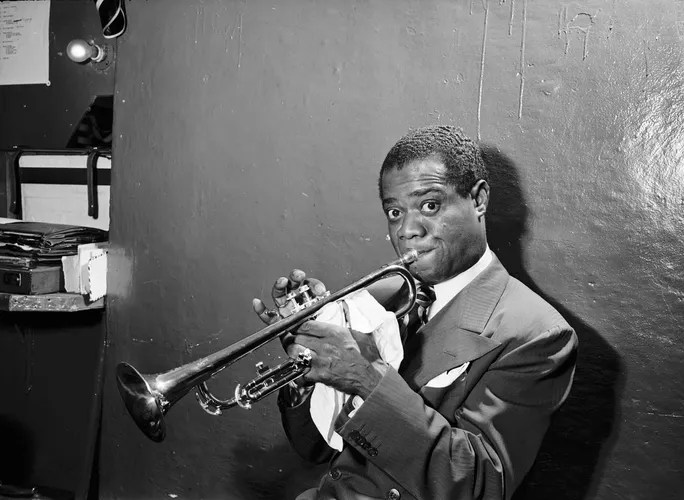
By the turn of the century, ragtime pianists like Scott Joplin and blues singers like Bessie Smith were already laying the foundation. Then came Louis Armstrong, whose trumpet carried both virtuosity and soul, embodying the improvisatory genius that defined jazz.
The Jazz Age: 1920s America
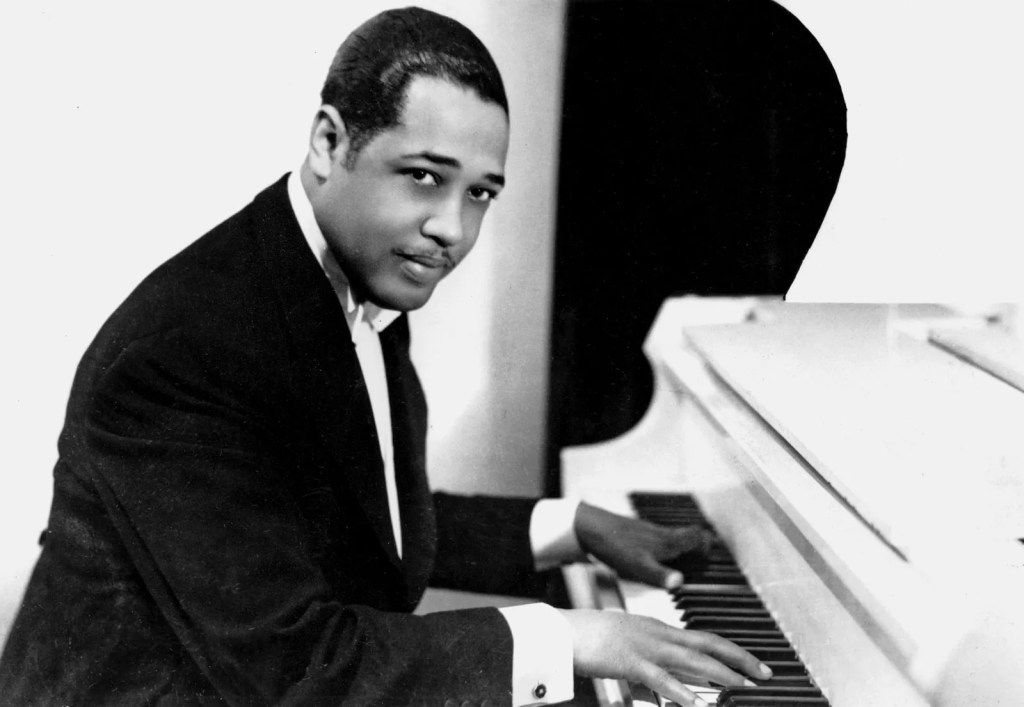
With Prohibition came speakeasies, and with speakeasies came jazz. The 1920s saw the rise of the so-called Jazz Age — a term popularized by F. Scott Fitzgerald, whose novels pulsed with the syncopation of the era. Harlem became the beating heart of this new culture. Duke Ellington played the Cotton Club, Fletcher Henderson’s orchestra swung, and the Harlem Renaissance folded jazz into literature, painting, and politics.
Chicago and Kansas City joined the map. In smoky clubs and dance halls, jazz was both rebellion and release — the soundtrack of flappers, bootleggers, and writers in search of the modern.
Swing and Big Band Brilliance
By the 1930s, jazz had grown up and gone big. Swing, with its driving rhythm and danceable melodies, dominated America. Benny Goodman, the “King of Swing,” integrated his band, breaking barriers even as segregation persisted. Count Basie’s orchestra defined Kansas City swing; Glenn Miller brought jazz to the masses with smooth, radio-ready arrangements.
In these years, jazz became America’s popular music. It was no longer confined to clubs — it filled ballrooms, radios, and movie soundtracks. Yet the tension remained: was jazz entertainment, or was it art?
Bebop Revolution
The answer came in the 1940s, in the cramped after-hours clubs of New York. Dizzy Gillespie, Charlie Parker, Thelonious Monk, and Bud Powell upended the music. They sped it up, twisted the harmonies, made it less about dancing and more about listening. Bebop was radical, intellectual, and defiantly Black. It demanded attention, not as background but as high art.
In smoky clubs like Minton’s Playhouse, bebop redefined jazz as a musicians’ music — a language of virtuosity, invention, and daring. It was modernism in sound, as challenging as Picasso’s cubism or Joyce’s prose.
Cool, Hard Bop, and Modal Turns
The 1950s and 60s brought a flowering of styles. Miles Davis, forever reinventing, moved from the cool restraint of Birth of the Cool to the modal explorations of Kind of Blue. John Coltrane pushed harmony and spirituality to their limits, his saxophone solos becoming meditations on transcendence. Horace Silver and Art Blakey grounded hard bop in gospel and blues.
This was also the era when jazz intertwined with politics. Charles Mingus’s Fables of Faubus was a furious response to segregation; Max Roach’s We Insist! became a civil-rights anthem. Jazz was no longer just modern art — it was protest, identity, and liberation.
Free Jazz and Fusion
By the late 1960s, Ornette Coleman, Cecil Taylor, and Sun Ra were dismantling structure itself. Free jazz was as radical as its name: collective improvisation, dissonance, cosmic philosophy. It reflected both the turmoil and the possibility of the era.
Simultaneously, jazz embraced electricity. Miles Davis’s Bitches Brew (1970) fused jazz with rock, funk, and psychedelia, opening the way for Herbie Hancock, Weather Report, and the fusion wave that brought jazz into arenas and record shops beyond its traditional audience.
Global Soundtrack
As jazz spread, it absorbed. Brazilian bossa nova — João Gilberto, Antonio Carlos Jobim — seduced the world in the 1960s. Afro-Cuban jazz infused Gillespie’s big band with conga and clave. In Europe, artists like Django Reinhardt had already created a Gypsy jazz tradition; later, ECM Records in Germany fostered a cool, spacious European sound.
Jazz was no longer an American export but a global conversation. Today, it thrives in Tokyo clubs, Nordic festivals, Cape Town stages. Its adaptability has kept it alive.
Legacy: Jazz as Style, Spirit, and Survival
What makes jazz endure is its paradox. It is both formal and improvisational, deeply rooted in African American history yet endlessly global, both popular and esoteric. It shaped fashion (zoot suits, flapper dresses, black turtlenecks), literature (Fitzgerald, Kerouac, Baldwin), and film (from Louis Malle to Damien Chazelle). It has been background music, protest music, high art, and pop culture.
Jazz is not one sound but a way of thinking: improvisation as philosophy, collaboration as politics, swing as survival. From Armstrong’s trumpet to Coltrane’s saxophone to Esperanza Spalding’s bass, it remains the art of making something new out of the moment.
More than a century after its birth, jazz still feels modern, because it is never finished. It is always improvising.
10 Essential Jazz Recordings
A curated listening guide — each work a landmark in jazz history.
1. Louis Armstrong – The Complete Hot Five and Hot Seven Recordings (1925–28)
Armstrong’s trumpet revolutionized jazz, turning it from collective improvisation to soloist’s art.
🎧 Listen on Spotify
2. Duke Ellington – Ellington at Newport (1956)
Ellington’s big band at full firepower, revitalizing his career and reaffirming the majesty of swing.
🎧 Listen on Spotify
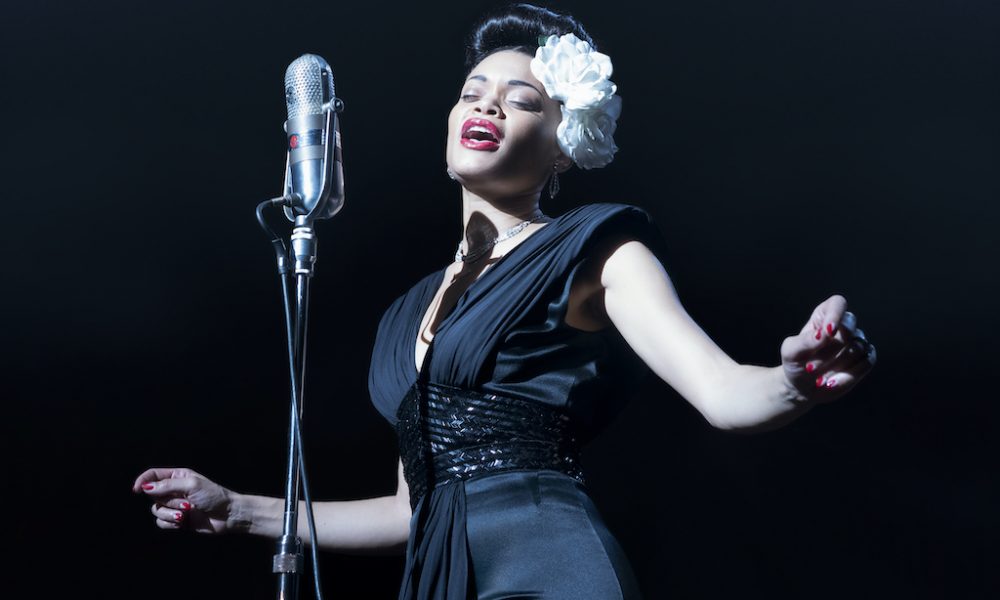
3. Billie Holiday – Lady in Satin (1958)
A haunting late-career masterpiece, her voice fragile but devastatingly expressive.
🎧 Listen on Spotify
4. Charlie Parker and Dizzy Gillespie – Bird and Diz (1950)
The essence of bebop: virtuosity, velocity, and harmonic daring.
🎧 Listen on Spotify
5. Thelonious Monk – Brilliant Corners (1957)
Monk’s angular compositions and off-kilter rhythms push jazz into new modernist terrain.
🎧 Listen on Spotify
6. Miles Davis – Kind of Blue (1959)
Perhaps the most famous jazz album ever, a modal masterpiece with Coltrane, Cannonball Adderley, and Bill Evans.
🎧 Listen on Spotify
7. John Coltrane – A Love Supreme (1965)
A spiritual suite that remains one of jazz’s most transcendent statements.
🎧 Listen on Spotify
8. Charles Mingus – Mingus Ah Um (1959)
Fiery, political, and inventive; a landmark in jazz composition.
🎧 Listen on Spotify
9. Herbie Hancock – Head Hunters (1973)
A funk-infused fusion record that expanded jazz’s reach to new audiences.
🎧 Listen on Spotify
10. Esperanza Spalding – Emily’s D+Evolution (2016)
Proof that jazz continues to evolve: a blend of funk, poetry, and virtuoso bass work.
🎧 Listen on Spotify
 My World of Interiors