
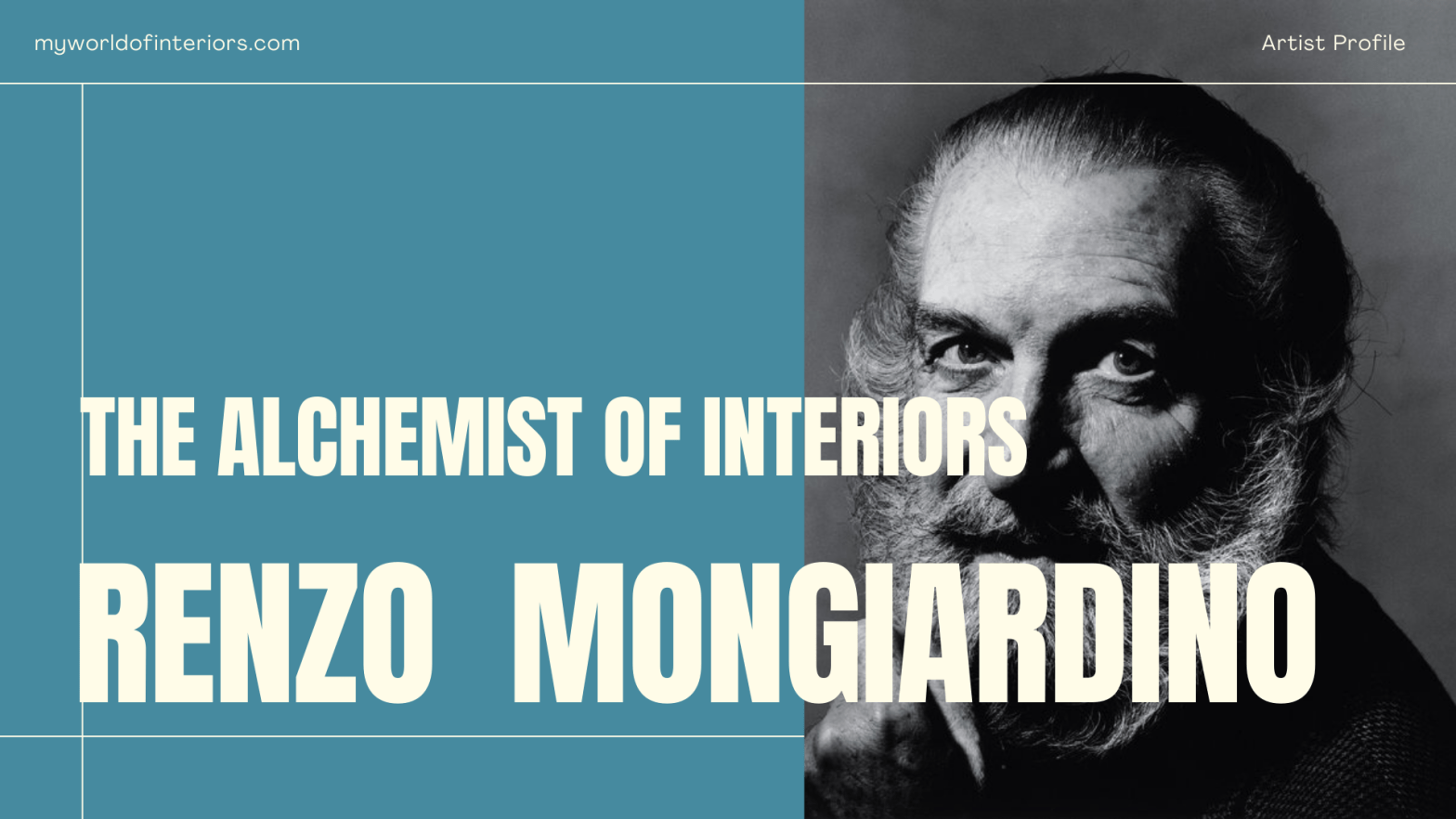
In the pantheon of 20th-century design, few names carry the mystique of Renzo Mongiardino. Architect, set designer, decorator, and illusionist, he transformed interiors into immersive worlds where memory, theater, and craftsmanship converged. To step into a Mongiardino room was to enter a space both ancient and imagined — a palimpsest of cultures layered with painterly wit.
The Architect of Atmosphere
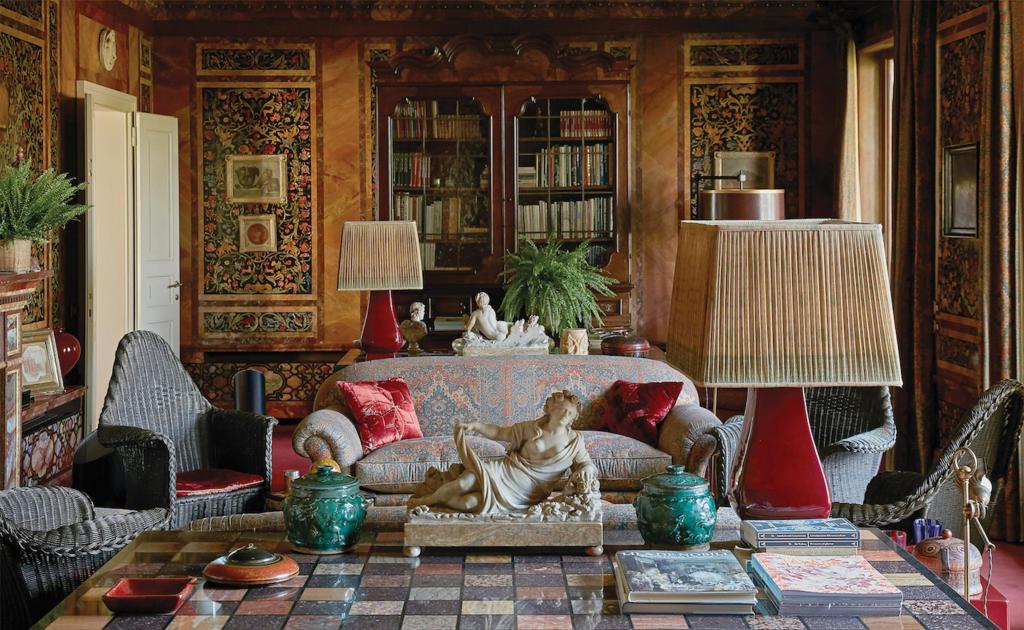
Born in Genoa in 1916 and trained as an architect in Milan, Mongiardino began his career designing stage sets for opera and theatre. That theatrical sensibility — an instinct for drama, narrative, and mise-en-scène — never left his interiors. Unlike the rigid modernists of his generation, he rejected minimalism in favor of abundance: velvets, murals, trompe-l’œil, patterned textiles, carved wood, objets trouvés. His work was less about architecture than about atmosphere.
A Language of Illusion
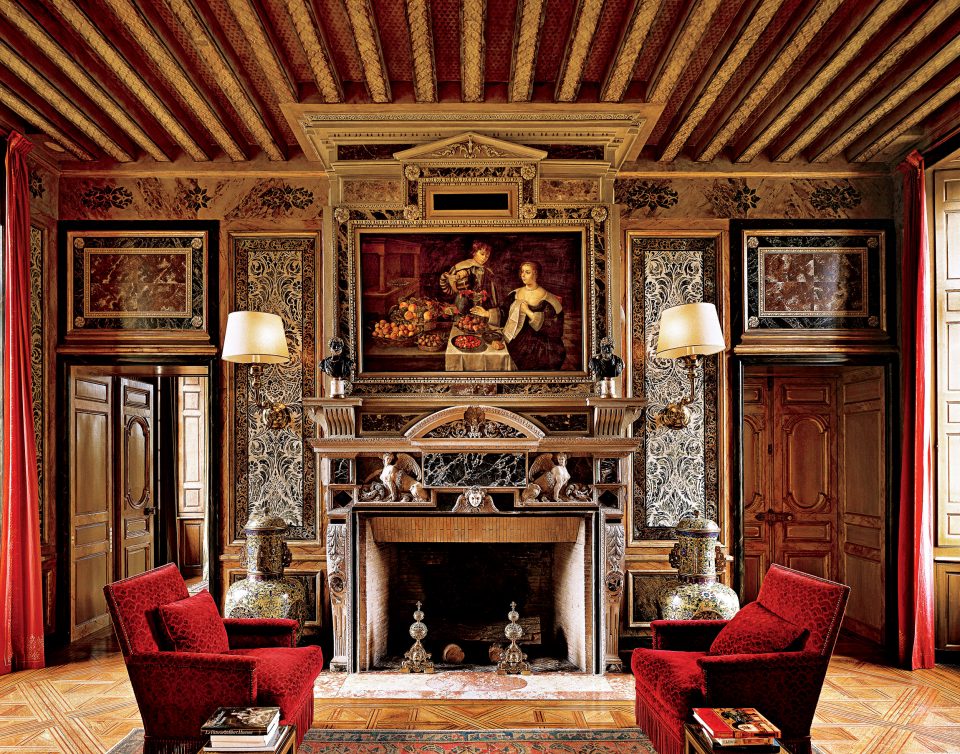
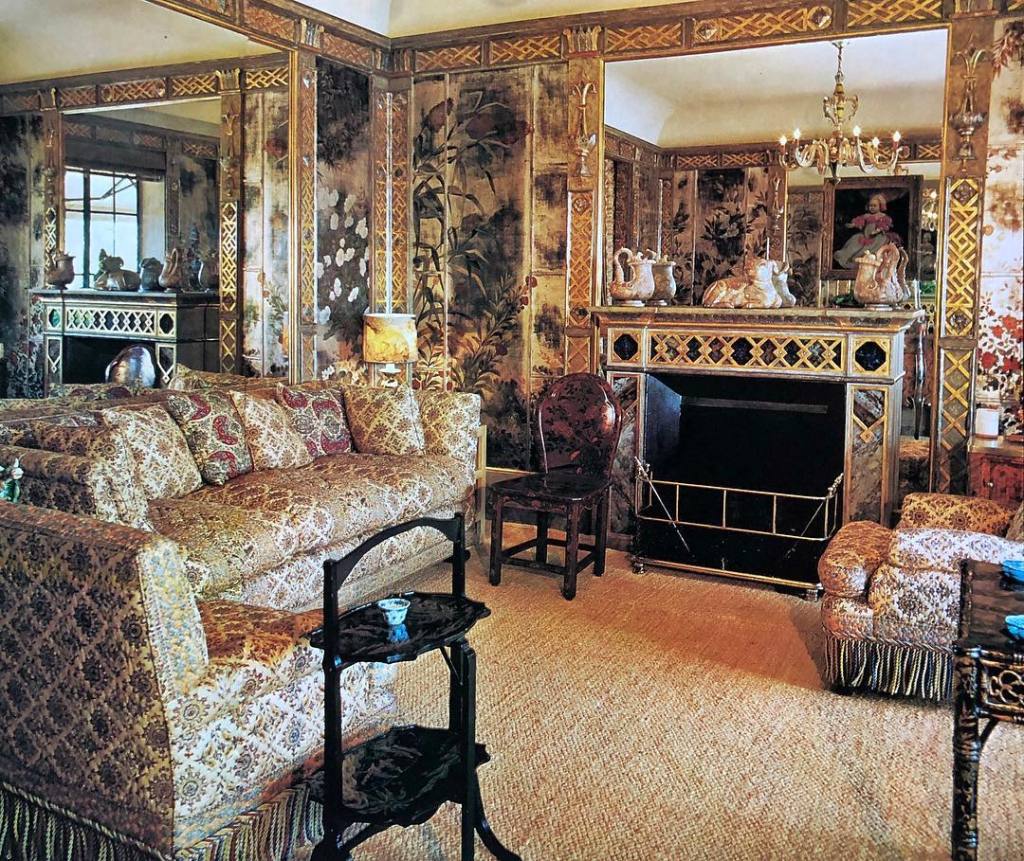
Mongiardino’s genius lay in conjuring entire worlds through illusion. His walls became canvases for frescoes, landscapes, or fictive architecture painted by hand. He collaborated with a small army of artisans, many trained in traditional Italian decorative arts, to execute painstaking techniques — marbling, stenciling, faux stone — that gave his spaces the texture of antiquity without slavish reproduction.
For Mongiardino, rooms were not simply decorated; they were staged. He blurred the line between authenticity and fantasy, creating environments that felt timeless, yet slightly unreal. A Mongiardino interior did not copy history — it dreamed it.
Rooms for Legends
His client list reads like a cultural who’s who of the late 20th century. Gianni and Marella Agnelli called on him to shape their legendary apartment in Turin. Lee Radziwill’s Paris residence was layered with his painted illusions and rich textiles. For Rudolf Nureyev, he conjured Orientalist fantasies; for Aristotle Onassis, palatial suites afloat on the Christina O yacht. His projects extended from Milanese palazzi to Manhattan townhouses, each an essay in layered opulence.
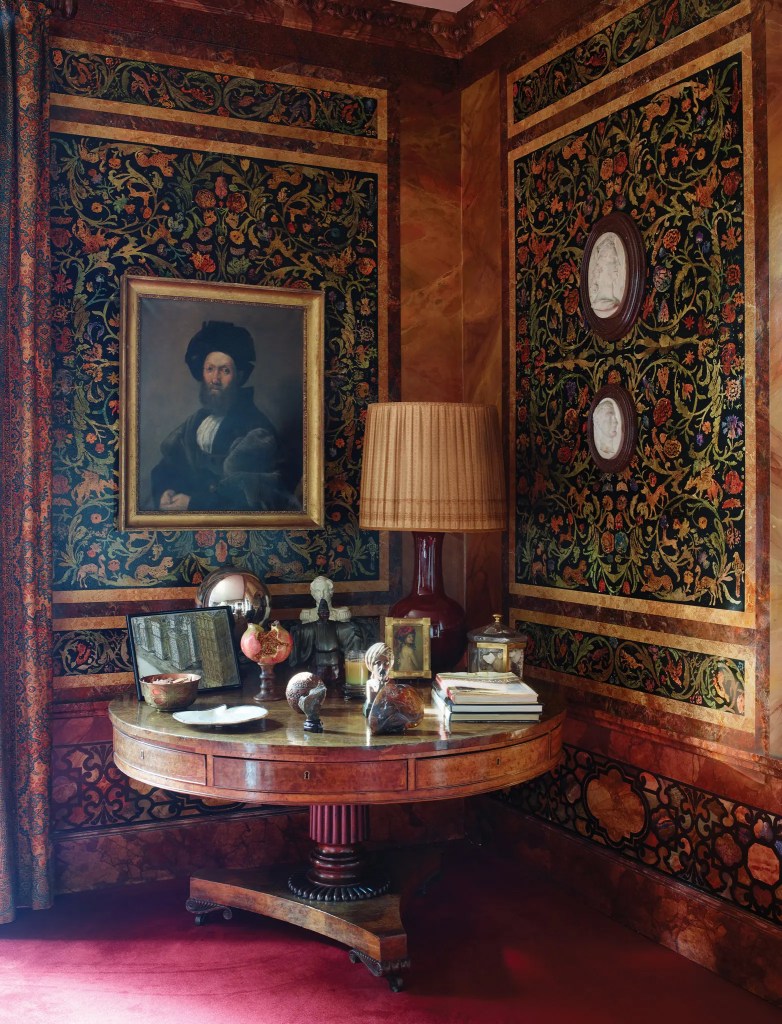
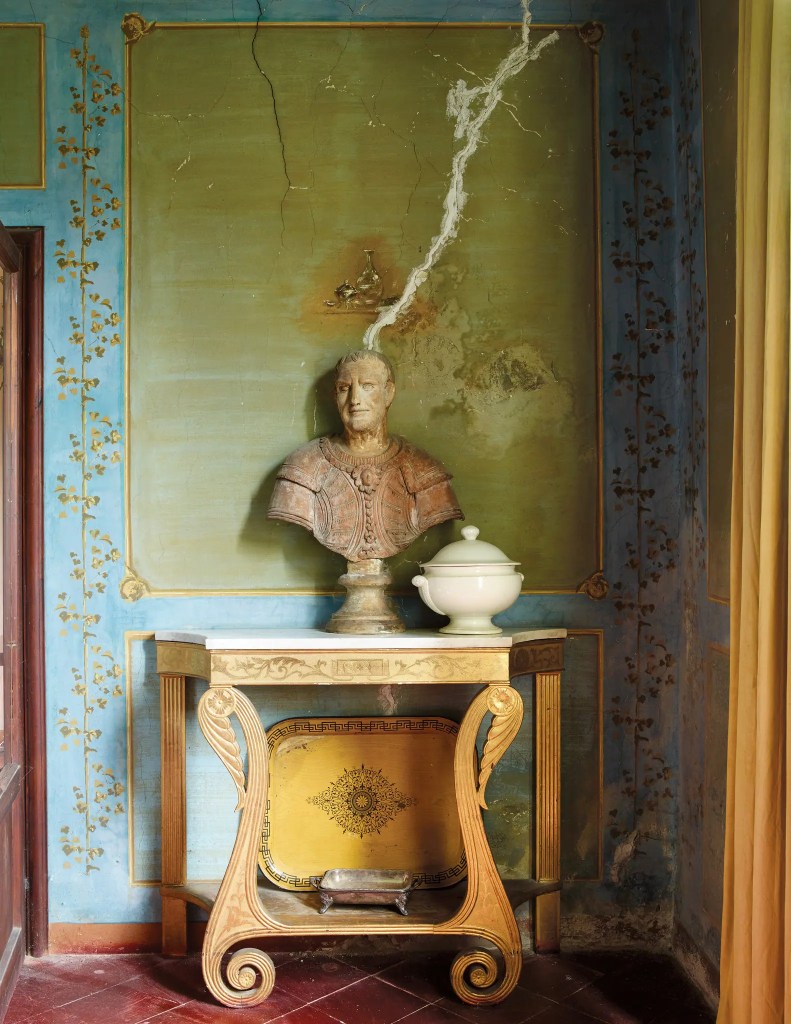
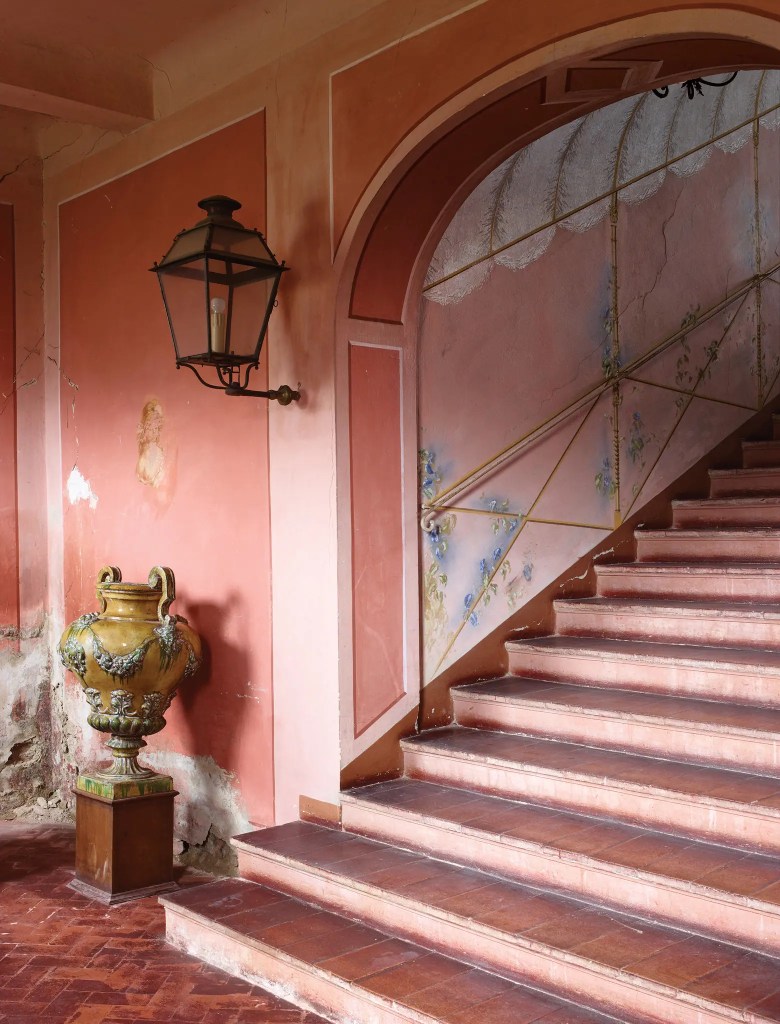
5 Iconic Mongiardino Projects
1. Gianni and Marella Agnelli’s Apartment, Turin
Perhaps his most famous commission, the Agnelli residence was a manifesto of Mongiardino’s style. Painted illusionistic panels, layers of pattern, and subtle references to Renaissance interiors gave the apartment a scholarly richness. It remains one of the touchstones of late 20th-century Italian decoration.
2. Lee Radziwill’s Paris Residence
Radziwill’s home on the Rue de Courcelles became a salon of trompe-l’œil fantasy. Mongiardino transformed modest architectural bones into palatial backdrops, using painted wood graining, textiles, and atmospheric lighting to create a sense of lived-in grandeur. It remains one of the most photographed of his works.
3. Rudolf Nureyev’s Homes (Paris and elsewhere)
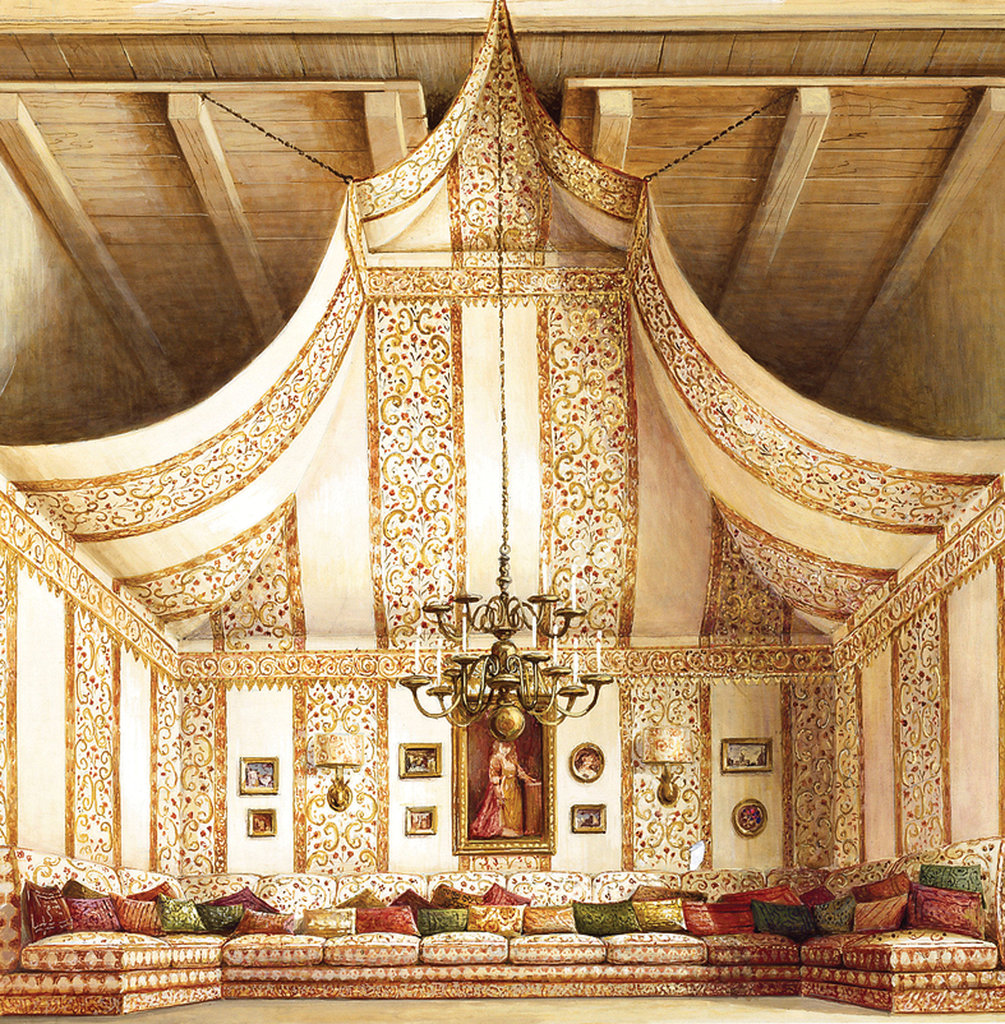
For the ballet legend, Mongiardino unleashed a maximalist Orientalism: deep colors, heavy textiles, and layers of Eastern motifs. These rooms embodied Nureyev’s own theatricality, merging the exotic with the decadent to create spaces as flamboyant as their inhabitant.
4. Aristotle Onassis’ Christina O Yacht
Onassis enlisted Mongiardino to transform his yacht into a floating palace. The result was a suite of salons layered in marble effects, intricate woodwork, and theatrical detailing — a reminder that for Mongiardino, even the sea could be staged as spectacle.
5. The Milanese Palazzi and Manhattan Townhouses
Beyond celebrity commissions, Mongiardino’s quiet triumphs were in private Milanese palazzi and discreet Manhattan homes, where he adapted his maximalism to suit each patron. These projects often revealed his most subtle touches: painted niches, faux marbles, libraries that felt centuries old though newly built.
Beyond Decoration
Mongiardino’s influence was profound not only for his interiors but for the philosophy they embodied. At a time when modernist austerity dominated design discourse, he proved there was intellectual rigor in ornament. His rooms were scholarly yet sensual, filled with literary references, echoes of Renaissance painting, and fragments of Eastern art. He elevated eclecticism to high art, showing that atmosphere and emotion could be as architecturally significant as structure.
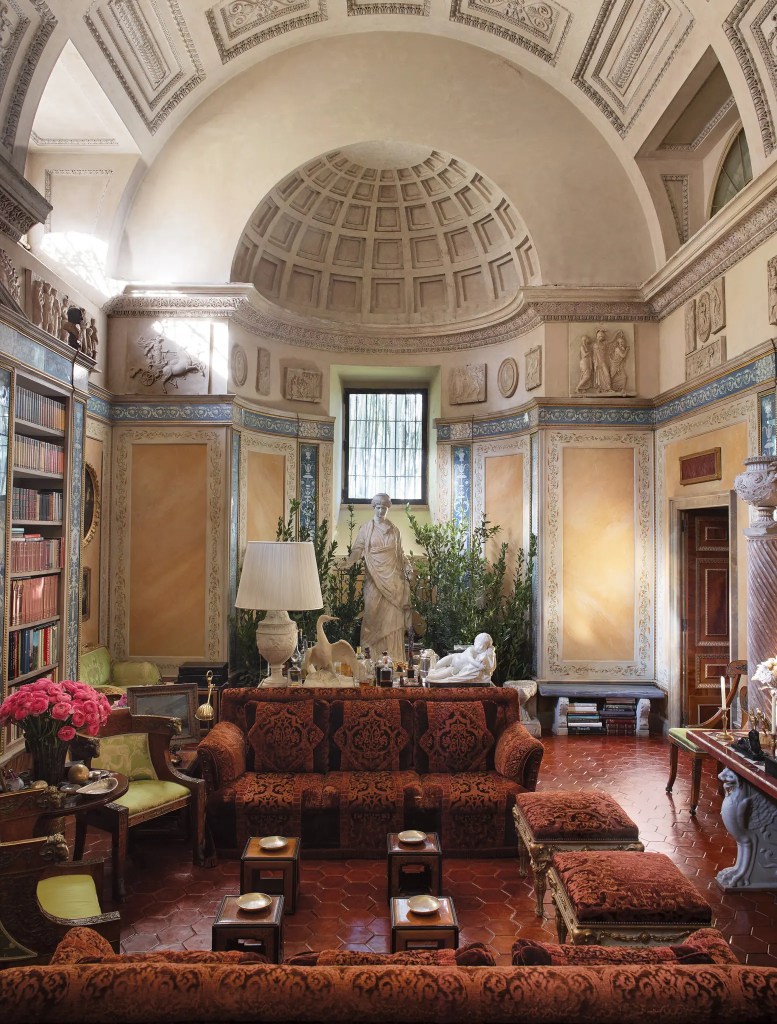
The Legacy of a Dreamer
Renzo Mongiardino died in 1998, but his legend has only grown. His work is chronicled in volumes such as Roomscapes and Renaissance Redux, and contemporary decorators still cite him as a lodestar. His interiors are celebrated not merely for their beauty but for their philosophy: that a room should transport, seduce, and expand the imagination.
In today’s climate of pared-down minimalism and Instagram-ready neutrality, Mongiardino feels radical once more. His maximalism was never about excess for its own sake; it was about creating spaces where culture, history, and fantasy could coexist. To sit in one of his rooms was to be reminded that design is not only shelter but theatre — a stage for life lived as art.
Renzo Mongiardino remains what he always was: the alchemist of interiors, turning walls into worlds, and decoration into dream.
 My World of Interiors