
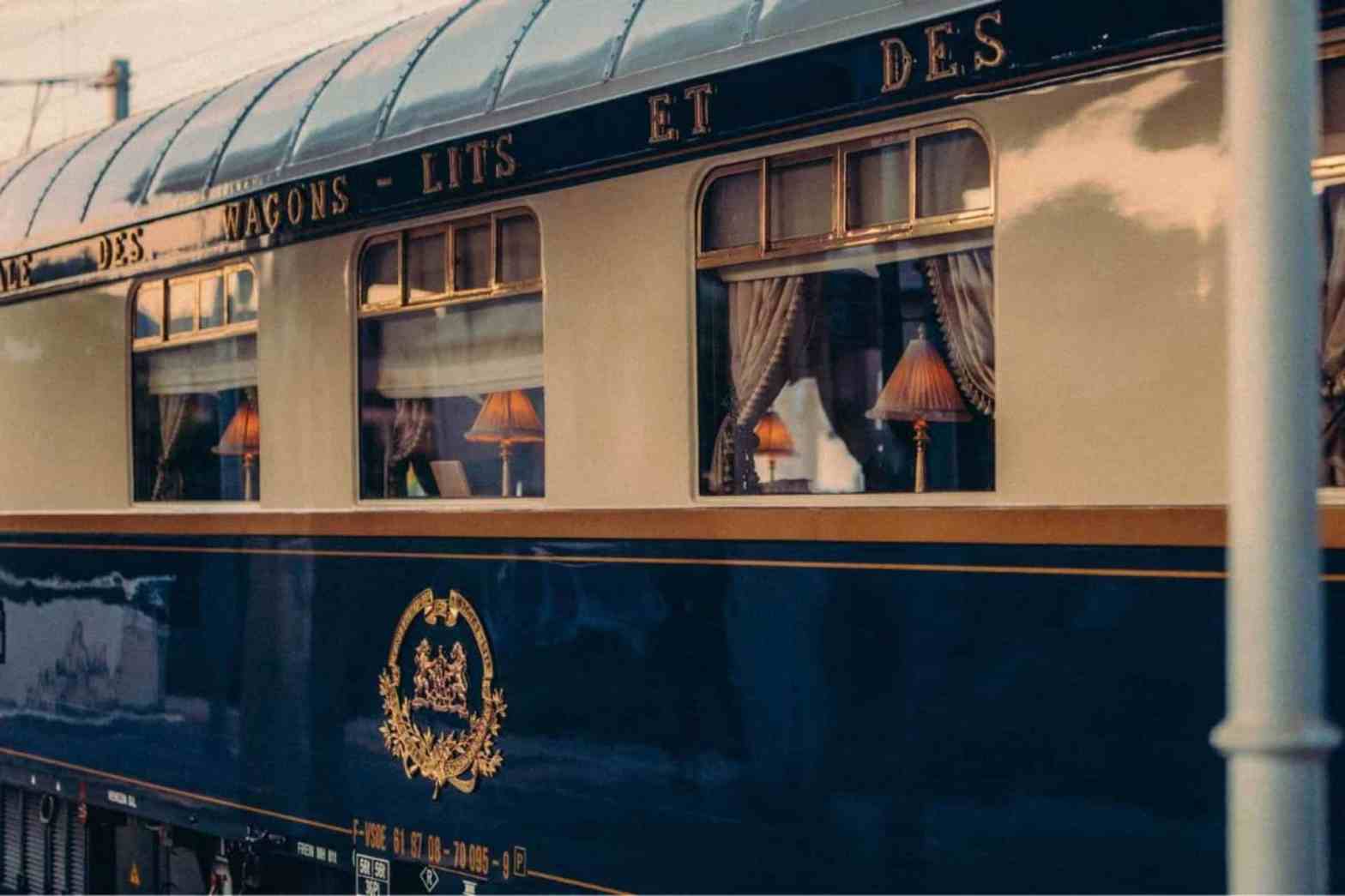
The Orient Express has always stood for more than mere travel. Since its first runs in the nineteenth century, it has represented romance, craftsmanship, and the art of slow luxury. Over time, its glamour faded—but in recent years, the Venice Simplon-Orient-Express (VSOE) has undertaken a renaissance. With new suites, carriages, and artful redesigns, it has reawakened the legend.
From Golden Age to Restoration
When Georges Nagelmackers launched the original Express d’Orient in 1883, he set a standard: travel not just as transport, but as experience. Sumptuous dining cars, luxurious cabins, polished wood panelling, velvet upholstery, and artisanal detail were the hallmarks of the journey. Over the decades, war, changing borders, and the rise of faster travel reduced the original routes, and by 2009 the last regular Orient Express sleeper was retired.
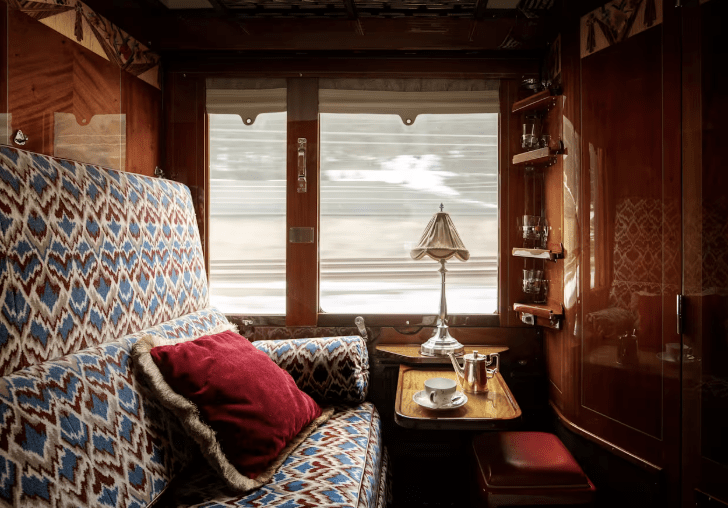
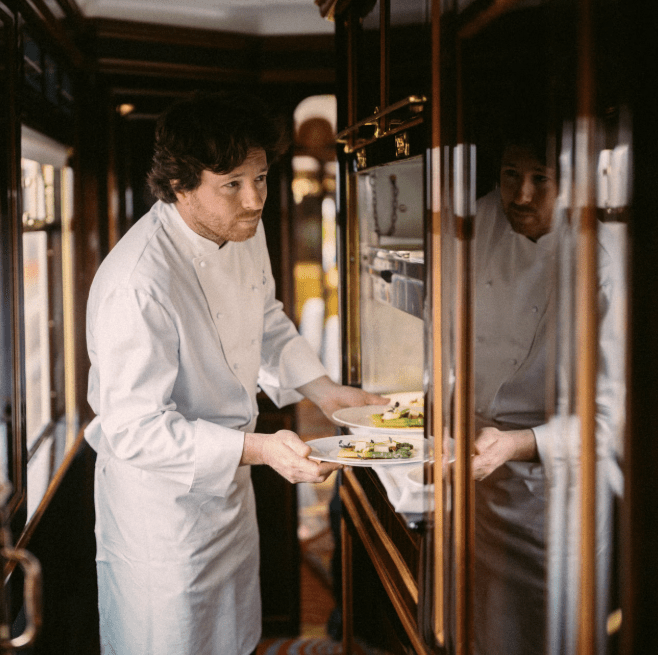
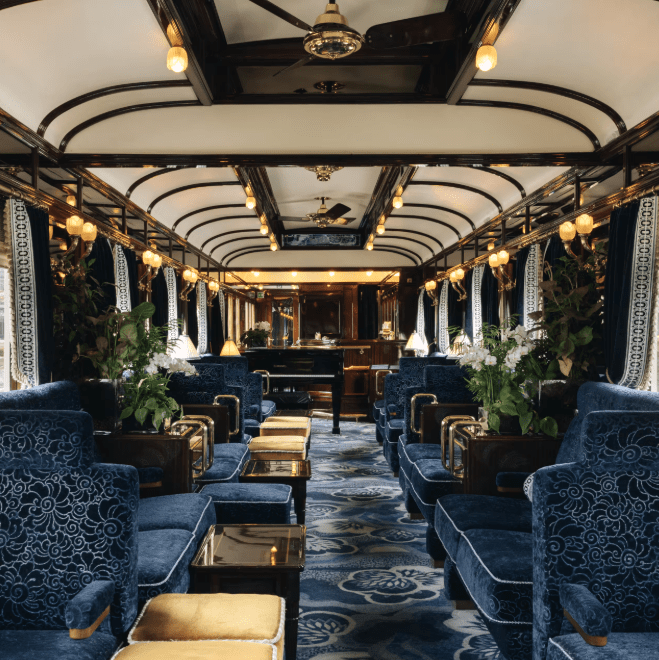
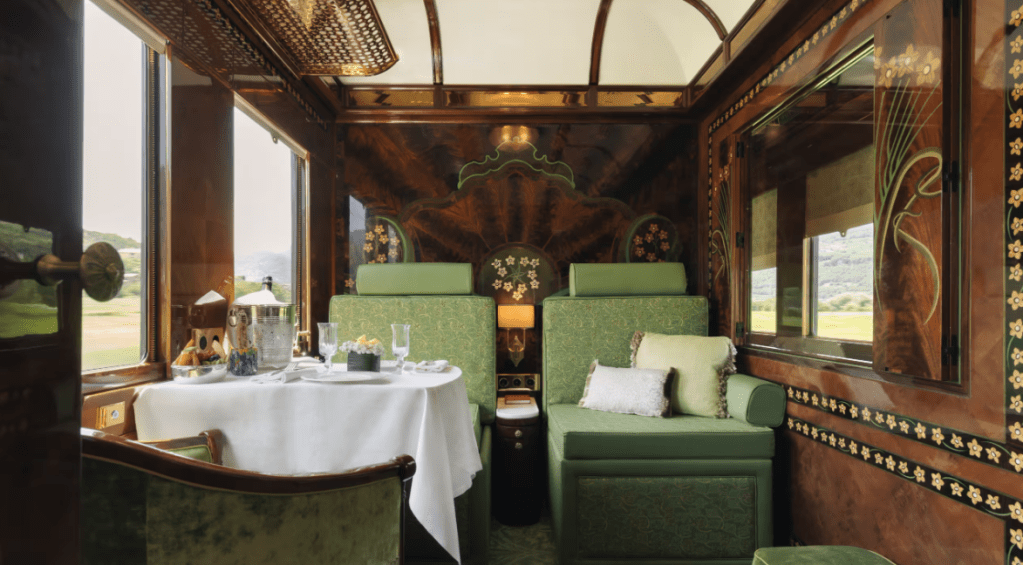
The Venice Simplon-Orient-Express revived that legacy in the early 1980s, restoring 1920s and 30s carriages and returning them to the rails. It was not a museum piece but a living theatre of luxury, where passengers could once again dress for dinner, sip champagne in Lalique-lit dining cars, and sleep beneath polished wood marquetry.
Modern Revival: New Suites and Artistic Vision
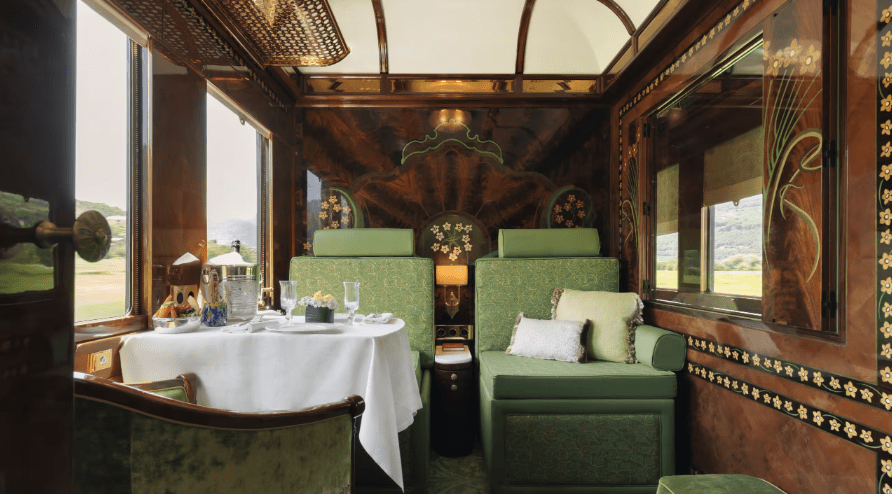
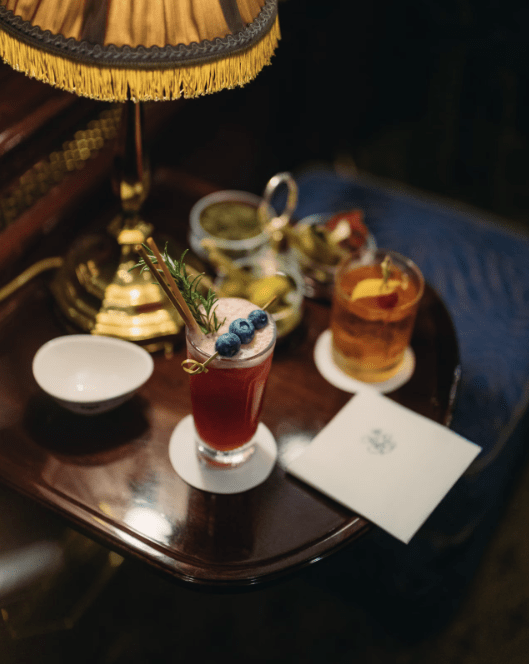
Today the VSOE is entering a new chapter. Alongside its iconic Historic Cabins, it has unveiled Grand Suites, Suite Class compartments, and the extraordinary artist-designed carriage L’Observatoire. These additions bring fresh glamour to the rails while preserving the romance of the past.
The Designers Behind the New Interiors
Wimberly Interiors and the Grand Suites
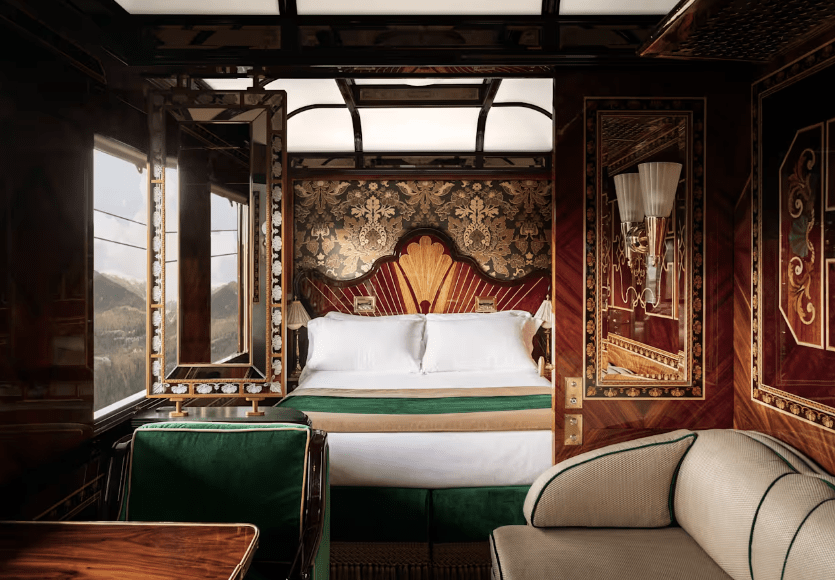
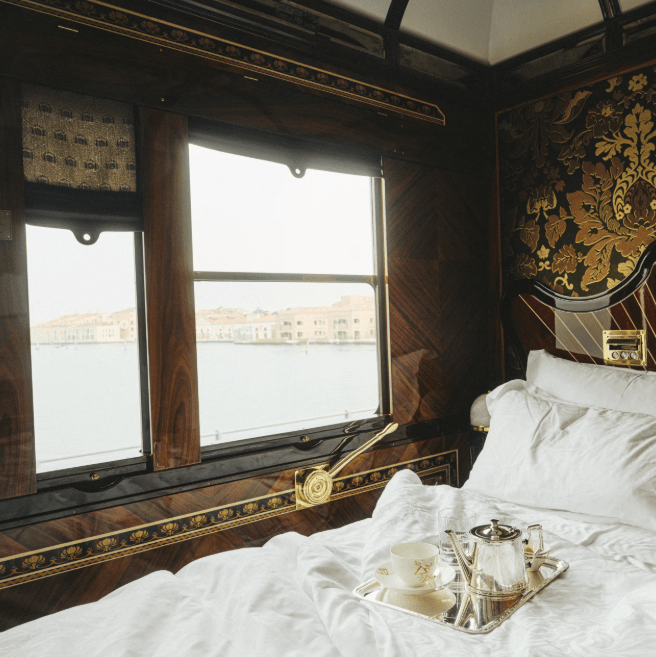
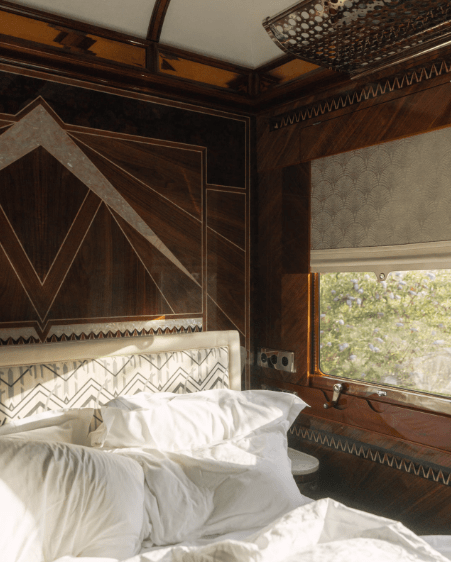
The firm Wimberly Interiors oversaw the creation of the Grand Suites, inspired by the train’s original Art Deco and Belle Époque heritage. Each suite—Paris, Venice, Istanbul, Vienna, Prague, and Budapest—evokes the culture of its namesake city. Rich woods, marquetry, bespoke brocades from Rubelli, and handcrafted furniture create interiors that are sumptuous yet refined. Master artisans like Philippe Allemand contributed inlay work, ensuring the suites retained historic authenticity while offering modern comfort.
JR and L’Observatoire
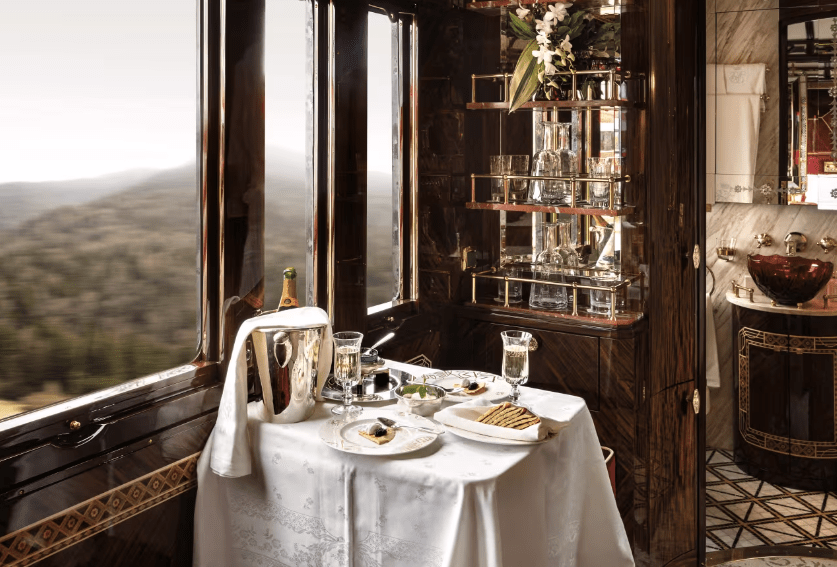
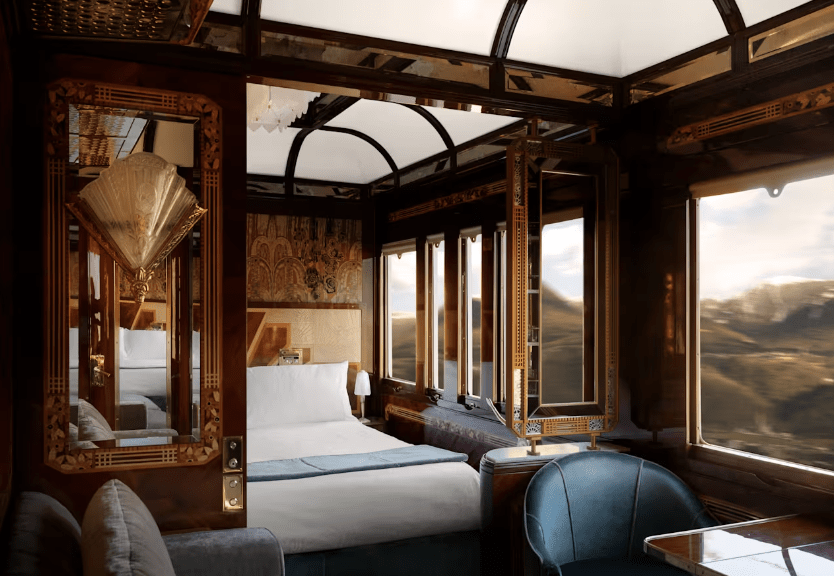
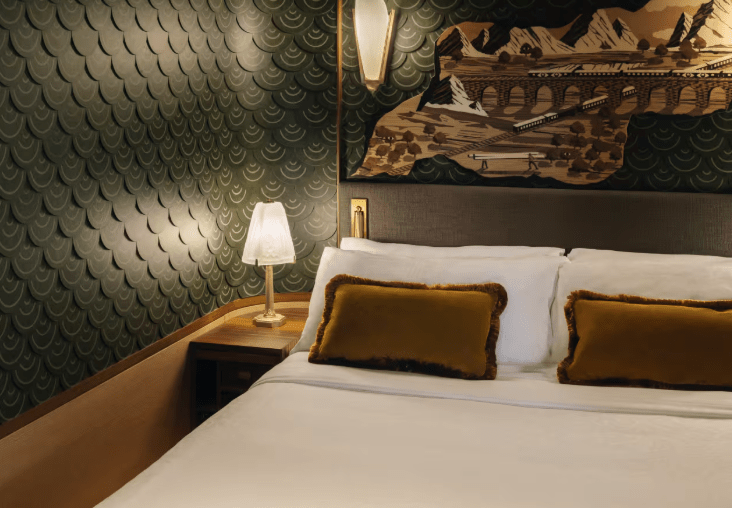
French contemporary artist JR designed the newest carriage, L’Observatoire. It feels less like a train cabin and more like a travelling atelier. Skylights and stained glass, green scalloped leather, free-standing baths, and personal artworks transform the space into a moving artwork. JR collaborated with master marquetry craftsman Philippe Allemand and glass artists to create a space that bridges historic craftsmanship with contemporary creativity.
Collaborative Craftsmanship
The revival has also depended on heritage partners:
- Rubelli, the Venetian textile house, supplied silks and velvets for upholstery and drapery.
- Sébastien Denizard contributed etched glasswork for partitions and lighting.
- Traditional marquetry ateliers restored and created panelling, combining 1920s design with contemporary precision.
Together, these designers and artisans have ensured that the new Orient Express is both faithful to its golden age and innovative in spirit.
What Has Changed — What Remains
What remains: the polished woods, Lalique panels, intimate dining cars, and the ceremonial rhythm of slow travel. The sense of stepping back into a grander age is intact.
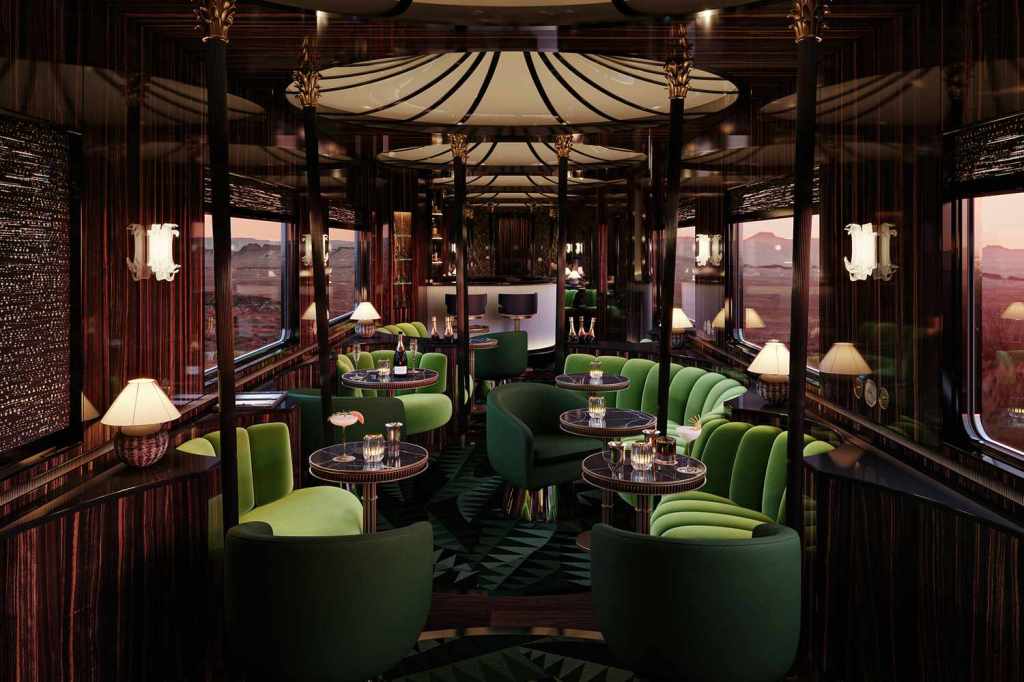
What has changed: the addition of en-suite marble bathrooms, spacious lounges within Grand Suites, artist-driven interiors like L’Observatoire, and discreet integration of modern comforts. The train has evolved from restoration to reinvention.
Why the Legend Persists
The Orient Express endures because it embodies the romance of the journey. It is not the fastest route, nor the most efficient—but it is the most storied. It carries memories of spies and royalty, of Agatha Christie’s mysteries, of glamour long thought lost. Today, with its newly designed interiors, it offers a chance to relive that history while enjoying modern luxury.
Begin the Journey
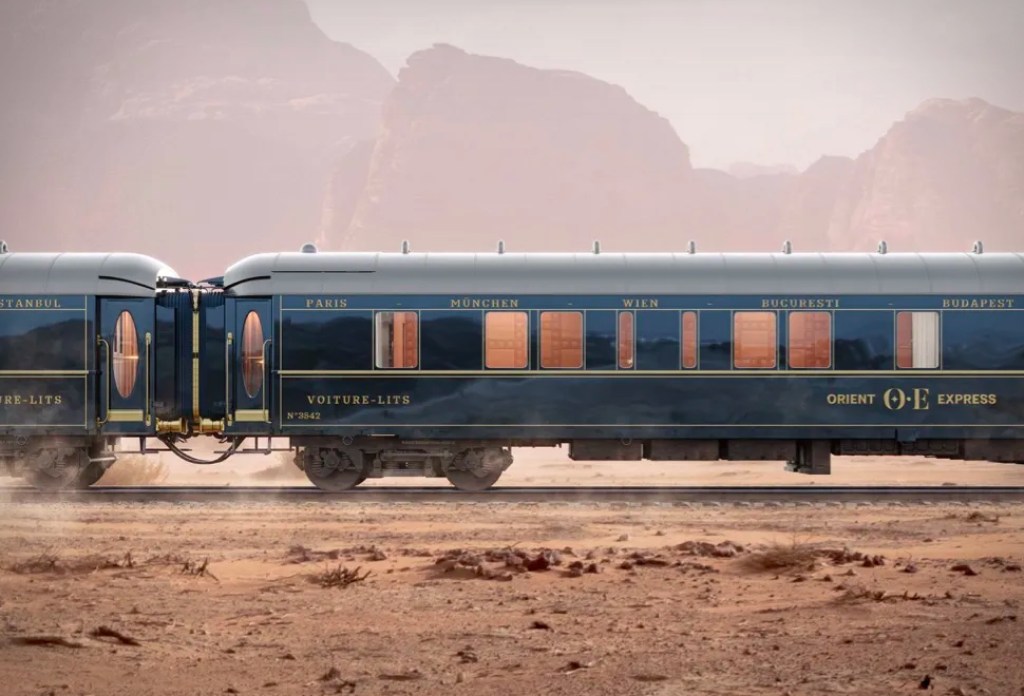
The Venice Simplon-Orient-Express operates routes across Europe, from Paris to Venice, Vienna, Budapest, and Istanbul. Journeys can now be booked in Historic Cabins, in the new Suites, or in the one-of-a-kind L’Observatoire.
For those who want to explore the story in full, Orient Express: The Life and Times of the World’s Most Famous Train by E. H. Cookridge is the definitive book.
Book your journey on the Venice Simplon-Orient-Express here.
 My World of Interiors