
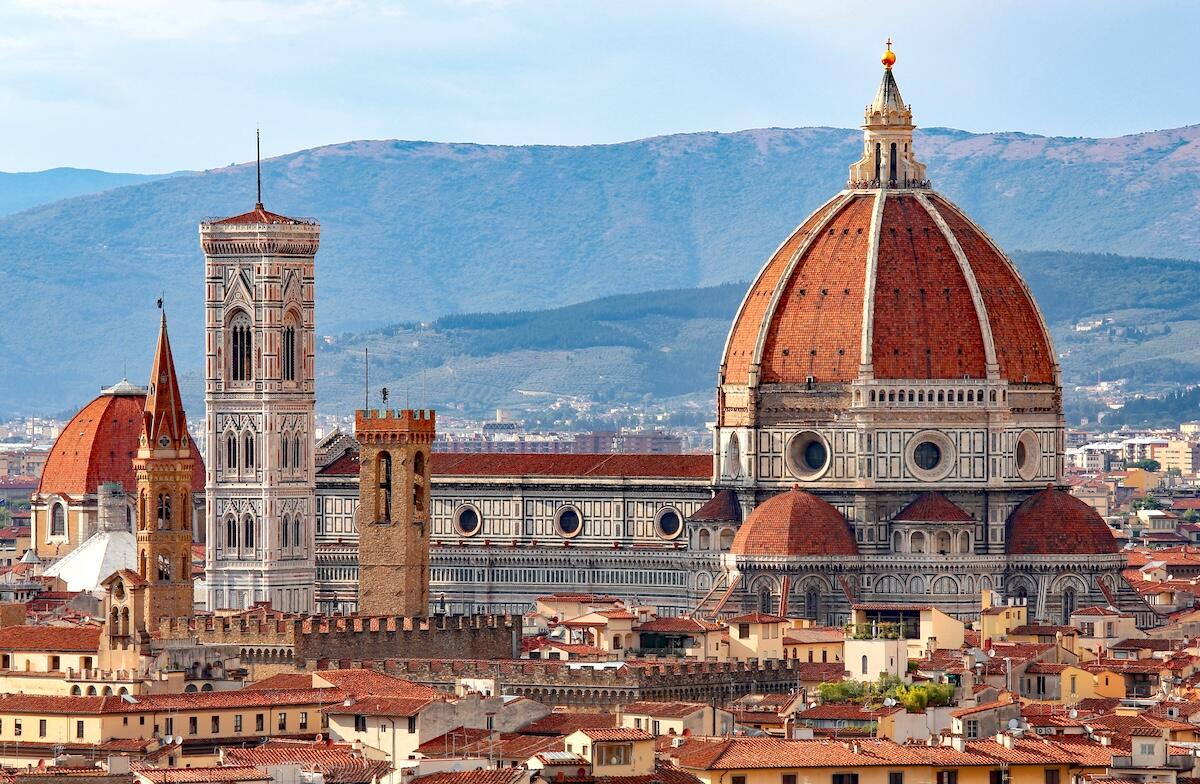
Florence is not merely a city; it is the origin point of modern culture. Nestled along the Arno, surrounded by Tuscan hills, it gave birth to the Renaissance — a revolution in art, architecture, and thought that reshaped the Western world. Today, Florence remains a masterpiece: its streets a living museum, its palaces and churches radiant with centuries of genius, its cafés and boutiques humming with contemporary life. To walk through Florence is to move through both history and the present, where every piazza is a stage and every stone tells a story.
The Duomo: A Miracle of Engineering
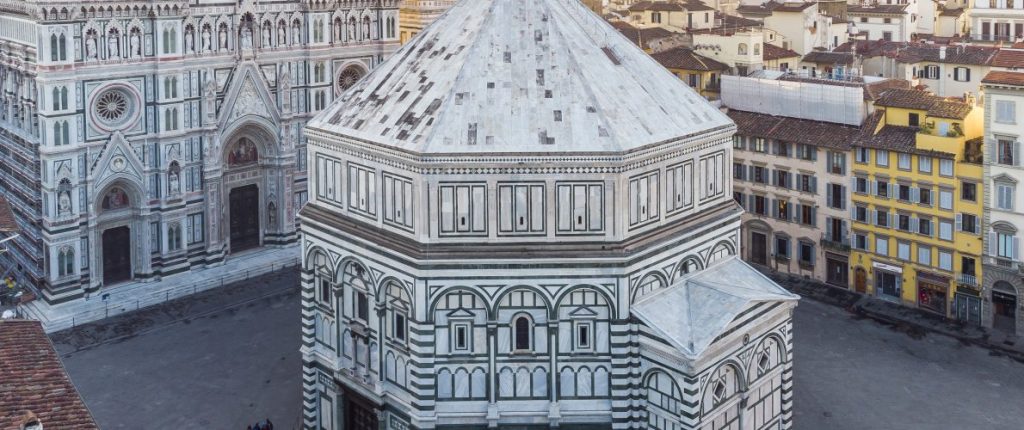
At the city’s heart rises the Cathedral of Santa Maria del Fiore, crowned by Filippo Brunelleschi’s dome — a feat of engineering so audacious it has defined Florence’s skyline for six centuries. The cathedral’s façade of pink, green, and white marble glows in Tuscan light, while Giotto’s campanile and the Baptistery’s gilded “Gates of Paradise” complete a complex that embodies the Renaissance spirit: beauty married to invention.
Palaces and Power
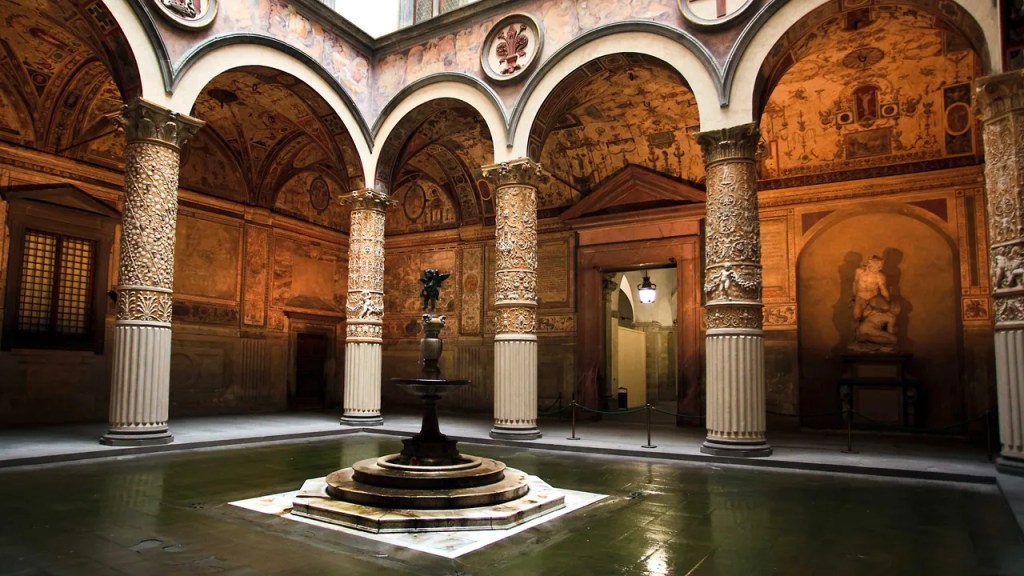
Florence’s golden age was shaped by the Medici family, whose wealth and patronage created the very notion of cultural capital. Their legacy endures in the Palazzo Vecchio, fortress of civic power; the Palazzo Pitti, later a royal residence; and the Uffizi Gallery, once administrative offices, now one of the world’s greatest museums. Here Botticelli’s Birth of Venus, Leonardo’s Annunciation, and Caravaggio’s chiaroscuro hang as reminders that Florence changed how humanity sees itself.
Churches of the Renaissance
Beyond the Duomo, Florence is studded with churches that double as museums of genius:
- Santa Croce, burial place of Michelangelo, Galileo, and Machiavelli.
- Santa Maria Novella, with Masaccio’s groundbreaking frescoes and a cloister painted by Ghirlandaio.
- San Lorenzo, where Brunelleschi’s architecture and Michelangelo’s sculptures converge.
These are not merely religious sites but symphonies of art, design, and devotion.
The Arno and Its Bridges
No image of Florence is complete without the Ponte Vecchio, lined with jewelers’ shops as it has been since the 16th century. Crossing the Arno leads to the Oltrarno district, Florence’s artisanal heart, where workshops still practice marquetry, leatherwork, and gilding. From the Piazzale Michelangelo, the entire city unfolds in terracotta and stone, glowing like a Renaissance painting at sunset.
Living Florence
Florence is not only museums and monuments; it is also sensory delight:
- Markets like Mercato Centrale, where tripe sandwiches and pecorino cheeses mingle with contemporary food halls.
- Boutiques and ateliers where Florentine leather, paper marbling, and jewelry traditions thrive.
- Cafés and enotecas where an espresso or a glass of Chianti becomes ritual.
Cuisine is rustic and robust: bistecca alla Fiorentina, pappa al pomodoro, ribollita, all rooted in Tuscan soil and tradition.
Where to Stay
- Hotel Savoy, Rocco Forte – Overlooking Piazza della Repubblica, blending Florentine style with modern luxury.
- Portrait Firenze – Intimate riverside suites by the Ferragamo family.
- Villa San Michele, A Belmond Hotel – A former monastery with panoramic views over Florence.
Four Seasons Hotel Firenze
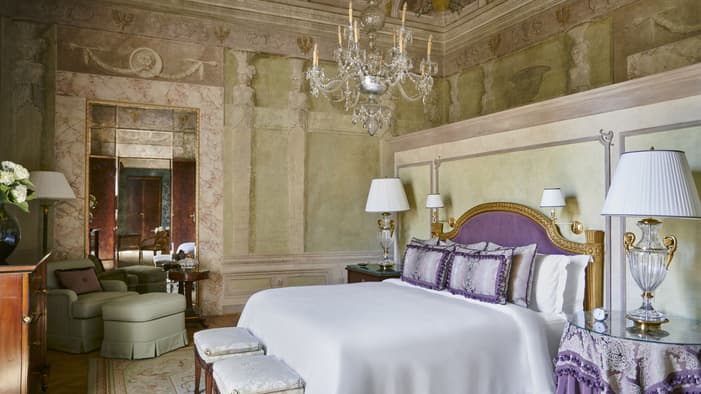
Housed in a 15th-century Medici palazzo and a former convent, the Four Seasons Firenze is the city’s most opulent retreat. Set within 11 acres of private gardens — complete with fountains, ancient trees, and Renaissance statues — it offers a rare sense of sanctuary just minutes from the Duomo. Inside, frescoed ceilings, marble bathrooms, and grand staircases evoke Florentine history at its most luxurious. The Michelin-starred Il Palagio serves refined Italian cuisine, while the spa and outdoor pool provide modern indulgence. It is the definitive address for travelers seeking Florence at its most elevated.
Florence Beyond Time
Florence endures because it is not a relic but a rhythm. Its masterpieces are not frozen in glass but woven into daily life: students crossing piazzas where Dante walked, artisans carving stone in sight of Michelangelo’s David, aperitivo spilling into streets framed by Renaissance palazzi. It is a city that shaped the world — and still invites the traveler to be transformed by its beauty.
Experiences
- Uffizi Gallery – Botticelli, Leonardo, Caravaggio: the canon of Western art in one museum.
- Accademia Gallery – Home of Michelangelo’s David.
- Boboli Gardens – Medici gardens, Renaissance landscaping at its most theatrical.
- Mercato Centrale – A historic market reimagined as a modern culinary hub.
- Piazzale Michelangelo – For the most iconic sunset over the city.
TL;DR
Florence is the cradle of the Renaissance: a city where Brunelleschi’s dome still defines the skyline, where Botticelli and Michelangelo still shape imagination, and where the Arno still reflects centuries of genius. It is both a living museum and a living city — one where art, food, and daily life merge into an eternal masterpiece.
 My World of Interiors