
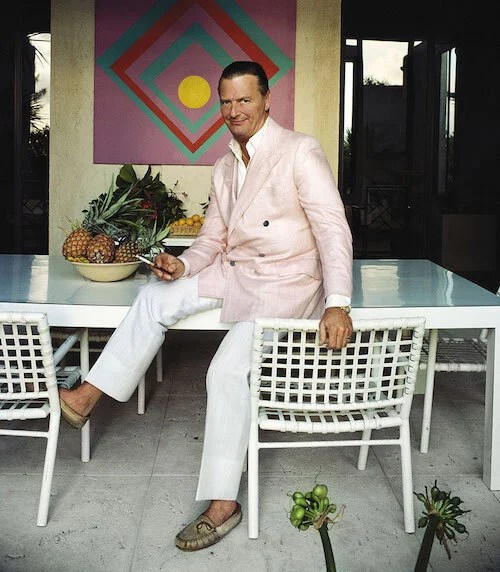
If Billy Baldwin was the master of American understatement, David Hicks (1929–1998) was the British prophet of boldness. With his fearless use of color, graphic geometry, and daring juxtapositions, Hicks transformed postwar interiors into stages of modern glamour. His work epitomised a swinging, aristocratic chic that bridged Mayfair townhouses, country estates, and even royal palaces.
From Advertising to Interiors
Born in Essex and educated at the Central School of Arts and Crafts in London, Hicks began his career in advertising before pivoting to interior design in the late 1950s. His break came in 1954, when House & Garden featured his Chelsea flat — a striking blend of modern furniture, antiques, and bold color. Almost overnight, Hicks became the decorator of choice for London’s fashionable set.
The Hicks Style
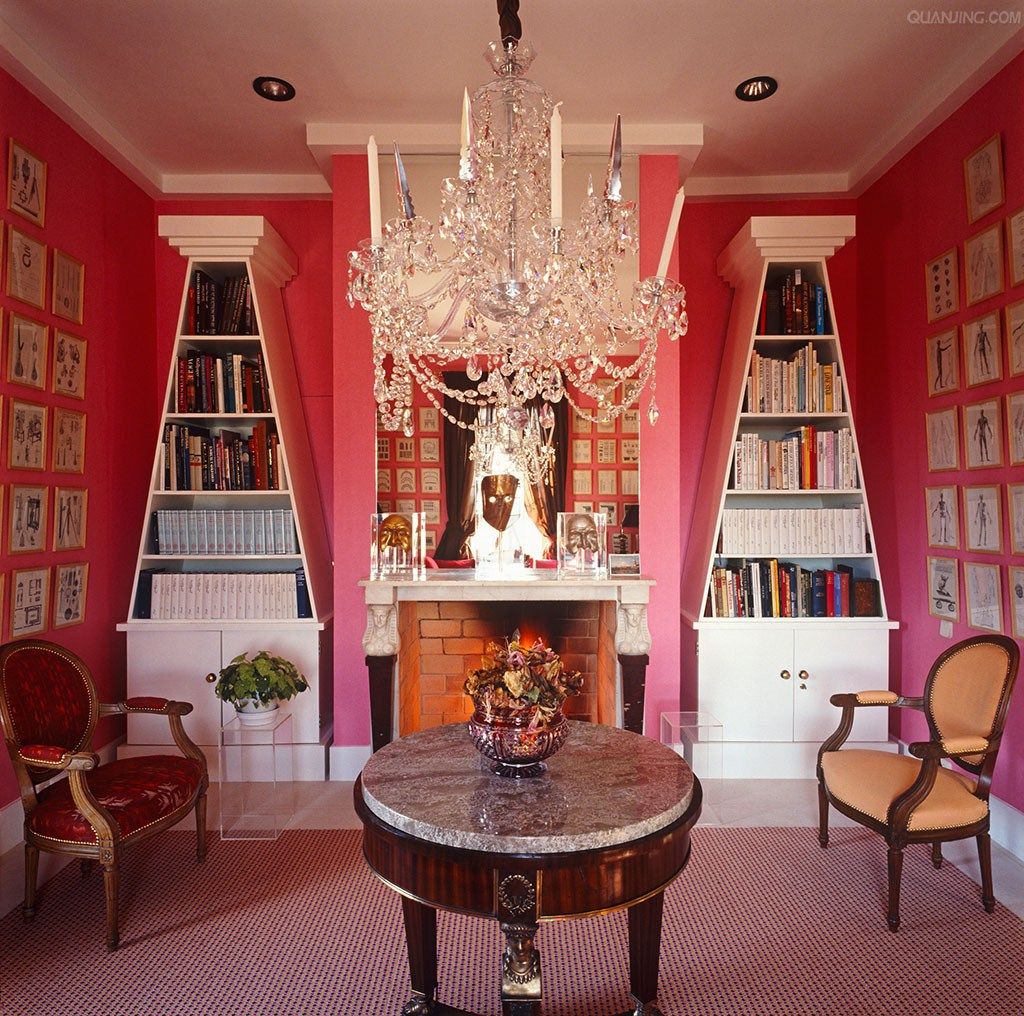
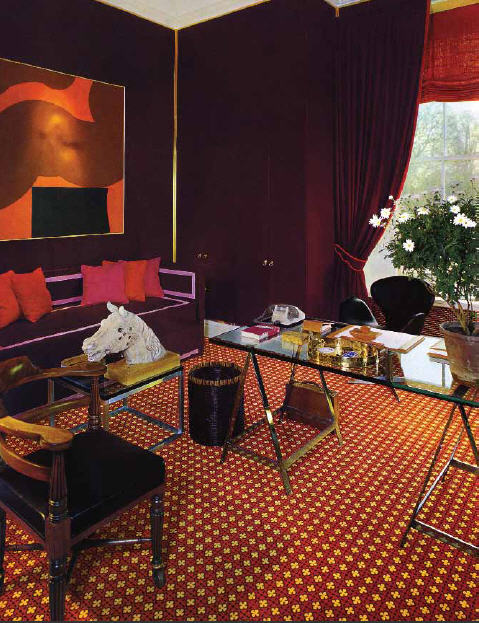
Where Baldwin valued restraint, Hicks courted impact. His interiors were built on clashing juxtapositions: eighteenth-century antiques against minimalist modern chairs, Islamic tiles paired with pop art prints. His hallmark was geometry — bold zigzags, hexagons, and checkerboards rendered in carpets, wallpapers, and fabrics.
Color was another weapon. Hicks adored burnt orange, acid green, mustard yellow, and shocking pink, often combined in high-contrast schemes that felt both daring and oddly timeless. He once declared: “I believe in doing things in the grand manner. If it is worth doing at all, it is worth overdoing.”
Clients of Power and Glamour
Hicks’ clientele included aristocrats, jet-setters, and royals. He designed rooms for Lord Mountbatten at Broadlands, the interiors of the Prince of Wales’s first bachelor apartment at Buckingham Palace, and salons for Vidal Sassoon and Helena Rubinstein. His projects reflected both privilege and audacity — traditional pedigrees reframed through modern vision.
Pattern as Power
Hicks’s carpets and wallpapers became his most enduring legacy. His geometric designs — bold enough to anchor entire rooms — spread his aesthetic far beyond individual commissions. They embodied his belief that pattern could be both decorative and structural, giving rhythm to space. Today, they remain in production, testament to his graphic genius.
Legacy in Print
Hicks was also a prolific author, publishing over a dozen books on decoration, gardens, and personal style. His David Hicks on Decoration series distilled his philosophy into aphorisms as sharp as his designs. The books, with their graphic covers, are now collectibles, emblematic of an era when interiors became part of lifestyle branding.
An Enduring Boldness
By the 1980s, Hicks’s maximalist boldness fell out of fashion, eclipsed by minimalism. Yet his influence has only grown: Kelly Wearstler, Jonathan Adler, and countless contemporary designers owe a debt to his fearless use of pattern and color. Hicks proved that interiors could be audacious without losing elegance — that boldness, when disciplined, becomes timeless.
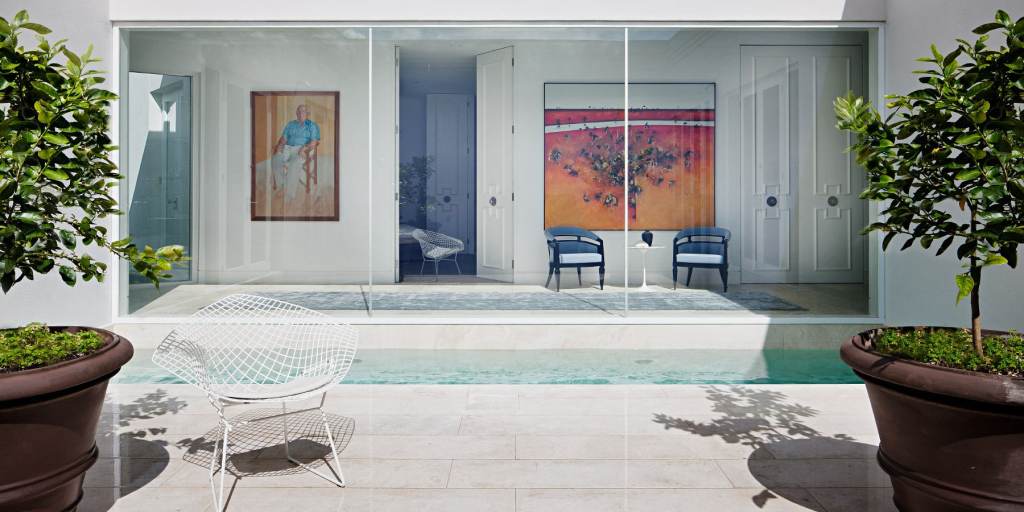
Five Signature Ideas of David Hicks
1. Geometric Carpets & Wallpapers
Hicks’s bold patterns — zigzags, hexagons, checkerboards — became his calling card. They gave rooms rhythm and scale, often transforming carpets into the anchor of an entire space.
2. Fearless Color
From shocking pink to acid green, Hicks believed color should be saturated and unapologetic. He paired hues others considered impossible, creating spaces of energy and drama.
3. Clash of Antiques and Modernism
He loved the friction of placing Louis XV chairs beside minimalist steel tables. This juxtaposition gave his interiors a charged vitality — the old reframed through the lens of the new.
4. Tabletop as Theatre
Hicks elevated the dining table into spectacle. Place settings, flowers, and graphic linens were treated with as much seriousness as walls and furniture. He believed everyday rituals deserved grandeur.
5. Aphoristic Wit
Hicks’s published quips remain as sharp as his interiors. He despised mediocrity, distrusted trends, and wrote with unapologetic confidence. His books remain as much style manifestos as design manuals.
Lifestyle Notes
Books
- David Hicks on Decoration – His classic text on design philosophy.
- David Hicks: A Life of Design – A lavish monograph by his son, Ashley Hicks.
Patterns & Legacy
- David Hicks by Ashley Hicks – Wallpapers, carpets, and fabrics continuing his father’s legacy.
- Christie’s – Auctions of vintage Hicks furnishings and prints.
Iconic Projects
- Broadlands, Hampshire – Interiors for Lord Mountbatten.
- Prince of Wales’s Apartment, Buckingham Palace – Modern glamour within royal walls.
- Helena Rubinstein’s London Salon – A theatre of pattern and color.
TL;DR
David Hicks was Britain’s decorator of audacity. With geometric carpets, fearless color, and daring juxtapositions, he turned interiors into graphic statements of modern glamour. His legacy endures in patterns still produced today and in a philosophy that insists style is not subtlety alone — sometimes, it is shock, discipline, and brilliance combined.
 My World of Interiors