
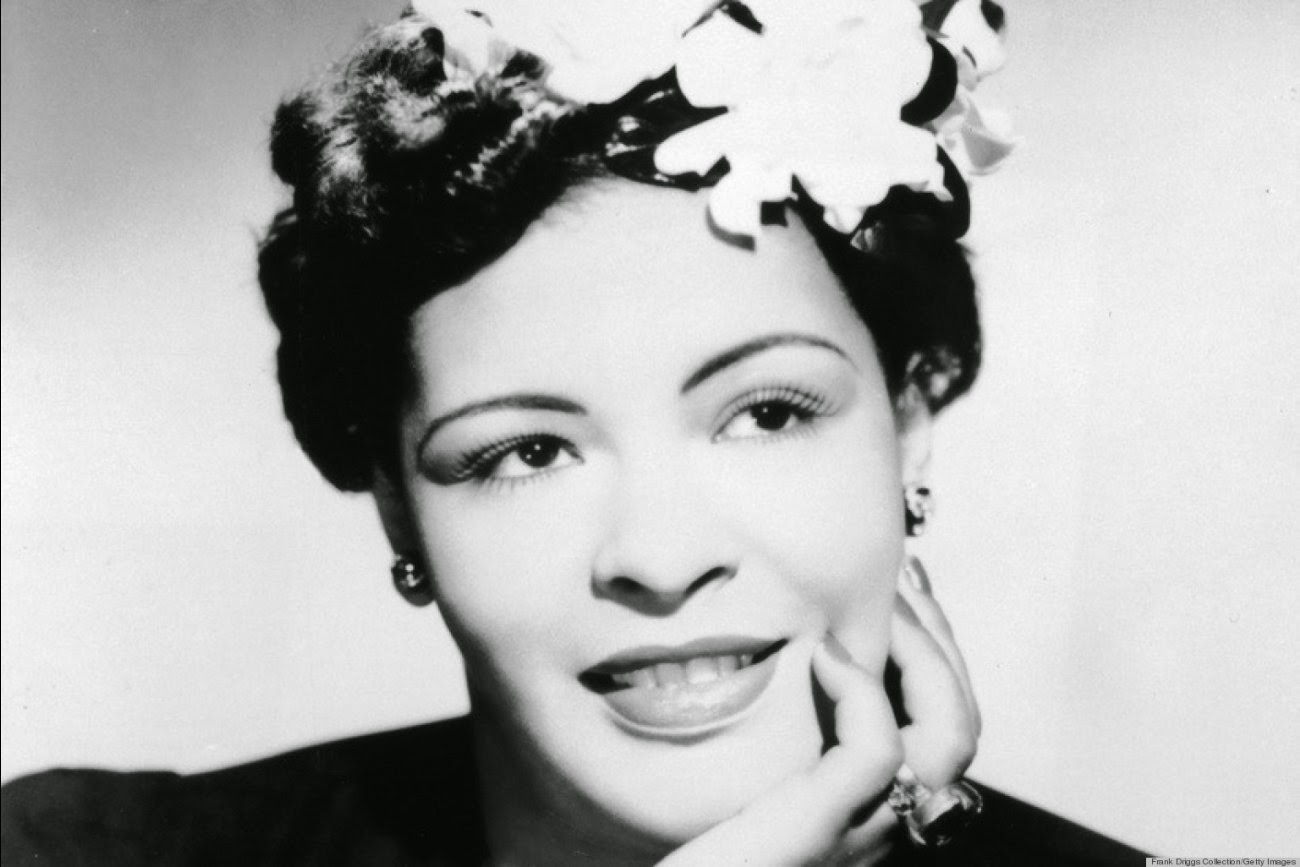
Billie Holiday’s voice was unlike any other. Smoky, fragile, and impossibly intimate, it carried the weight of joy and pain in every phrase. To listen to her sing is to feel as if she is confiding directly in you — not performing, but revealing. More than a jazz singer, Holiday (1915–1959) became a cultural icon: a woman whose artistry reshaped American music and whose life embodied its deepest contradictions.
The Birth of a Style
Born Eleanora Fagan in Philadelphia and raised in Baltimore, Holiday endured a childhood marked by poverty and instability. She found solace in music, idolising Louis Armstrong and Bessie Smith, and by her late teens she was singing in Harlem clubs. Discovered by producer John Hammond in 1933, she quickly began recording with Benny Goodman and Count Basie.
Her voice defied convention. She lacked the range of her contemporaries, but she turned limitation into genius. By phrasing behind the beat, bending notes with conversational ease, and infusing lyrics with emotional nuance, Holiday reinvented the art of jazz singing.
Lady Day and the Swing Era
In the 1930s and ’40s, Holiday’s collaborations with pianist Teddy Wilson, saxophonist Lester Young, and Count Basie’s orchestra defined an era. Young nicknamed her “Lady Day,” and their musical dialogue — his saxophone answering her voice like a twin soul — remains one of jazz’s most tender partnerships. Songs like A Sailboat in the Moonlight or Mean to Me radiate with unspoken intimacy.
“Strange Fruit” and Political Fire
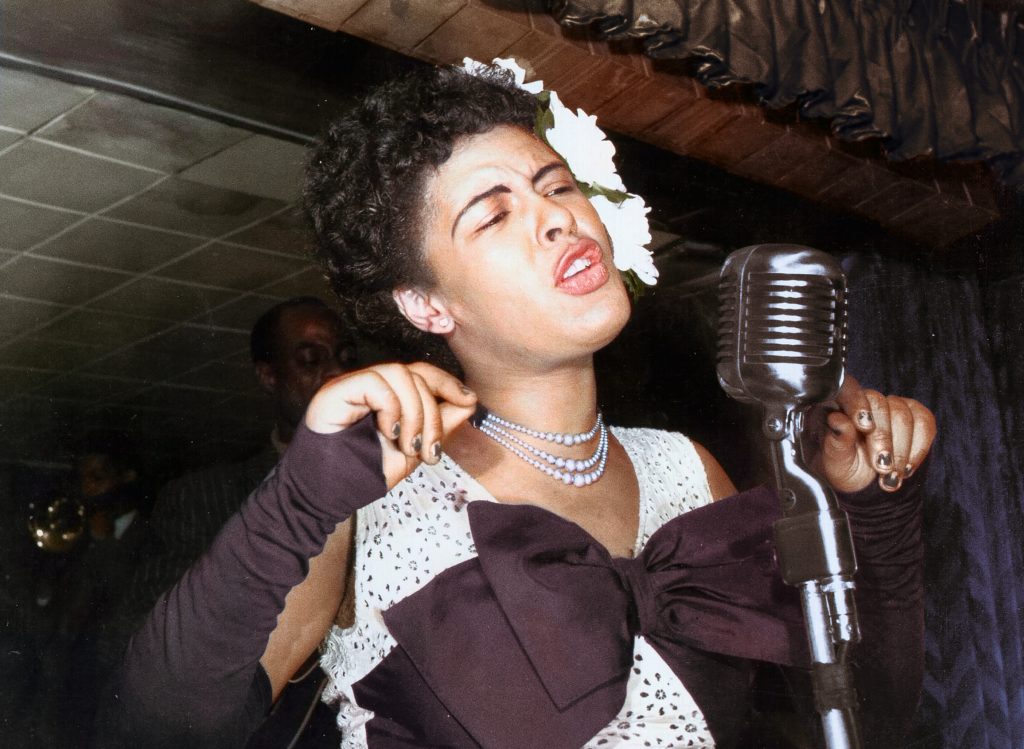
Holiday’s artistry reached beyond romance to raw political truth. In 1939, she introduced “Strange Fruit,” a haunting protest song about lynching in the American South. With its chilling imagery — “black bodies swinging in the Southern breeze” — and her devastatingly restrained delivery, the song became one of the first great anthems of the Civil Rights era. Singing it night after night took a toll, but it cemented her role not just as an entertainer, but as a witness.
Shadows and Struggles
Holiday’s life was as turbulent as her music was transcendent. Addictions, abusive relationships, and relentless racism scarred her career. She was hounded by law enforcement, targeted by federal narcotics agents who sought to make an example of her. Even as her health declined, her artistry deepened — her late recordings, worn and frayed, are often more heartbreaking than her youthful brilliance.
The Final Years
Holiday’s last decade was a battle against both her demons and the world that exploited her. Arrested, imprisoned, denied a cabaret license in New York, she continued to sing in concert halls where her artistry remained undeniable. She died in 1959 at the age of 44, her body ravaged, but her legend already secure.
The Enduring Flame
Billie Holiday’s legacy is both musical and cultural. She transformed how songs could be sung, proving that interpretation mattered as much as composition. She gave voice to Black experience at a time when few dared, making her art inseparable from politics. And she lived as she sang: vulnerably, defiantly, beautifully flawed.
To hear Holiday is to be reminded that art at its highest is not perfection, but truth. Every cracked note, every pause, every sigh becomes revelation. Her voice is not merely sound — it is memory, longing, sorrow, and flame, forever flickering in the history of American music.
Information:
Essential Listening
- The Quintessential Billie Holiday, Vol. 1–9 – Early Columbia recordings with Teddy Wilson and Lester Young.
- Lady in Satin (1958) – Her late masterpiece, fragile and devastating.
- Strange Fruit – Perhaps the most important protest song in American history.
Books
- Lady Sings the Blues – Her controversial autobiography.
- Billie Holiday: The Musician and the Myth by John Szwed – A critical study separating legend from artistry.
Films & Documentaries
- The United States vs. Billie Holiday (2021) – Biopic starring Andra Day.
- Billie (2019) – Documentary built on lost interviews with her friends and collaborators.
TL;DR
Billie Holiday was more than a singer: she was a voice that carried sorrow, resilience, and truth. From the tenderness of Lady Day to the fury of Strange Fruit, her music reshaped jazz and gave America one of its most enduring symbols of beauty and pain.

 My World of Interiors