
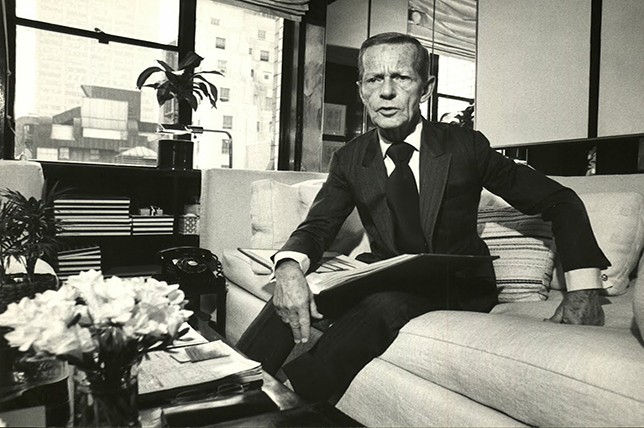
In the pantheon of twentieth-century interior design, few names carry the quiet authority of Billy Baldwin (1903–1983). Known simply as “Billy” to clients who ranged from Jackie Kennedy to Babe Paley, Baldwin defined a distinctly American elegance: urbane, tailored, and timeless. If Dorothy Draper conjured fantasy and Sister Parish invented cozy chic, Baldwin distilled modernism into comfort — proving that restraint could be the ultimate luxury.
A Baltimore Beginning
Born in Baltimore, Baldwin studied architecture and art history before joining the New York firm of Ruby Ross Wood in the 1930s. Under Wood’s formidable guidance, Baldwin learned to balance classicism with modern sensibility. When he opened his own practice in 1938, he was already recognized for an aesthetic that rejected fuss in favor of clarity.
The Baldwin Look
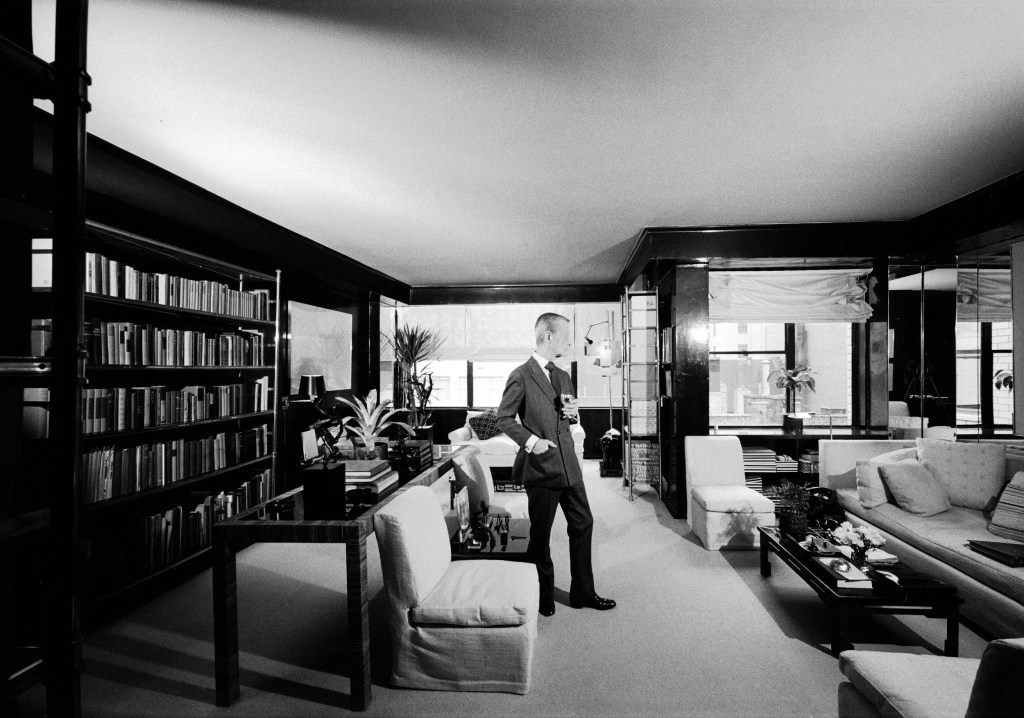
Baldwin’s interiors were marked by a kind of cultivated understatement. He disliked clutter and ornament, preferring clean lines, crisp cottons, and bold use of color. He famously championed slipcovers in white cotton or canvas, elevating them from practicality to chic statement. For Baldwin, comfort was inseparable from beauty — rooms had to be lived in, not merely admired.
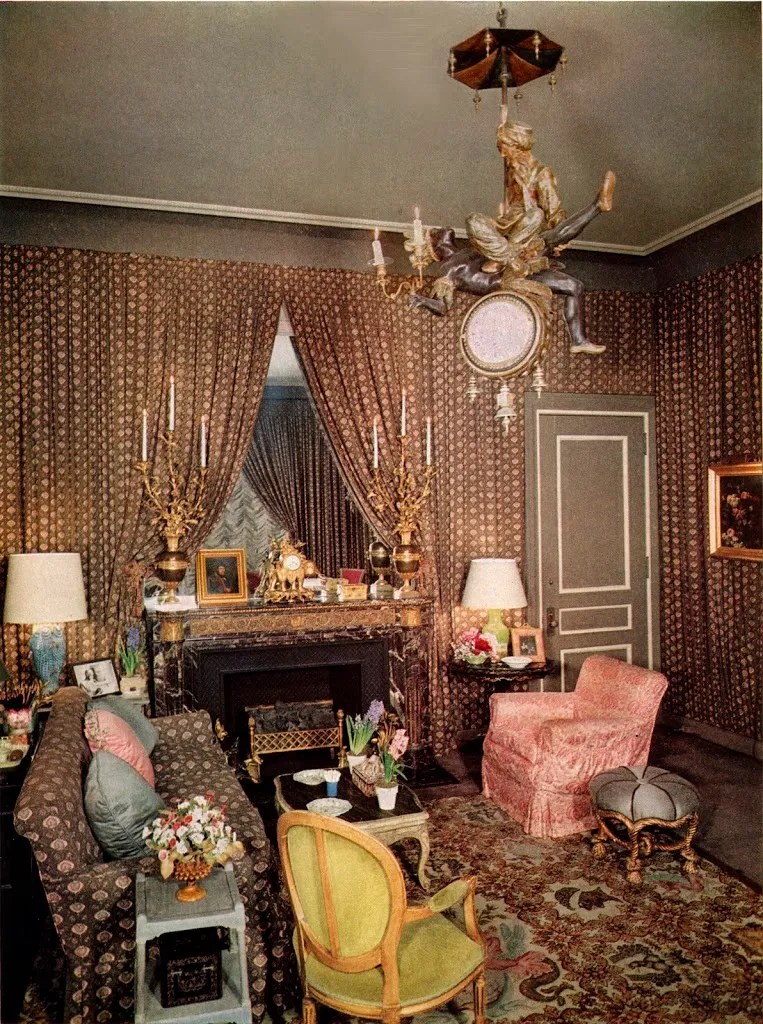
His palette often embraced strong colors — Chinese red lacquer walls, chocolate brown library panelling — but always balanced by restraint. Pattern appeared sparingly: stripes, geometric rugs, a single chintz. Every element served the harmony of the whole.

Society and Celebrity
Baldwin’s client list reads like a cultural who’s who: Jackie Kennedy, Billy Rose, Diana Vreeland, and most iconically, Babe Paley, whose Fifth Avenue apartment he designed with a cool blend of modern and traditional. His interiors for the Paleys embodied his credo: “decorating is not a look, it’s a point of view.”
For Diana Vreeland, he lacquered a library in brilliant red — “a garden in hell,” she called it, delighting in its theatricality. For Cole Porter, he created urbane spaces that mirrored the wit of Porter’s lyrics. Baldwin was able to translate personality into décor, making each home a portrait of its occupant.
Author and Tastemaker
Baldwin was also a gifted writer. His books — Billy Baldwin Decorates (1972) and Billy Baldwin Remembers (1974) — remain classics, blending memoir with design philosophy. They reveal a man who approached interiors with both discipline and humor, skeptical of trend, devoted to the belief that rooms should reflect lives, not just styles.
Enduring Legacy
Though Baldwin closed his firm in the 1970s, his influence persists. His name is invoked whenever decorators speak of “tailored rooms,” “American classicism,” or the art of restraint. In an era of maximalism and Instagram spectacle, his interiors remind us that timelessness comes from clarity, proportion, and empathy for those who live within the space.
A Modern Classicist
Billy Baldwin’s genius was subtle. He created no single iconic chair or fabric, but rather an approach: elegant yet approachable, sophisticated yet humane. His interiors resist nostalgia or trend, occupying instead the rare territory of permanence. In Baldwin’s hands, decoration was not ornament but atmosphere — a way of shaping how life feels inside a room.
Lifestyle Notes
Books
- Billy Baldwin Decorates – His design manifesto and classic text.
- Billy Baldwin Remembers – Memoir blending society anecdotes with design wisdom.
Notable Projects
- Babe Paley’s Fifth Avenue Apartment – A model of Baldwin’s tailored elegance.
- Diana Vreeland’s “Garden in Hell” Library – A theatrical masterpiece in red lacquer.
- Cole Porter’s Waldorf Towers Apartment – Urbane, witty, and refined.
Museums & Archives
- New York School of Interior Design – Holds archives and exhibitions on Baldwin’s era.
- Parrish Art Museum – Features Baldwin among the greats of American design.
TL;DR
Billy Baldwin defined American elegance through restraint, comfort, and clarity. His rooms for Paley, Vreeland, and Porter showed that true luxury lies not in excess but in proportion, atmosphere, and empathy. To enter a Baldwin interior was to experience timelessness itself — urbane, inviting, perfectly composed.
Five Signature Ideas of Billy Baldwin
1. The Slipcover Revolution
Baldwin elevated the humble cotton slipcover into high design. Crisp white, striped, or chintz, his slipcovers made rooms both chic and practical — furniture that could breathe with everyday life.
2. Lacquered Walls
From chocolate brown dining rooms to Diana Vreeland’s famous fire-red library, Baldwin used lacquered walls to create depth, drama, and glow. For him, color was architecture.
3. The Slipper Chair
Low, armless, and perfectly proportioned, Baldwin’s slipper chair remains one of his enduring design contributions. Comfortable yet sculptural, it epitomises his marriage of form and function.
4. Bold Yet Disciplined Color
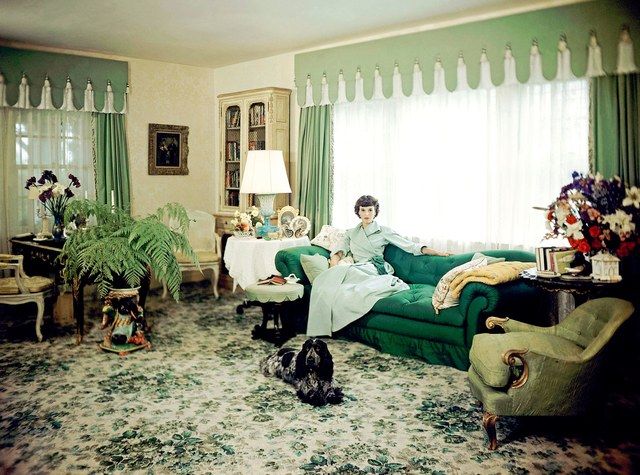
Baldwin loved saturated tones — Chinese red, deep green, tobacco brown — but always within a tightly edited palette. His rooms balanced intensity with restraint, avoiding clutter or over-patterning.
5. “Comfort Is Luxury”
Above all, Baldwin believed rooms were for living. He distrusted ostentation, preferring elegance born of ease: furniture arranged for conversation, books within reach, atmosphere over display.
 My World of Interiors