
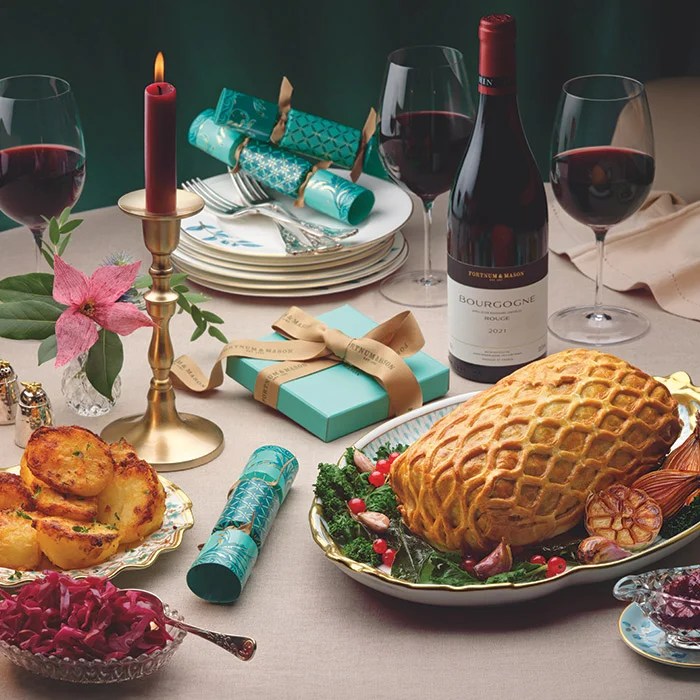
The Christmas table is as much about taste as it is about sight. Across centuries, festive meals evolved from medieval spectacle to Victorian tradition to modern comfort — a culinary story of abundance, ritual, and memory.
Medieval Banquets
In the great halls of Europe, feasts featured roasted boar’s head, spiced pies, and gilded confections. These meals were less about sustenance than about performance: the theatre of abundance.
The Victorian Invention
The Victorians codified the Christmas dinner we know today: roast goose or turkey, plum pudding aflame, mince pies rich with spice. Cookbooks and illustrations spread these rituals across households.
Twentieth-Century Comfort
In the modern home, Christmas became more intimate. Regional variations flourished — stollen in Germany, panettone in Italy, pudding in Britain, tamales in Mexico. Recipes travelled, but the core remained: warmth, richness, and indulgence.
December Picks:
- Fortnum & Mason – Traditional British puddings and mince pies.
- Eataly – Italian panettone and festive sweets.
- Maison Plisson – French holiday delicacies.
- Saveur Recipes – Global takes on Christmas classics.
TL;DR
The winter feast is a story of evolution: from medieval theatre to Victorian ritual to modern kitchens. Its flavours — spice, citrus, roasted meats, sugared fruit — are timeless notes of celebration.
 My World of Interiors