
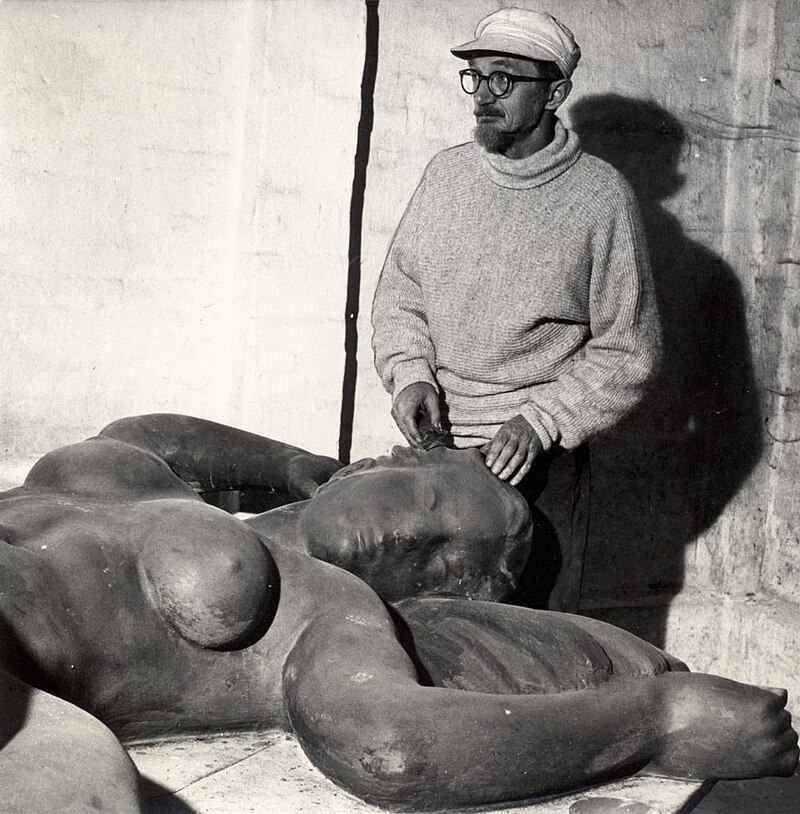
The story of Danish design is usually told through clean-lined chairs and functionalist architecture, but just as vital is the quieter artistry of ceramics and glass. Among its masters, Arne Bang (1901–1983) holds a singular place. A sculptor, ceramicist, and designer, he spent much of his career at Holmegaard Glassworks, shaping objects that married modern restraint with a deep, tactile beauty. Today, his vases, bowls, and figurative works stand as testaments to a Danish sensibility that was never only about function, but about atmosphere, material, and touch.
From Sculpture to Craft
Trained as a sculptor, Bang studied at the Royal Danish Academy of Fine Arts before joining Holmegaard in the late 1920s. At first, his role was conventional: decorative sculptural motifs for the company’s glass production. Yet by the early 1930s, as modernism reshaped the language of design, Bang began experimenting with ceramics. The Great Depression and material shortages made clay more practical than glass — but it also unlocked a new vocabulary for him, one of sculptural, hand-thrown forms in subdued glazes.
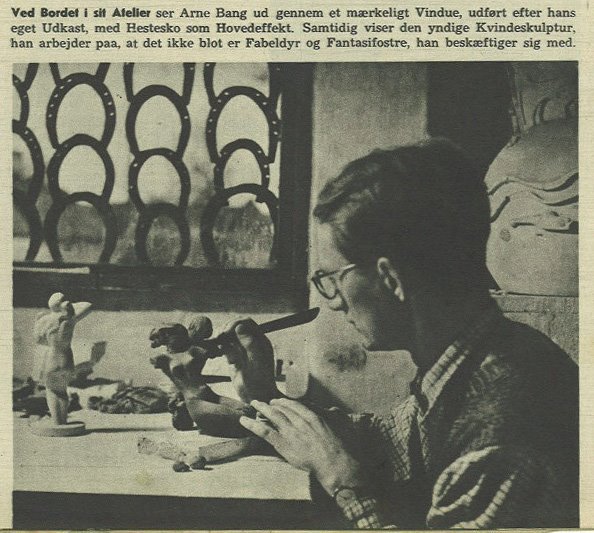
Ceramics as Sculpture
Bang’s ceramic work is defined by weight, balance, and texture. His stoneware vessels are monumental in feel yet intimate in scale, often finished in muted matte glazes: moss greens, earthy browns, chalk whites. Unlike the glossy perfection of industrial porcelain, Bang’s ceramics celebrated imperfection — the traces of the hand, the roughness of the kiln.
Series of lidded jars, bowls, and sculptural vases became his signature, many numbered in small batches rather than mass-produced. Collectors today prize these pieces for their timelessness: they feel as contemporary in a 21st-century home as they did in interwar Denmark.

Holmegaard and Modern Danish Design
Holmegaard Glassworks, founded in 1825, was one of Denmark’s great design laboratories, producing everything from cut crystal to experimental glassware. Bang’s role there was pivotal: he brought a sculptor’s eye to both glass and ceramics, ensuring that Holmegaard’s output extended beyond utility into artistry.
Alongside contemporaries such as Axel Salto — another sculptor-turned-ceramicist — Bang bridged fine art and applied design. His works for Holmegaard resonated with the international movements of the time (Art Deco, Functionalism) while remaining grounded in Nordic restraint.
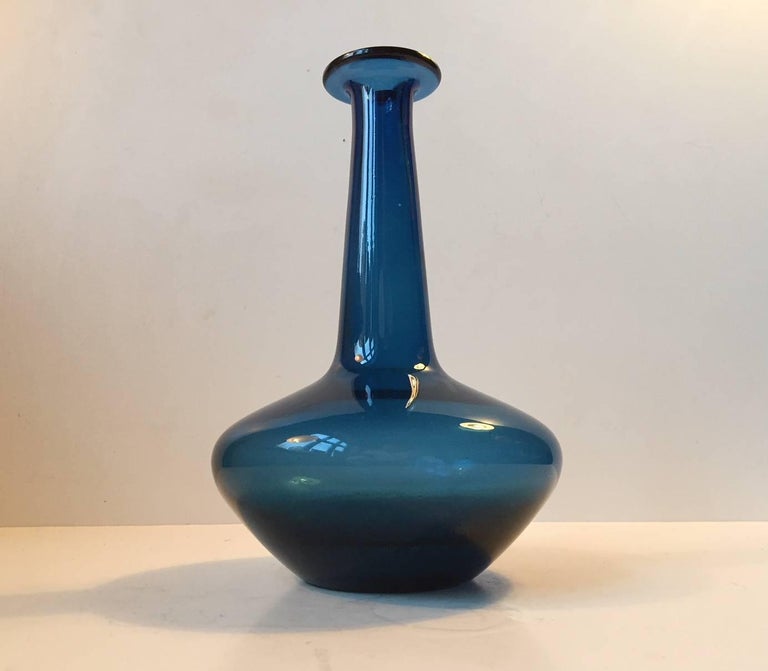
Collecting Arne Bang Today
Bang’s ceramics, especially his stoneware numbered series (often marked “AB” and stamped with a model number), are highly sought after by collectors. Auction houses such as Bruun Rasmussen in Copenhagen regularly feature his works, where prices reflect both rarity and the growing global interest in mid-century ceramics.
Their appeal lies not only in design pedigree but in tactility: to hold an Arne Bang vessel is to feel a sculptor’s hand shaping clay into permanence.
Arne Bang: Signature Works
- Stoneware Vases and Bowls (1930s–50s) – Robust, weighty vessels with matte glazes in earthy tones.
- Numbered Series – Each ceramic piece often stamped with a number, marking limited batches that today aid collectors in cataloguing his oeuvre.
- Sculptural Figures – Smaller works, often human or animal forms, reflecting Bang’s academic training in sculpture.
- Glass and Relief Work for Holmegaard – Though best known for ceramics, Bang also created reliefs and decorative designs for Holmegaard’s glass production.
How to Collect Arne Bang
- Look for Marks
Most authentic pieces are stamped “AB” along with a model number (e.g. AB 123). This system helps trace designs to specific series. - Signature Styles
Bang’s ceramics are easily identified by their heavy forms, matte glazes in muted greens, browns, and whites, and a sculptural solidity that distinguishes them from finer porcelain. - Rarity
Small production runs mean each piece is relatively scarce. Numbered jars and lidded vessels are especially prized. - Auction Prices
Expect €1,000–€5,000 for vases and bowls at auction, with rarer sculptural works reaching higher figures. Regular appearances can be found at Bruun Rasmussen in Copenhagen.
http://www.bruun-rasmussen.dk - Museum Collections
For study and inspiration, examples of Bang’s work are held at Holmegaard Værket museum, Denmark’s centre for glass and ceramic design heritage.
http://www.holmegaard-vaerket.dk
TL;DR
Arne Bang may not be as widely known as Hans Wegner or Arne Jacobsen, but his contribution to Danish modernism is no less vital. By treating ceramics and glass as sculptural mediums, he enriched the landscape of Scandinavian design with texture, intimacy, and gravitas.
In an age when design often equates to sleek uniformity, Bang’s work reminds us of the enduring value of touch, imperfection, and craft. His legacy endures not just in museum collections or auction houses, but in the quiet presence of a vase on a table — a vessel that holds not only flowers, but history.
Discover more:
- Holmegaard Museum: http://www.holmegaard-vaerket.dk
- Danish auction listings: http://www.bruun-rasmussen.dk
 My World of Interiors