

In 2025, Royal Copenhagen celebrates 250 years of porcelain making — a quarter of a millennium of craft, culture, and design. Founded in 1775 under the patronage of Queen Juliane Marie, the manufactory has become Denmark’s most enduring emblem of elegance and national identity. From its signature blue-and-white “Blue Fluted” pattern to bold contemporary reinterpretations, Royal Copenhagen’s history is both a chronicle of taste and a story of resilience. To own a piece is not only to hold porcelain, but to carry centuries of artistry in your hands.
Enlightenment Origins
The story begins in the late 18th century, when European courts competed to establish porcelain manufactories rivalling those of Meissen and Sèvres. In Denmark, chemist Frantz Heinrich Müller, with royal backing, mastered the secrets of hard-paste porcelain and launched the Royal Porcelain Factory in Copenhagen.
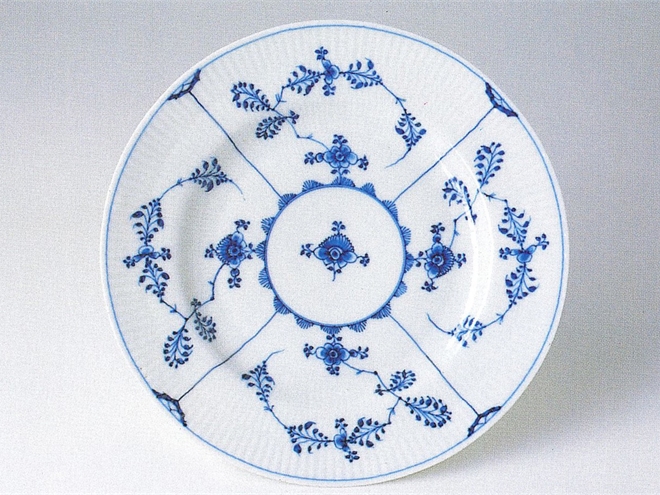
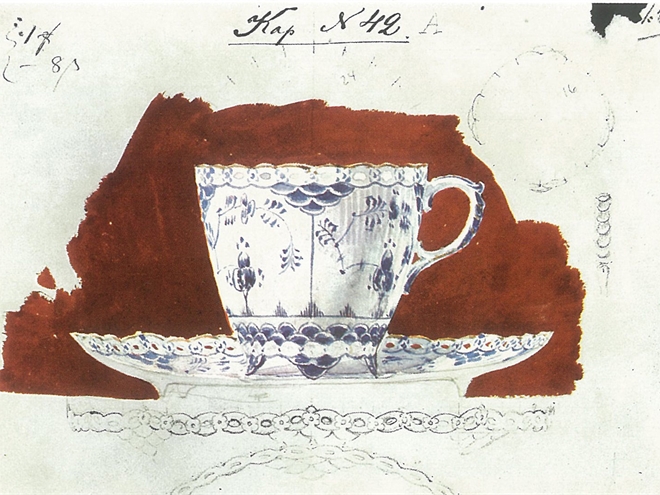
Its earliest pieces were richly decorated with cobalt blue on luminous white — a nod to Chinese porcelain that had captivated Europe since the Ming dynasty. The “Blue Fluted Plain” pattern, with its stylised flowers and latticework, remains the house’s most iconic design to this day.
Symbols of a Nation
Throughout the 19th century, Royal Copenhagen became more than a luxury brand: it became part of Denmark’s national identity. Its porcelain adorned royal banquets, diplomatic tables, and bourgeois parlours, embodying both refinement and a distinctly Danish sense of order and beauty.
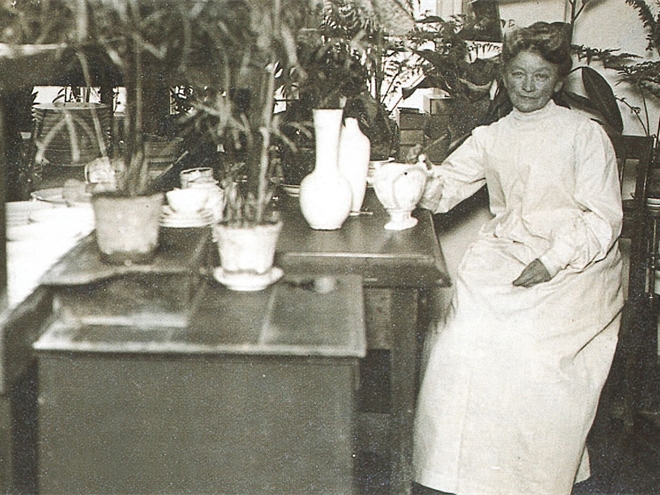
Artisans trained for years to perfect the factory’s demanding standards. Every plate, cup, and vase was hand-painted — an ethos that continues, even as the brand evolved into a global name.
Innovation and Design Leadership
Royal Copenhagen has always balanced tradition with innovation. In the late 19th and early 20th centuries, it embraced naturalism and the Art Nouveau movement, producing sculptural pieces, figurines, and tableware inspired by flora and fauna. The painter Arnold Krog, artistic director from 1885 to 1916, introduced underglaze techniques that gave surfaces new depth and subtlety.
Later, the brand pioneered collaborations with modern designers, ensuring that its porcelain remained relevant in the age of functionalism and beyond. Today, Royal Copenhagen embodies both continuity and reinvention.

Blue, White, and Beyond
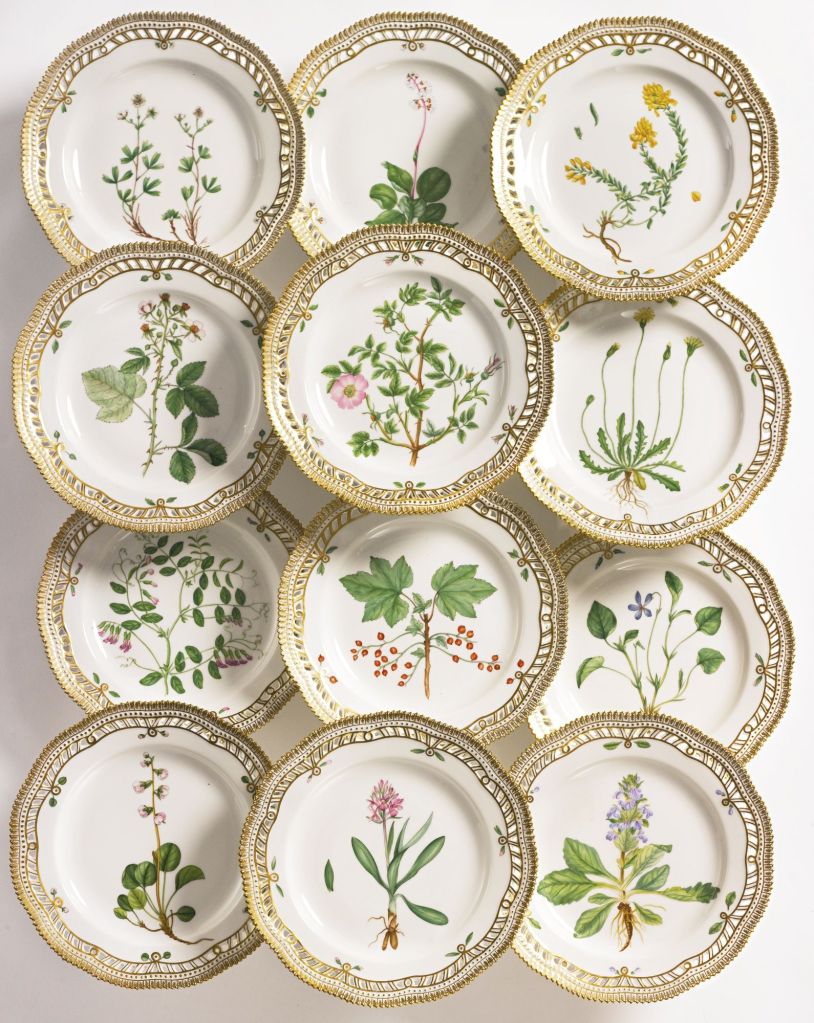
While the Blue Fluted series is its eternal signature, Royal Copenhagen has expanded into new collections that reinterpret its heritage. Flora Danica, begun in the 1790s and still produced today, is one of the most ambitious porcelain services ever conceived: each piece hand-painted with botanical illustrations from the Danish flora compendium.
In the 20th century, the Musselmalet Mega series — a bold, enlarged reinterpretation of Blue Fluted by designer Karen Kjældgård-Larsen — became a contemporary classic, proving that tradition could be both honoured and playfully reinvented.
Royal Copenhagen Through Time: A Timeline
- 1775 – Royal Copenhagen is founded under Queen Juliane Marie, with Frantz Heinrich Müller as director.
- 1775 – The first Blue Fluted pattern is introduced; it becomes the house icon.
- 1790s – “Flora Danica” service commissioned, painted with Danish botanical illustrations.
- 1885–1916 – Artistic director Arnold Krog pioneers underglaze painting and naturalistic forms.
- 20th century – Figurines, sculptural pieces, and functionalist designs expand the portfolio.
- 2000 – Karen Kjældgård-Larsen launches Musselmalet Mega, a bold modern reinterpretation.
- 2025 – The manufactory celebrates 250 years of Danish porcelain.

The Masters of Porcelain: Signature Collections
- Blue Fluted Plain
The original 1775 pattern, hand-painted in cobalt blue. A study in restraint and balance.
Blue Fluted Plain - Flora Danica
A legendary service, each piece decorated with hand-painted flora from Danish botanical studies. Still produced, often for collectors.
Flora Danica - Blue Elements
A playful, youthful evolution of the Blue Fluted pattern, with unexpected flourishes and asymmetry.
Blue Elements - Musselmalet Mega
A contemporary reinterpretation of the Blue Fluted design, with enlarged motifs and a bold graphic sensibility.
Musselmalet Mega - White Fluted
Minimalist and timeless: the same forms as Blue Fluted, stripped of colour for pure white porcelain elegance.
White Fluted
How to Start a Royal Copenhagen Collection
- The Essential Starter
Begin with Blue Fluted Plain. A dinner plate or coffee cup introduces the DNA of the brand and sets the tone for future additions. - The Investment Piece
Consider Flora Danica. Even a single plate carries history and artistry — a statement heirloom that grows more valuable over time. - The Modern Classic
Add Musselmalet Mega. Its enlarged motifs feel graphic, playful, and contemporary, making it a perfect everyday luxury. - The Everyday Elegant
White Fluted or Blue Elements bring understated charm and versatility to daily use, pairing beautifully with both historic and modern designs. - The Collector’s Path
Build gradually: mix patterns across tablescapes, experiment with seasonal designs, or hunt down limited editions and discontinued motifs for rarity.
Closing Reflection
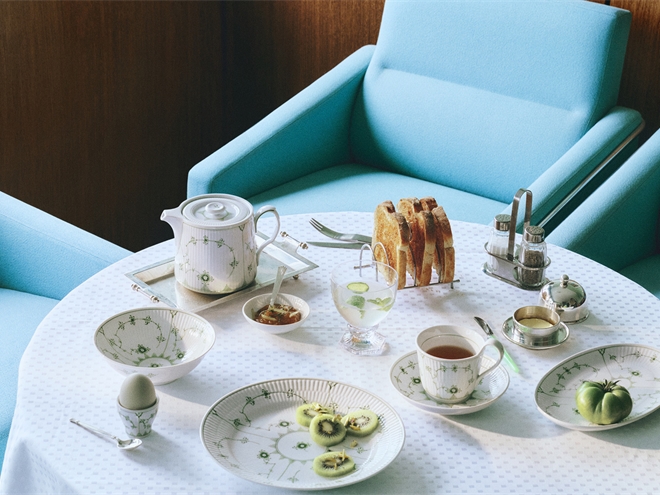
Royal Copenhagen’s porcelain is not just tableware. It is ritual, memory, and national story, told through brushstrokes on white glaze. From the Enlightenment’s fascination with porcelain chemistry to today’s collaborations with contemporary designers, the brand remains at once timeless and experimental.
To set a table with Royal Copenhagen is to participate in history — one where design, craftsmanship, and culture meet, and where every plate carries centuries of artistry in its delicate weight.

Discover more: http://www.royalcopenhagen.com
 My World of Interiors