
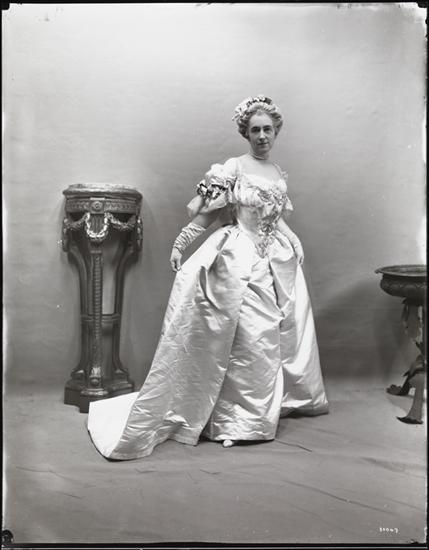
Long before “interior design” was a profession, Elsie de Wolfe had already invented it. A woman of dazzling wit, formidable ambition, and impeccable taste, she transformed how people thought about domestic space. Her life — stretching from Gilded Age New York to Belle Époque Paris, from Broadway stages to transatlantic salons — was as theatrical as any of her designs. To speak of her legacy is to speak of the very origins of interior design as we know it today.
From Actress to Tastemaker
Born in New York City in 1859, Elsie de Wolfe began her career not in design but in the theater. As an actress, she cultivated an eye for stagecraft — costumes, sets, and the atmospheres that carried meaning. Yet she found herself increasingly drawn not to the scripts she performed but to the spaces she inhabited.
Her own apartment, refashioned with pale colors, chintz, and light, became her calling card. At a time when interiors were heavy with mahogany, velvet, and dark ornament, de Wolfe embraced freshness, air, and charm. Guests took note. Soon, she was receiving commissions to bring her aesthetic into the homes of others.
Reinventing the Interior
De Wolfe’s great break came in 1905, when she was commissioned to decorate the Colony Club in New York — the city’s first private social club for women. The results were revolutionary: light-filled rooms, painted furniture, trellises, and mirrors that opened space and created ease. Gone was the Victorian heaviness; in its place, a vision of modern femininity.
Her style emphasized comfort and livability. She championed slipcovers, wicker, cheerful color schemes, and floral fabrics. For de Wolfe, beauty was not grandeur but atmosphere: rooms that invited life rather than stifled it.
A Life of Glamour and Society
Part of de Wolfe’s success was her ability to inhabit the worlds she decorated. She was a consummate hostess, a transatlantic socialite, and eventually the wife of Sir Charles Mendl, a British diplomat. In Paris, she became known as “Lady Mendl,” presiding over glittering salons attended by aristocrats, writers, and artists.
Her life was also marked by long-term partnerships with women, most notably the theatrical agent Elisabeth Marbury, with whom she shared a home for decades. De Wolfe’s identity, unconventional by the standards of her era, shaped her interiors: spaces of liberation, charm, and sociability.
The Book That Defined a Profession
In 1913, she published The House in Good Taste, a manifesto of her design philosophy. In brisk, witty prose, she instructed readers to reject clutter and gloom, to embrace light, simplicity, and personal comfort. The book was both a bestseller and a cultural turning point, legitimizing interior design as a profession.
Through her writing, lectures, and projects, de Wolfe established herself not merely as a decorator but as the very model of what a modern designer could be: tastemaker, author, arbiter, and entrepreneur.
Legacy and Influence
Elsie de Wolfe died in Versailles in 1950, having lived through almost a century of transformation. By then, interior design had become an established discipline, taught in schools and practiced globally. But its origins lay in her insistence that beauty could be practical, that interiors should uplift rather than intimidate.
Her influence endures in the vocabulary of design: the preference for light over heaviness, comfort over ostentation, charm over severity. She opened the door for later generations — from Dorothy Draper to Sister Parish — who would expand the role of the decorator into cultural force.

Elsie de Wolfe: Iconic Projects & Houses
- The Colony Club, New York (1905) – De Wolfe’s breakthrough commission: a women’s club refashioned into a light, airy space with trellises, painted furniture, and pastel hues.
See images: NYPL Digital Collections - Villa Trianon, Versailles – Her French residence, where she entertained Parisian and expatriate society in rooms that blended French elegance with her own signature lightness.
See images: Versailles Archives - Lady Mendl’s Apartment, Paris – A fashionable pied-à-terre that epitomized her mix of French antiques, mirrors, and pale upholstery.
See images: Getty Images Archive - Elsie de Wolfe’s Costumes & Stage Sets – Before interiors, she experimented with atmosphere on stage, honing her eye for scale, drama, and ornament.
See images: Library of Congress - The House in Good Taste (1913) – Her definitive book, still in print, laying down the principles of modern decoration.
Read: Internet Archive
Selected Milestones
- 1859 – Born in New York City.
- 1880s–1890s – Works as an actress on Broadway.
- 1905 – Commissions the Colony Club in New York, launching her career.
- 1913 – Publishes The House in Good Taste.
- 1920s–1930s – Achieves international fame, decorating residences for American high society and European aristocracy.
- 1935 – Marries Sir Charles Mendl, while continuing her independent professional and social life.
- 1950 – Dies at Versailles, leaving a profession she had effectively created.
TL;DR
Elsie de Wolfe’s story is more than the tale of a pioneering decorator. It is the story of how interiors became a medium of cultural expression — of how taste, comfort, and personality could be arranged in space. She understood that rooms, like people, tell stories, and she gave the 20th century its first vocabulary for living beautifully.
To this day, when we speak of interior design as a profession, we are speaking in the language Elsie de Wolfe first imagined.

 My World of Interiors