
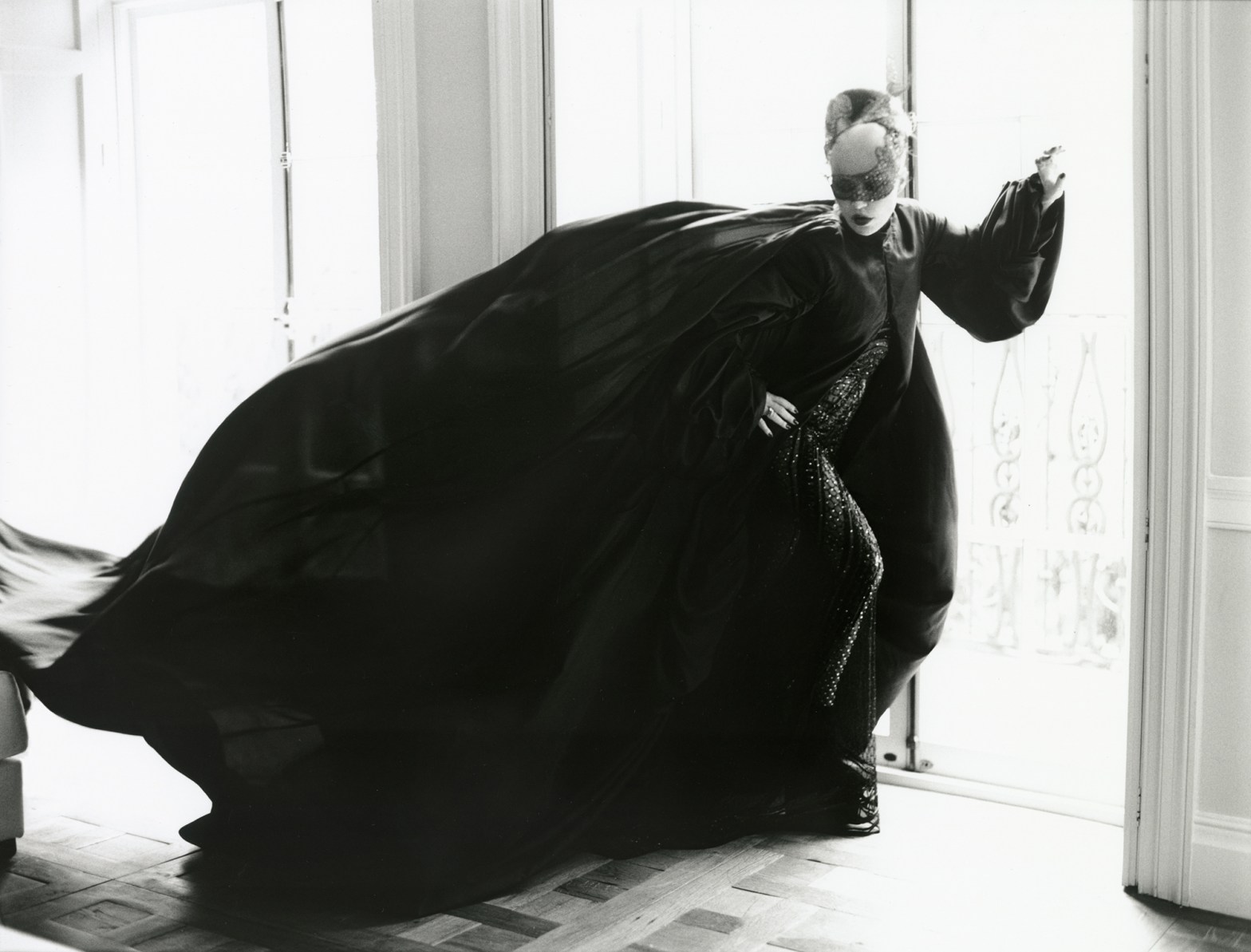
There are fashion icons, and then there is Daphne Guinness: heiress, collector, singer, and self-styled chameleon who has turned her own life into a one-woman show. She exists at the intersection of haute couture and rock opera, at once muse and maker, wearing her legacy as easily as her Alexander McQueen armadillo boots.
A Life Staged in Couture
Born into the Guinness family in 1967, Daphne Guinness was raised among castles, collections, and eccentricities. Where some inheritances weigh heavy, she has made hers an aesthetic — aristocracy reframed as avant-garde. For decades she has been one of fashion’s most consistent fixtures, known as much for her personal wardrobe as for her friendships with the designers who defined an era: McQueen, Galliano, Lagerfeld.
Her closets — more museum than storage — hold one of the most significant private couture collections in existence, yet Guinness wears the clothes not as relics but as instruments. A Balenciaga jacket, a McQueen corset, a Gareth Pugh gown: on her body they are not garments but punctuation marks in a continuous performance of self.
The McQueen Connection
It is impossible to speak of Guinness without speaking of Alexander McQueen. She was not only his muse but his intimate, a creative ally whose own flamboyance mirrored his. After his death in 2010, she purchased his entire final collection directly from Isabella Blow’s estate, ensuring it would not be dispersed. Her act was both personal and curatorial: a recognition that clothes can hold memory, and that to preserve them is to preserve a life.
Music as Mirror
But Guinness has always resisted the role of passive muse. In the last decade, she has shifted her performance into sound. With producer Tony Visconti — best known for his collaborations with David Bowie — she has released a series of albums (Optimist in Black, Revelations, Hallucinations) that combine art rock, glam, and chanson.
Her music is both confessional and theatrical: a husky voice layered with orchestration, lyrics that flirt with despair and defiance. Like her fashion, it resists categorization — too polished to be raw, too strange to be pop. To listen is to enter her world, part cabaret, part cathedral.
The Stagecraft of Self
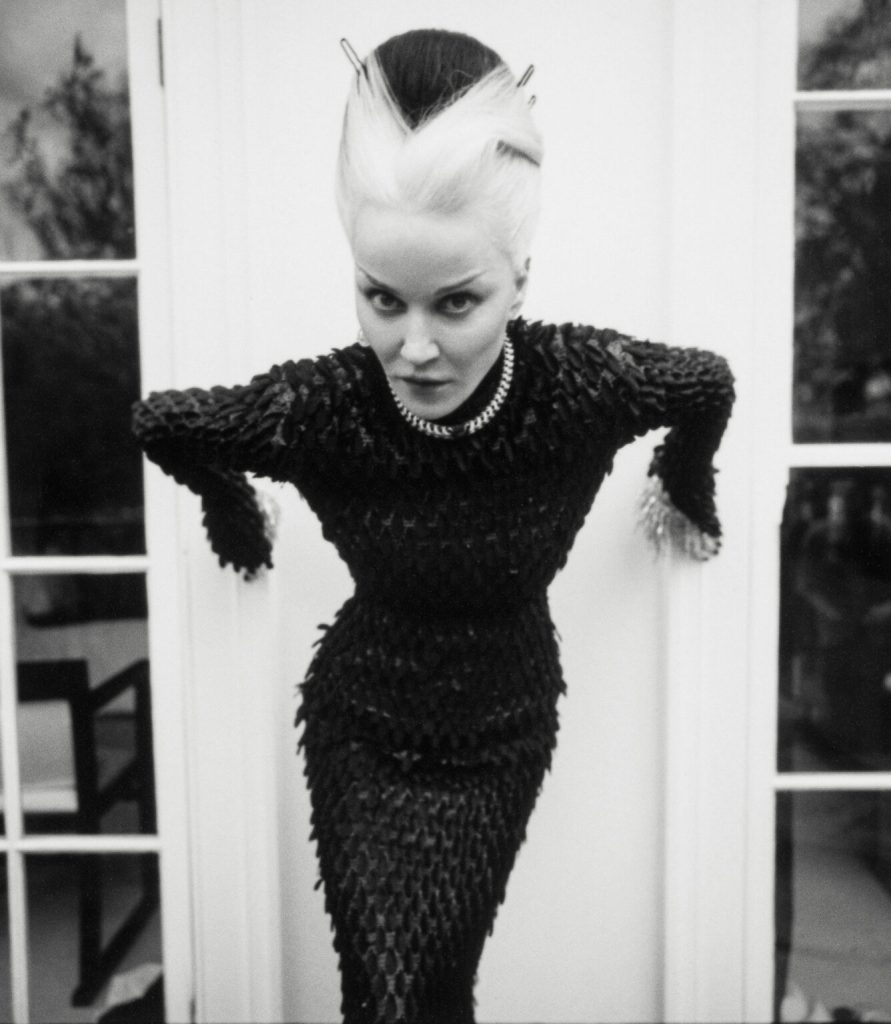
Daphne Guinness treats public life as stagecraft. Her towering heels, silver-streaked hair, sculptural silhouettes: these are not affectations but costumes in a life she plays as performance art. She has staged exhibitions (Daphne Guinness at FIT, 2011), short films (The Legend of Lady White Snake), and immersive installations where clothing, film, and sound merge.
Unlike many socialites, she is not content with appearance alone. Each presentation becomes commentary: on femininity, on excess, on the porous line between fashion and theatre. She inhabits the tradition of the dandy, the cabaret singer, the avant-garde artist who makes life indistinguishable from art.
A One-Woman Show
To watch Daphne Guinness is to realize that she has been staging a one-woman show for decades — not on Broadway, but on the shifting stages of fashion week, recording studios, and gallery spaces. Her medium is not only music or couture but her very presence: a curated amalgam of history, luxury, and subversion.
In this sense, Guinness is not a model or a singer or a collector. She is a Gesamtkunstwerk — a “total artwork” — in the Wagnerian sense, collapsing boundaries between disciplines.
The Legacy
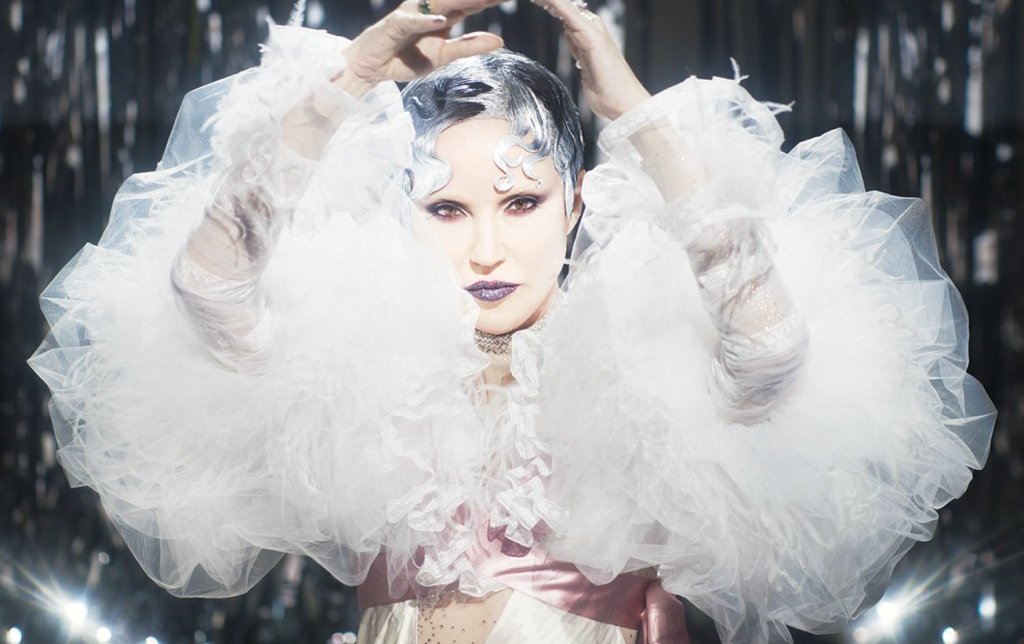
What is her legacy? Partly preservation: a private collection of couture that rivals institutions. Partly creation: music that pushes against genre. But most of all, it is the insistence that identity itself can be art. In an era of relentless exposure and fast fashion, Daphne Guinness continues to resist dilution. She is fashion’s diva of defiance, forever turning the act of being into a performance worth watching.
Key Works: Daphne Guinness
Couture Collection
Over 100 pieces of Alexander McQueen, Galliano, Balenciaga, and Gareth Pugh. Many are displayed in museum exhibitions, including her landmark Daphne Guinness show at the Museum at FIT (2011).
Music
- Optimist in Black (2016) — Produced by Tony Visconti, an elegiac debut inspired by Bowie and Roxy Music.
- Revelations (2020) — Dark, theatrical, blending glam rock and chanson.
- Hallucinations (2022) — Expansive art rock, described as her most experimental.
Films & Installations
- The Legend of Lady White Snake (2011) — A short film directed by Indrani, exploring mythology and couture.
- Cashmere (2008) — A collaboration with artist Nick Knight.
- Exhibitions — Alongside FIT, her work and collection have appeared in the V&A, MoMu Antwerp, and The Met Costume Institute’s Savage Beauty.
Collaborations
Muse and confidante of Alexander McQueen, Isabella Blow, Karl Lagerfeld, and Gareth Pugh. Worked closely with Tony Visconti on her musical projects.
Suggested Listening
- “Fatal Flaw” (Optimist in Black) — A glam-tinged meditation on love’s contradictions.
- “Revelations” (Revelations) — Baroque rock with echoes of Bowie’s Berlin years.
- “Looking Glass” (Revelations) — A haunting ballad that channels chanson traditions.
- “Love Is War” (Hallucinations) — Sweeping art rock, theatrical in scale.
- “Hallucinations” (Hallucinations) — Title track and statement piece, a sonic portrait of dream and distortion.
 My World of Interiors