
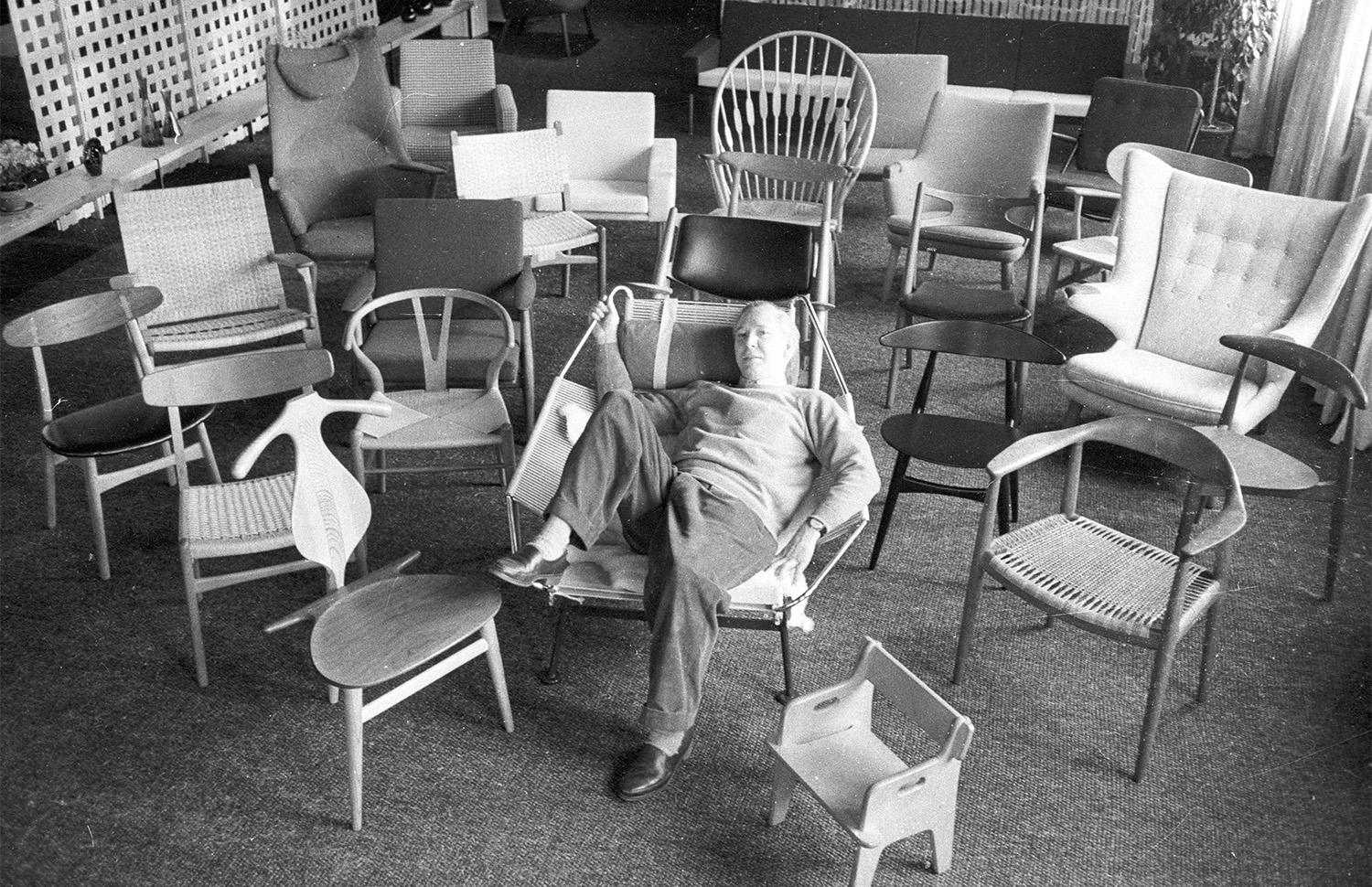
From Hans Wegner’s wishbone curve to Arne Jacobsen’s sculptural silhouettes, Danish design has shaped the way the world sits, eats, and lives. Clean lines, honest materials, and humanist ideals continue to make these pieces not only classics but companions across generations.
The Birth of a Design Language
In the years after World War II, Denmark emerged as an unlikely epicenter of modern design. The country was small, resources were limited, but necessity bred invention. Designers embraced simplicity, function, and craftsmanship, guided by the philosophy that beauty should live in everyday life, not be reserved for galleries.
By the 1950s and ’60s, names like Hans J. Wegner, Arne Jacobsen, Finn Juhl, Børge Mogensen, Poul Kjærholm, and Kaare Klint had become synonymous with a new kind of luxury: understated, democratic, and enduring.
Hallmarks of Danish Furniture
- Natural Materials: Oak, teak, walnut, and ash — worked with respect for the grain. Leather, wool, and paper cord are staples.
- Craftsmanship: Many icons were handcrafted by master cabinetmakers before entering wider production.
- Human-Centered Design: Chairs designed to cradle the body, tables scaled to the rhythms of daily life.
- Form & Function in Harmony: Decoration stripped away, leaving proportion and detail to carry beauty.
Ten Icons of Danish Furniture Design
1. The Wishbone Chair (CH24), Hans J. Wegner, 1949
Perhaps the most recognized Danish chair, with its Y-shaped back and woven paper cord seat. Still produced by Carl Hansen & Søn, it embodies lightness, durability, and sculptural grace.
2. The Egg Chair, Arne Jacobsen, 1958
Created for Copenhagen’s SAS Royal Hotel, the Egg envelops the sitter in a curving cocoon. Its futuristic form remains a symbol of Scandinavian modernity.
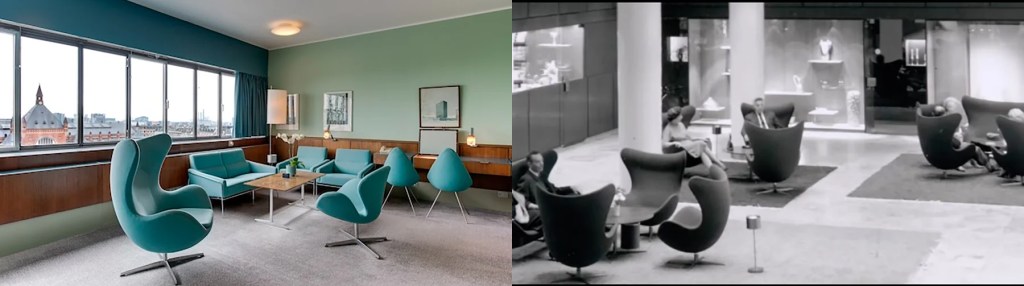
3. The Swan Chair, Arne Jacobsen, 1958
A sibling to the Egg, the Swan is all fluidity and elegance, designed without straight lines. Ideal in lobbies and living rooms alike, it is both playful and refined.
4. The Chieftain Chair, Finn Juhl, 1949
Monumental in presence yet delicate in line. Inspired by tribal art and modern sculpture, the Chieftain elevated Danish design into the realm of fine art.

5. The Spanish Chair, Børge Mogensen, 1958
Broad armrests double as side tables, while saddle leather slings age beautifully over time. Functional, honest, and unapologetically robust.
6. The PK22 Chair, Poul Kjærholm, 1956
Minimalist to its core: steel frame, leather or canvas seat. Kjærholm believed steel was as noble as wood, and the PK22 proves it — cool, elegant, architectural.
7. The Faaborg Chair, Kaare Klint, 1914
The grandfather of Danish modern design. Kaare Klint’s early work at the Danish Design School laid the foundation for the movement’s focus on ergonomics and clarity.
8. The Shell Chair (CH07), Hans J. Wegner, 1963
Initially too radical for its time, the three-legged Shell Chair has since become a beloved icon. Its floating seat and wing-like arms showcase Wegner’s sculptural daring.
9. The Poet Sofa, Finn Juhl, 1941
Compact and curvaceous, the Poet feels almost anthropomorphic. Upholstered in rich fabrics, it exemplifies the Danish ability to marry intimacy with elegance.
10. The Papa Bear Chair, Hans J. Wegner, 1951
A throne of comfort, with padded armrests that seem to hug the sitter. Nicknamed by a critic, it remains one of the most endearing Danish design classics.
The Global Legacy
These pieces did not remain in Denmark. They furnished embassies, airports, universities, and homes worldwide. They appeared in films, in fashion editorials, in corporate boardrooms, and in private sanctuaries. Their appeal lies in their paradox: restrained yet warm, minimalist yet deeply humane.
Today, as sustainability and timelessness eclipse fast trends, Danish design feels more relevant than ever. A Wegner chair or a Juhl sofa is not just a piece of furniture; it is a philosophy of living — one where beauty is inseparable from use, and elegance is found in restraint.
 My World of Interiors