
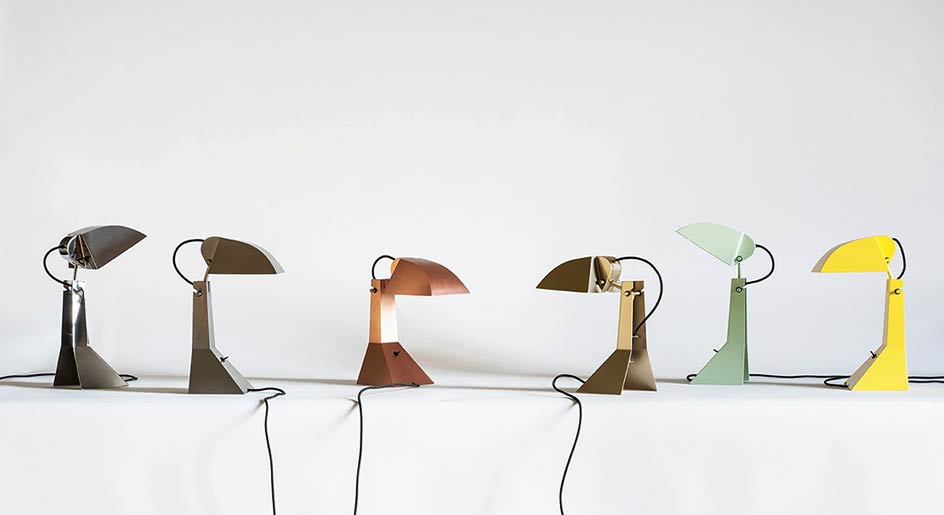
In the world of interiors, few objects define a space quite like a lamp. More than a source of illumination, the right lamp is a statement — sculptural, atmospheric, and unmistakably stylish. Nowhere has lighting been treated with as much flair as in Italy, where design houses and visionary creators transformed lamps into icons of modern living.
Arco Lamp — Achille & Pier Giacomo Castiglioni (1962, Flos)
Perhaps the most recognizable of all Italian lamps, the Arco is a feat of both engineering and elegance. With its Carrara marble base and sweeping steel arc that suspends a dome-shaped shade, it redefined what a floor lamp could be: architectural, cinematic, and perfect for open-plan living. The Arco remains a staple of fashionable apartments, often photographed as much as the furniture it lights.

Atollo Lamp — Vico Magistretti (1977, Oluce)
The Atollo is geometry made luminous. A hemisphere shade balanced on a cylinder and cone, its pure forms have made it one of the most reproduced and recognizable table lamps in the world. Minimal yet theatrical, it is the kind of lamp that signals impeccable taste — featured in both Milanese palazzos and New York lofts alike.
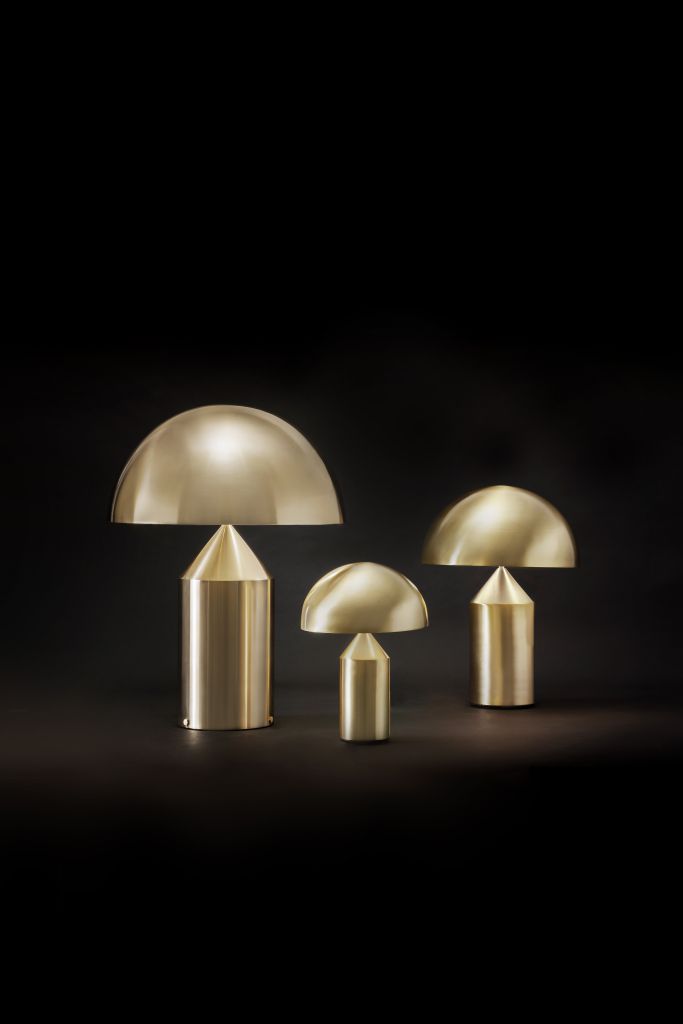
Taccia Lamp — Achille & Pier Giacomo Castiglioni (1962, Flos)
Nicknamed the “upside-down lamp,” the Taccia places a glass bowl on a ridged base, reflecting light upward to create a dramatic, ambient glow. It is both functional and sculptural — a classic of Italian design that feels as fresh in a contemporary setting as it did in the 1960s.
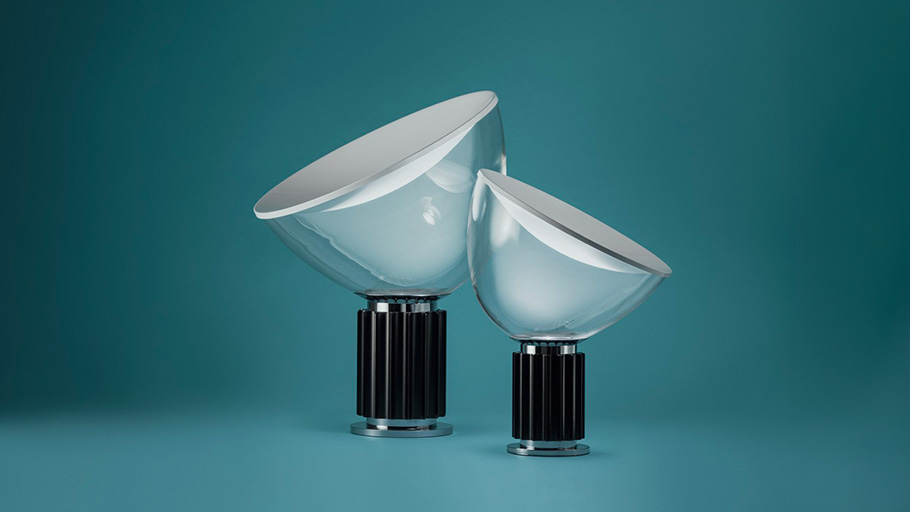
Tolomeo Lamp — Michele De Lucchi & Giancarlo Fassina (1987, Artemide)
If the Arco is cinematic and the Atollo sculptural, the Tolomeo is effortlessly versatile. Its clean aluminum arms and adjustable shade have made it a design classic in offices and studios worldwide. It is the Italian answer to functional elegance: refined, intelligent, and quietly chic.

Nesso Lamp — Giancarlo Mattioli (1967, Artemide)
A burst of pop futurism, the Nesso is a mushroom-shaped lamp made of molded plastic in bright orange or white. When introduced in the late 1960s, it epitomized Italian optimism and experimentation with new materials. Today, it remains a fashionable favorite — playful, retro, and striking.
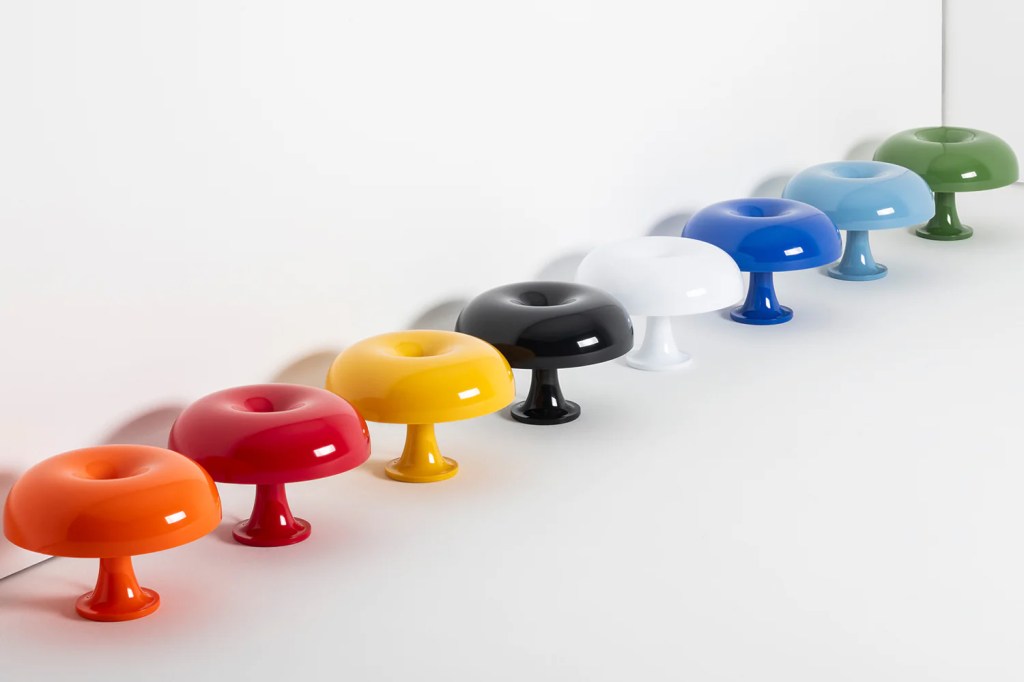
Honorable Mention: E63 by Umberto Riva (1969, Bieffeplast / FontanaArte)
Though less instantly recognizable than the Arco or Atollo, the E63 — sometimes nicknamed the Robot — is one of Italy’s most refined lighting designs. After studying in Venice under Carlo Scarpa, Umberto Riva opened his architecture practice in Milan and quickly established himself as a master of precision and detail.
The E63 was originally conceived for a competition, later taken into production in 1969 by Bieffeplast and FontanaArte. Its distinctive open-back construction makes it unusual: a table lamp that also functions beautifully as a wall-mounted fixture. With its geometric rigor and sculptural minimalism, the E63 embodies Riva’s architectural eye, balancing utility with an understated elegance.
Today, it stands as a cult classic among collectors — not as ubiquitous as the Arco or Atollo, but treasured by those with a connoisseur’s eye for Italian design.

Italians Do It Better
These lamps endure not because they are nostalgic, but because they transcend their eras. Each has become more than an object: the Arco signals cosmopolitan sophistication, the Atollo minimalist perfection, the Taccia sculptural drama, the Tolomeo intellectual clarity, and the Nesso pop-art playfulness. Together, they form the canon of Italian lighting — design that is as much about fashion and atmosphere as it is about illumination.
 My World of Interiors