

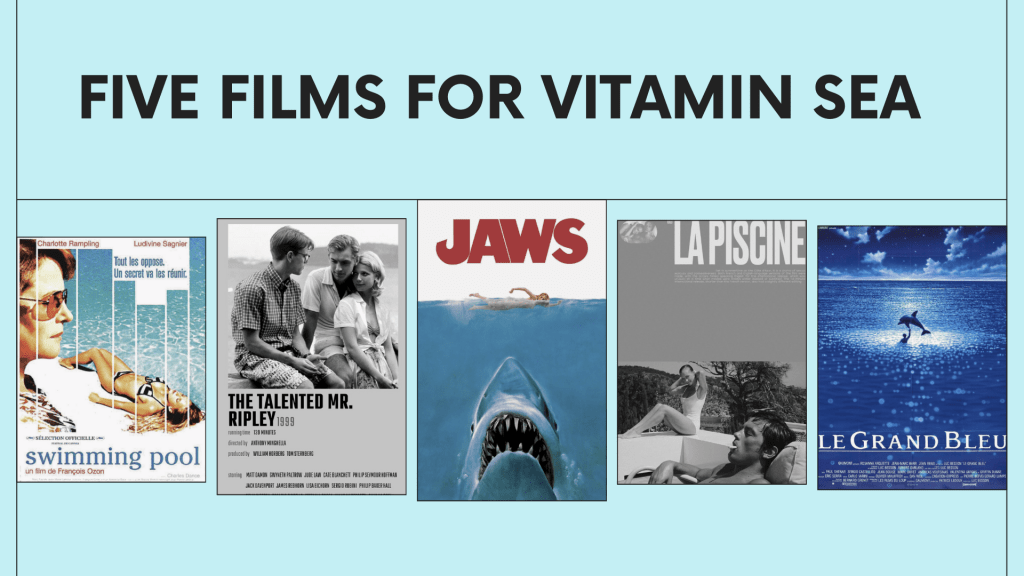
When the days shorten and the air turns crisp, nothing transports us back to sun-soaked afternoons and the languid rhythm of the Mediterranean quite like cinema. Some films capture not just water and light, but also the psychology of summer — its languor, its tensions, its beauty, and its dangers. Here are five iconic films that immerse you in the sea and its myths, from American suspense to French existentialism.
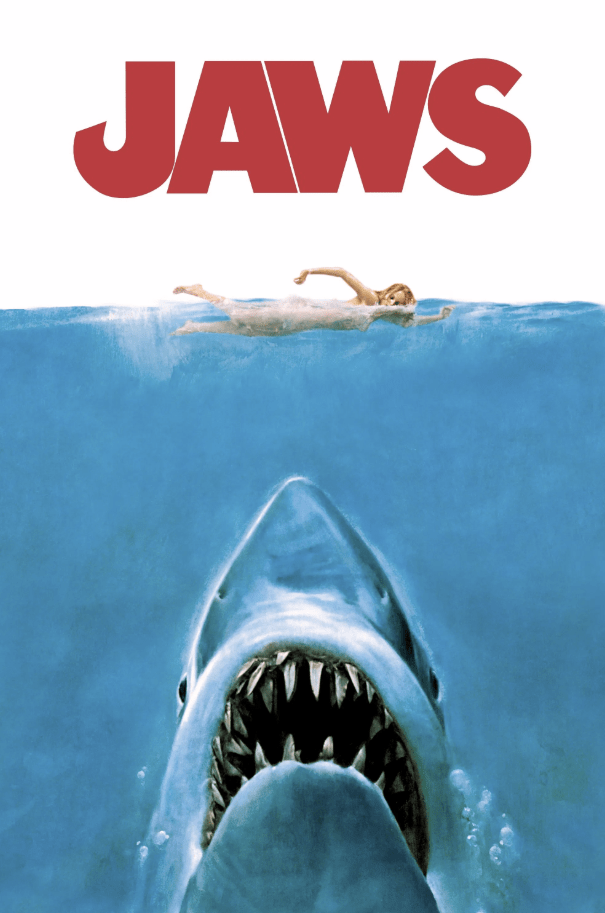
Jaws (1975, dir. Steven Spielberg)
The archetype of the summer blockbuster, Jaws is more than a shark thriller — it is a meditation on fear, community, and the fragile equilibrium between man and nature. Filmed largely on Martha’s Vineyard, Spielberg turns the New England coastline into a stage for primal dread. The salt-air realism of small-town America collides with the vast, unknowable ocean. As much as the suspense keeps viewers on edge, it is the film’s evocation of summer seaside life — beaches, sailing, the rituals of holiday escape — that make it timeless.
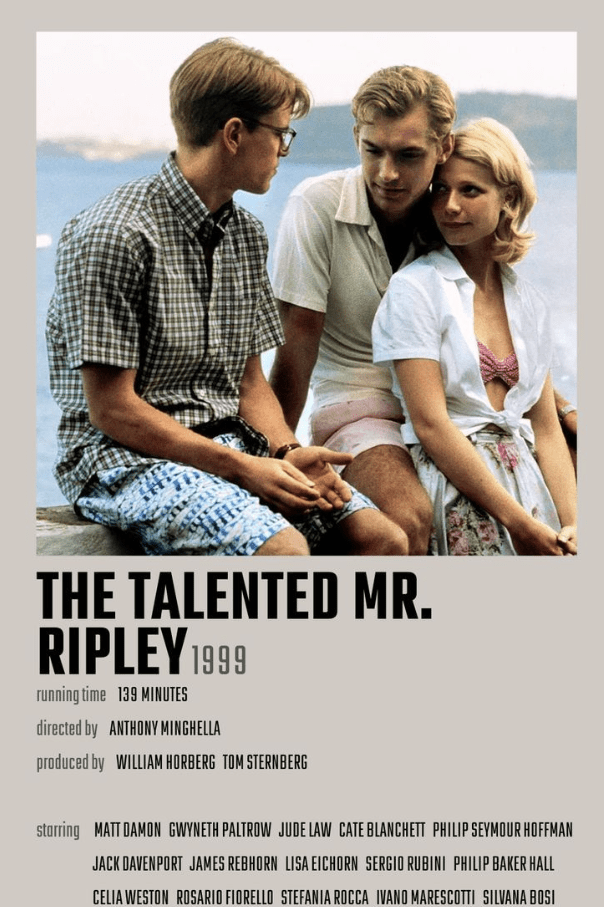
The Talented Mr. Ripley (1999, dir. Anthony Minghella)
Adapted from Patricia Highsmith’s novel, Minghella’s film is a portrait of seduction, identity, and obsession set against the dazzling backdrop of Italy’s coastline. Shot in Ischia, Procida, Rome, and Venice, it is as much a travelogue of the Mediterranean as it is a psychological thriller. Sun-washed villas, narrow piazzas, and the hypnotic glitter of the Tyrrhenian Sea frame the drama of Tom Ripley, played by Matt Damon, and his fatal entanglement with Dickie Greenleaf (Jude Law) and Marge Sherwood (Gwyneth Paltrow). It is both lush and unsettling, embodying the double-edge of summer’s beauty.
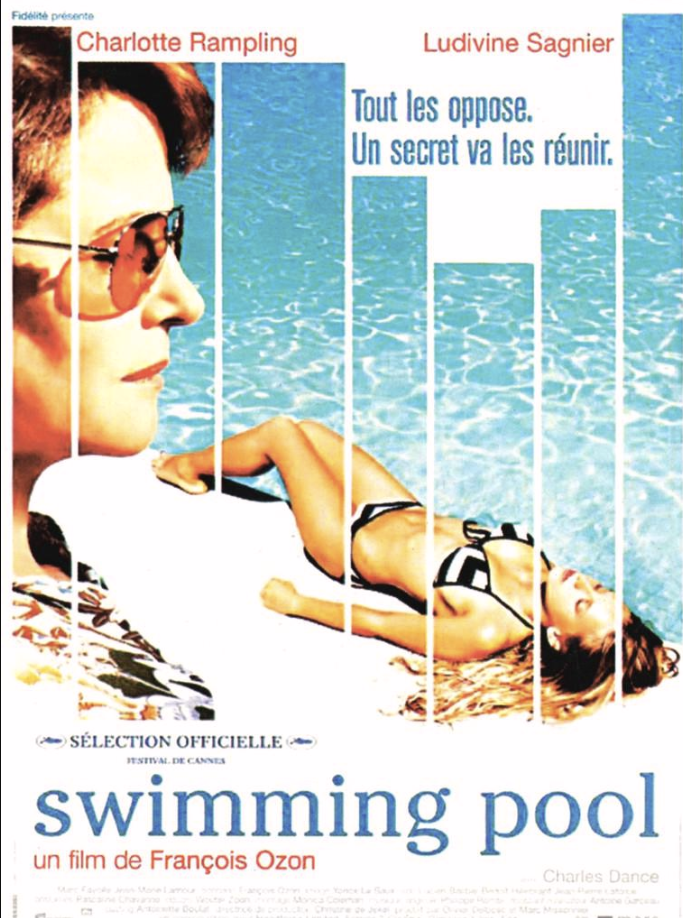
Swimming Pool (2003, dir. François Ozon)
Set in the Luberon region of Provence, Ozon’s film is a study of creativity, repression, and desire, distilled into the hypnotic rhythm of a sun-drenched swimming pool. Charlotte Rampling plays Sarah Morton, an English crime novelist in search of inspiration, who retreats to her publisher’s French villa. What begins as solitude is disturbed by the arrival of a provocative young woman (Ludivine Sagnier). The pool becomes a liminal space — a site of erotic tension, creativity, and blurred reality. More than a thriller, it is a cinematic essay on gaze, authorship, and the heat of summer idleness.
La Piscine (1969, dir. Jacques Deray)
Few films distil summer ennui and sensual danger as elegantly as Deray’s La Piscine. Starring Alain Delon, Romy Schneider, Maurice Ronet, and a young Jane Birkin, the film unfolds at a villa near Saint-Tropez, where a swimming pool becomes the symbolic centre of desire, rivalry, and violence. Shot in luminous colour, with the Côte d’Azur as backdrop, it captures the mood of late-1960s French Riviera hedonism: languid afternoons, sunlit bodies, and the undercurrent of jealousy that eventually erupts. Its influence on later films — including Ozon’s Swimming Pool — remains profound.

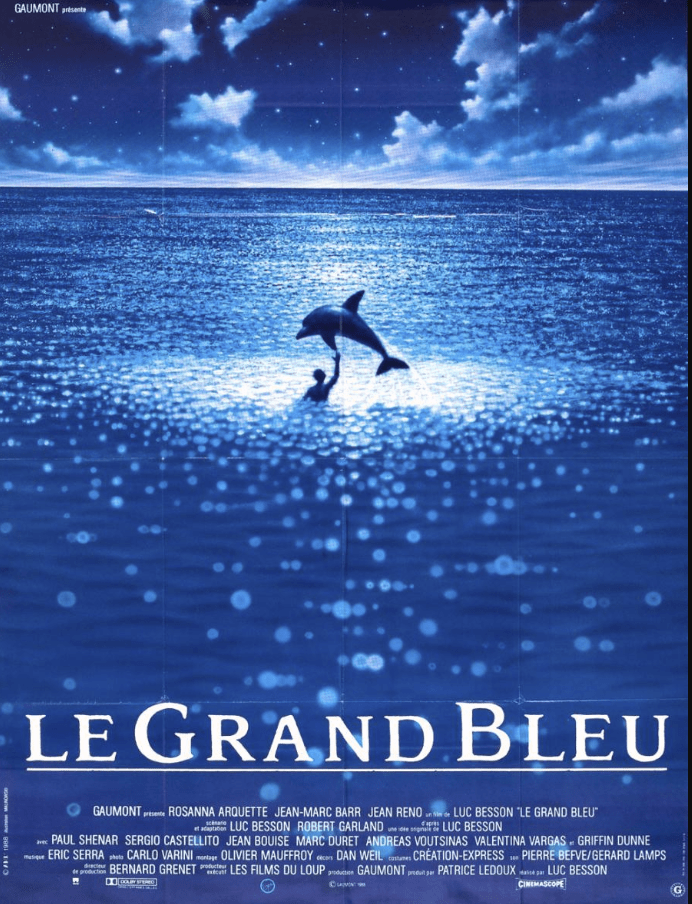
The Big Blue (Le Grand Bleu, 1988, dir. Luc Besson)
A cult favourite in France and beyond, Besson’s film is a dreamy, romanticised tale of rivalry and obsession among free divers. Shot in the Aegean, Taormina, and the Caribbean, The Big Blue transforms the sea into a realm of myth and transcendence. Jean-Marc Barr and Jean Reno star as childhood friends turned competitive divers, drawn ever deeper into the ocean’s hypnotic embrace. With Éric Serra’s iconic score, the film epitomises 1980s French cinema’s blend of romantic excess and existential yearning. The sea here is not simply setting but destiny.
TL;DR
Together, these films remind us of the sea’s dual nature: its serenity and its danger, its capacity to both soothe and unsettle. Whether the Mediterranean’s glittering waters, the stillness of a French villa pool, or the Atlantic’s primal vastness, cinema’s relationship with summer and water is always layered — a mixture of nostalgia, beauty, and unease. As autumn arrives, these works let us dive back into the luminous heat of summer, if only for a few hours.
Click the picture to go to our Amazon store
 My World of Interiors