

Where Stone, Sea & Ceremony Converge
Mediterranean sunlight, limestone façades glowing gold, streets twisting like ribbons of history — Malta is an island nation that seems small on the map yet vast in its layers of culture. Comprising Malta, Gozo, and Comino, the archipelago is both crossroads and sanctuary: Neolithic temples older than the pyramids, Baroque palaces of the Knights of St. John, and coastal cliffs where the Mediterranean feels infinite.
For the discerning traveler, Malta is not just a getaway but an immersion: ancient rites meet contemporary luxury, baroque grandeur meets turquoise sea. Here’s how to experience the island at its most refined.
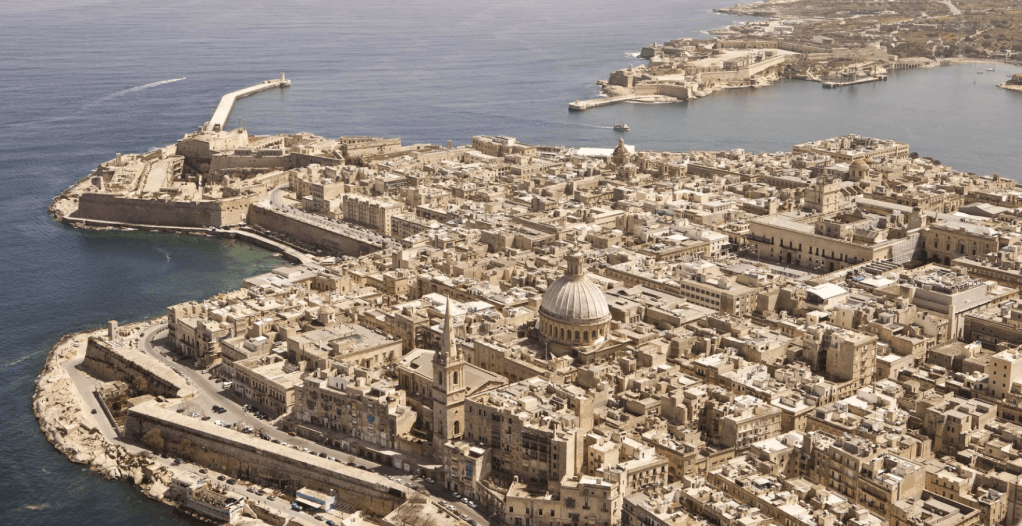
What to Do & Where to Go
Valletta — The Baroque Jewel
The capital, a UNESCO World Heritage City, is compact but richly layered. Walk Republic Street, step into St. John’s Co-Cathedral with its Caravaggio masterpiece, and explore the Grandmaster’s Palace with its armoury and frescoed halls. For a deeper time-travel, the National Museum of Archaeology reveals Malta’s prehistoric treasures.
The Megalithic Temples & Hypogeum
The Megalithic Temples — Ġgantija, Ħaġar Qim, Mnajdra, Tarxien — date from the 4th and 3rd millennia BC and are among the world’s oldest free-standing structures. The Ħal Saflieni Hypogeum is subterranean, carved with chambers and spirals: access is strictly limited, so book months ahead.
Mdina — The Silent City
Malta’s old capital, Mdina, is a walled city of lantern-lit alleys and stone palazzi. Walk its ramparts at sunset for views across the island. Visit Vilhena Palace, housing the National Museum of Natural History, or simply let the silence envelop you.
Gozo & Comino
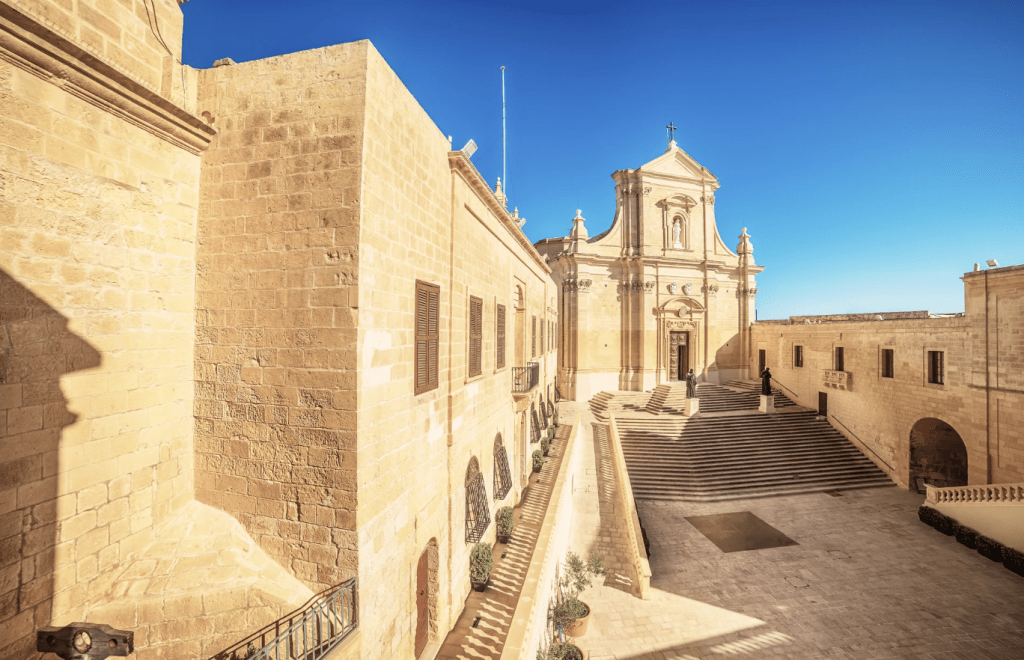
Gozo is greener and slower: home to the Ġgantija Temples and rustic vineyards. Its Cittadella in Victoria is a hilltop fortress town. Comino is famed for the Blue Lagoon — dazzling turquoise, best visited early morning or off-season for serenity.
Fortresses & Coastal Vistas
Malta’s story is one of fortification. Fort St. Angelo in Birgu, the bastions of Valletta, and scattered coastal watchtowers all bear witness to centuries of maritime power. For nature, head to the Dingli Cliffs at sunset for one of the island’s most dramatic panoramas.
Where to Stay
- Iniala Harbour House (Valletta) — Restored townhouses with sweeping Grand Harbour views, modern luxury woven through heritage architecture.
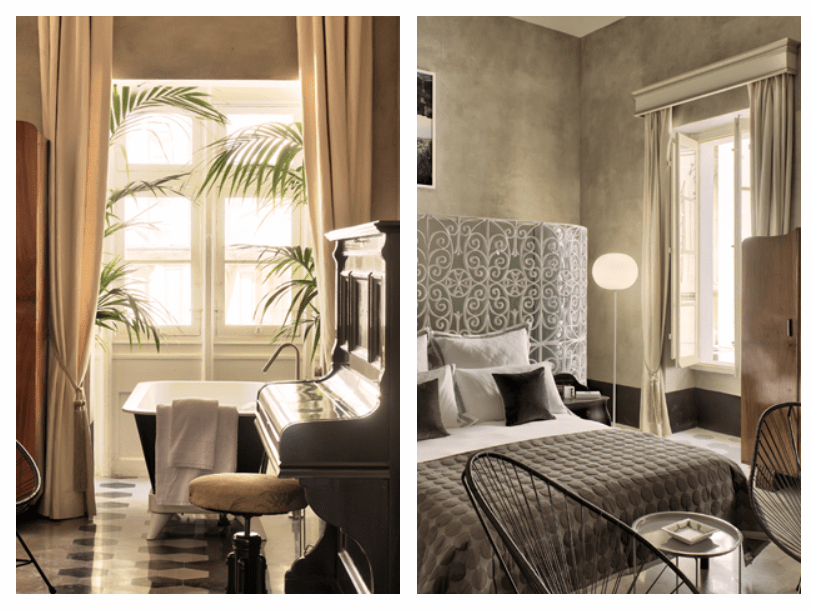
- Casa Ellul (Valletta) — A 19th-century palazzo turned boutique retreat, balancing Maltese character with sleek interiors.
- The Phoenicia Malta (Floriana/Valletta) — Malta’s grande dame hotel: formal gardens, marble halls, and timeless service.
- Radisson Blu Golden Sands (north coast) — Beach-front resort luxury overlooking Golden Bay.
- Kempinski Hotel San Lawrenz (Gozo) — Tranquil, resort-style indulgence, ideal for a slower pace on Malta’s greener sister island.
Where to Eat & Drink
- Attica (Melbourne transplant on guest chef residencies; note: Malta has its own Attard fine dining scene too)
- ION Harbour (Valletta) — Michelin-starred dining overlooking the Grand Harbour.
- De Mondion (Mdina) — Refined dining in a palazzo with panoramic island views.
- Rubino (Valletta) — Old-world charm with contemporary Mediterranean cooking.
- Marsaxlokk Fish Market (Sundays) — Authentic local colour, fresh catch, and harbourside restaurants.
Practicalities
- Best time to visit: May–June or September–October — warm seas, lighter crowds, perfect for walking and temple visits.
- Getting around: Ferries, buses, and taxis work well; hire a driver for temple or coastal day trips.
- Tickets: Book the Hypogeum months in advance. For temples, a Heritage Malta pass is worthwhile.
- Cultural etiquette: Churches require modest dress; local festas (religious festivals) are celebratory but deeply traditional.
Why Malta Rewards the Curious
To travel Malta is to fold time. One moment you are among Neolithic stones, the next within Caravaggio’s chiaroscuro, the next sipping a cocktail on a rooftop terrace above the Grand Harbour. The island is layered — an academic’s paradise as much as a hedonist’s playground. For those who travel in pursuit of both depth and delight, Malta offers a Mediterranean experience like no other.
📌 Guide Card: Malta at a Glance
- Capital: Valletta
- Language: Maltese & English
- Currency: Euro (€)
- Best Season: May–June, Sept–Oct
- Unmissable: St. John’s Co-Cathedral, Hypogeum, Mdina at night, Dingli Cliffs at sunset, Blue Lagoon (early morning)
- Top Hotels: Iniala Harbour House, Casa Ellul, The Phoenicia
- Tickets & Info: Visit Malta Official
 My World of Interiors