
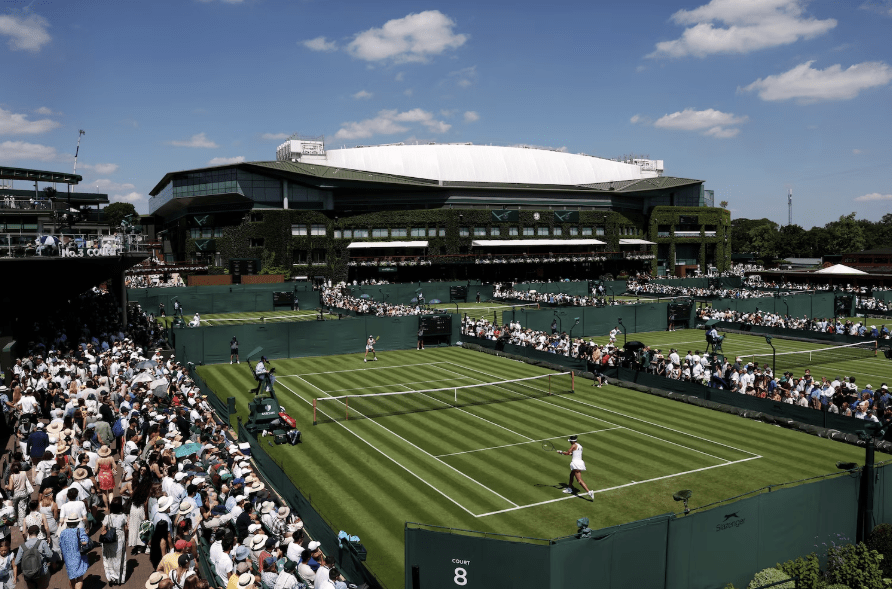
Tennis’s four Grand Slams are not just tournaments—they are seasonal rituals, each with its own character, prestige, and sensory atmosphere. From the hard courts of Melbourne in the heat of January to the lush grass of Wimbledon under fading British summer nights, each stop on the tour offers something distinct. For travelers, they are as much about place and ritual as they are about sport.
Our Amazon store companion list
Mood & Atmosphere: What Sets Each Apart
- Australian Open (“The Happy Slam”)
Melbourne in January buzzes with cosmopolitan energy: outdoor bars, food festivals, and a city alive with summer. The Open itself is inclusive and vibrant—families, students, international fans, and seasoned travelers all converge on Melbourne Park. The atmosphere is youthful and relaxed, more festival than formal, with night matches spilling into the early hours and rooftop parties keeping the mood light. - French Open / Roland-Garros
Roland-Garros is tennis seen through the prism of Parisian elegance. The red clay sets a theatrical tone—slow rallies, dust rising in the air, and the sense of tradition deeply embedded in French sport. The crowd is passionate, chic, and vocal, often with a café-culture vibe: champagne flutes in hand, discussions about art and politics drifting as much as tennis. The atmosphere is intense but stylish—an endurance contest that feels both romantic and combative. - Wimbledon
Wimbledon is the cathedral of tennis. The manicured grass, the all-white dress code, and strawberries with cream give it a sense of ritual and restraint. Silence falls as players serve, punctuated by gasps and applause. The audience includes royalty, international dignitaries, and celebrities, but also those who have queued for hours simply to gain entry. Tradition governs everything: no sponsor logos on Centre Court, players bowing or curtsying to the Royal Box, the almost ceremonial pace of matches unfolding on grass. It feels timeless—half social season, half sporting contest. - US Open
The US Open is pure spectacle: New York in late summer, brash, noisy, exuberant. Arthur Ashe Stadium fills with celebrities, Wall Street bankers, families, and tourists who want to taste the electric pulse of the city. Matches stretch past midnight, with raucous crowds cheering and jeering, Mexican waves rolling across stands, and the skyline glittering in the background. It is unapologetically loud and theatrical, with a carnival energy that sets it apart from its European cousins.
The Grand Slam Travel Guide
Australian Open — Melbourne, January
Stay:
- Park Hyatt Melbourne — refined classic luxury
- Crown Towers Melbourne — modern glamour with skyline views
Eat & Drink:
- Attica — one of Australia’s most acclaimed restaurants
- Cumulus Inc. — smart, contemporary dining in Flinders Lane
Culture: National Gallery of Victoria, Royal Botanic Gardens, or a Great Ocean Road day trip.
Tickets: ausopen.com/tickets
French Open — Paris, May–June
Stay:
- Le Bristol Paris — classic Parisian luxury
- Hôtel Lutetia — Left Bank icon with Art Deco style
Eat & Drink:
- Café de Flore — quintessential Parisian café culture
- L’Avenue — fashionable stop for chic lunches
Culture: Luxembourg Gardens, Musée d’Orsay, evening walks along the Seine.
Tickets: tickets.rolandgarros.com
Wimbledon — London, June–July
Stay:
- Claridge’s — Mayfair’s grand hotel, timelessly elegant
- The Dorchester — opulent classic with Hyde Park views
- Hotel Café Royal — contemporary luxury near Regent Street
Eat & Drink:
- Fortnum & Mason — the epitome of afternoon tea
- Daphne’s — chic Chelsea Italian for summer dining
Culture: Pair with Royal Ascot, Henley Regatta, or an exhibition at the Royal Academy.
Tickets: wimbledon.com (ballot, debentures, The Queue).
US Open — New York, August–September
Stay:
- The Baccarat Hotel — crystal-laden elegance opposite MoMA
- The Mark Hotel — Upper East Side sophistication
- The Standard, High Line — chic downtown edge
Eat & Drink:
- Bemelmans Bar — iconic cocktails at The Carlyle
- Balthazar — late-night French brasserie in SoHo
- Le Bain — rooftop with skyline views
Culture: MoMA, Broadway, or escape to the Hamptons post-match.
Tickets: usopen.org/tickets
TL;DR
To attend the Grand Slams is to enter four different worlds, each reflecting its host city and culture. Melbourne offers convivial summer, Paris delivers elegance on clay, London embodies tradition on grass, and New York stages tennis as theatre. To follow them all is to live the global calendar of sport, culture, and travel.
 My World of Interiors
One thought on “The Grand Slam Circuit: A Comparative Journey Through the Four Majors”