
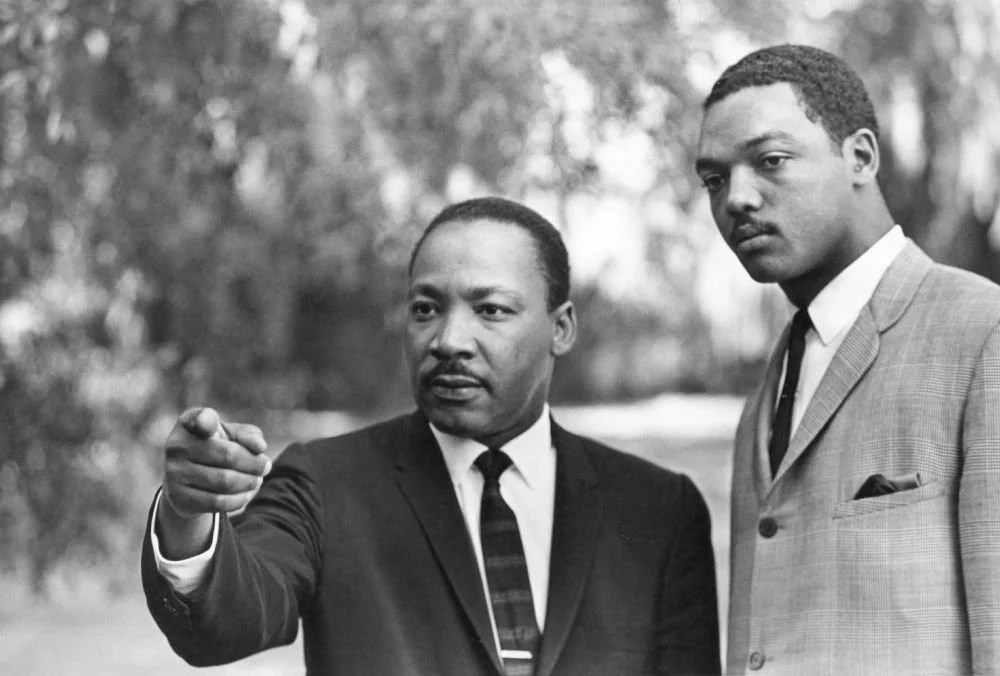
The Rev Jesse Jackson, who has died aged 84, was never merely a witness to history. He was one of its great interrupters.
For more than half a century, Jackson stood at the charged intersection of race, religion and American democracy – sometimes welcomed, often derided, always impossible to ignore. From the balcony of the Lorraine Motel, where he was present in the aftermath of Martin Luther King Jr’s assassination in 1968, to the raucous floor of the Democratic National Convention in 1984 and 1988, Jackson insisted that the dispossessed had not only grievances but a constituency – and that the constituency had a voice.
He called it the Rainbow Coalition.
To some, it sounded utopian, even naïve. To others, it was the first serious attempt to articulate a multiracial, working-class politics in the post-civil rights era: Black Americans, Latino voters, poor white farmers, labour unions, LGBTQ+ activists, peace campaigners – bound together not by sentiment, but by shared exclusion from power. Long before “intersectionality” entered the academic lexicon, Jackson was mapping its electoral possibilities.
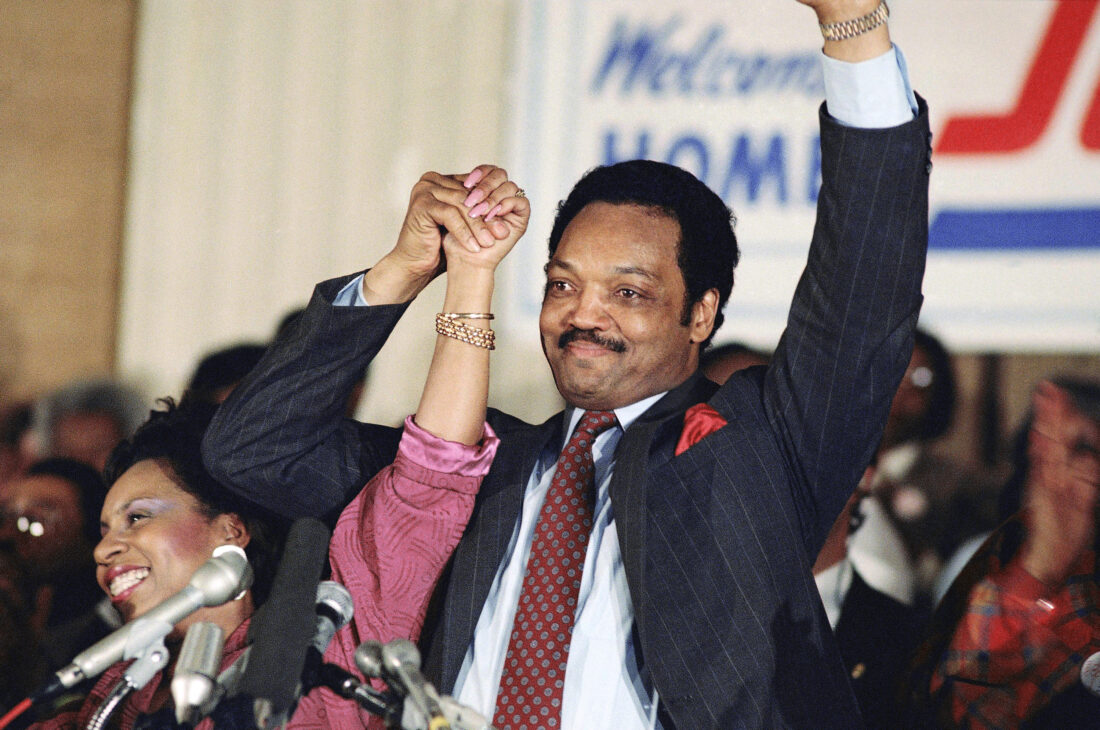
Born in Greenville, South Carolina, in 1941, Jackson was shaped by the rigid hierarchies of the Jim Crow south. He was a gifted student and athlete, later studying at North Carolina A&T State University and then at the Chicago Theological Seminary, where he embraced the fusion of gospel and politics that would define his public life. Ordained as a Baptist minister, he quickly emerged as a charismatic organiser within the Southern Christian Leadership Conference (SCLC), founded by Martin Luther King Jr..
Jackson’s oratory was unmistakable – rhythmic, biblical, sharp with alliteration. “Keep hope alive,” he would thunder, turning a campaign slogan into a secular hymn. In a country suspicious of prophetic voices, he made no effort to soften his cadences. Politics, for Jackson, was a moral drama.
That conviction propelled his two historic bids for the Democratic presidential nomination. In 1984, he became the second African American (after Shirley Chisholm) to mount a major campaign for the presidency. Four years later, he won 13 primaries and caucuses, finishing second in the delegate count. Though he did not secure the nomination, his campaigns transformed the party’s internal rules, expanding voter participation and altering the Democratic coalition for decades.
His critics – and there were many – accused him of opportunism and grandstanding. He weathered controversies, including remarks widely condemned as antisemitic during the 1984 campaign, for which he apologised. Even among allies, there were frustrations: Jackson could seem impulsive, drawn to the spotlight, less patient with organisational detail than with the poetry of protest.
Yet it is impossible to disentangle late 20th-century Democratic politics from his influence. The voter registration drives he championed swelled Black turnout across the south. The notion that the Democratic party must speak directly to those at the economic margins – and not merely as an afterthought – became harder to ignore.

Jackson’s activism extended well beyond electoral politics. He travelled repeatedly abroad as an unofficial diplomat, meeting political prisoners, negotiating hostage releases and forging ties with figures such as Nelson Mandela. To supporters, these missions reflected a restless commitment to justice. To detractors, they blurred the line between advocacy and self-promotion. Either way, they kept him on the global stage.
In later years, as Parkinson’s disease slowed his once tireless movements, Jackson remained a moral presence at protests against police violence and racial inequality. The emergence of the Black Lives Matter movement echoed themes he had articulated decades earlier: structural injustice, economic disenfranchisement, the unfinished business of civil rights.
If his presidential runs now appear quixotic, they also seem prophetic. The America of the 1980s was not ready to elect a Black president; that would take another 20 years. But Jackson’s campaigns widened the aperture of possibility. They demonstrated that a Black candidate could build a national coalition, compete seriously in primaries and articulate a platform that fused civil rights with economic populism.
He was not always easy. He was not always right. But he refused invisibility.
In the end, Jesse Jackson’s greatest achievement may have been to insist that hope was not a slogan but a discipline – something to be practised, organised and, when necessary, shouted from the podium. For a generation of activists and voters who had grown weary of incrementalism, he offered not consolation but mobilisation.
American politics remains fractious, polarised and unequal. The Rainbow Coalition never fully materialised in the way Jackson imagined it. Yet its premise – that democracy must stretch to include those pushed to the margins – endures as both challenge and aspiration.
“Keep hope alive,” he said.
It was not a plea. It was an instruction.
 My World of Interiors