
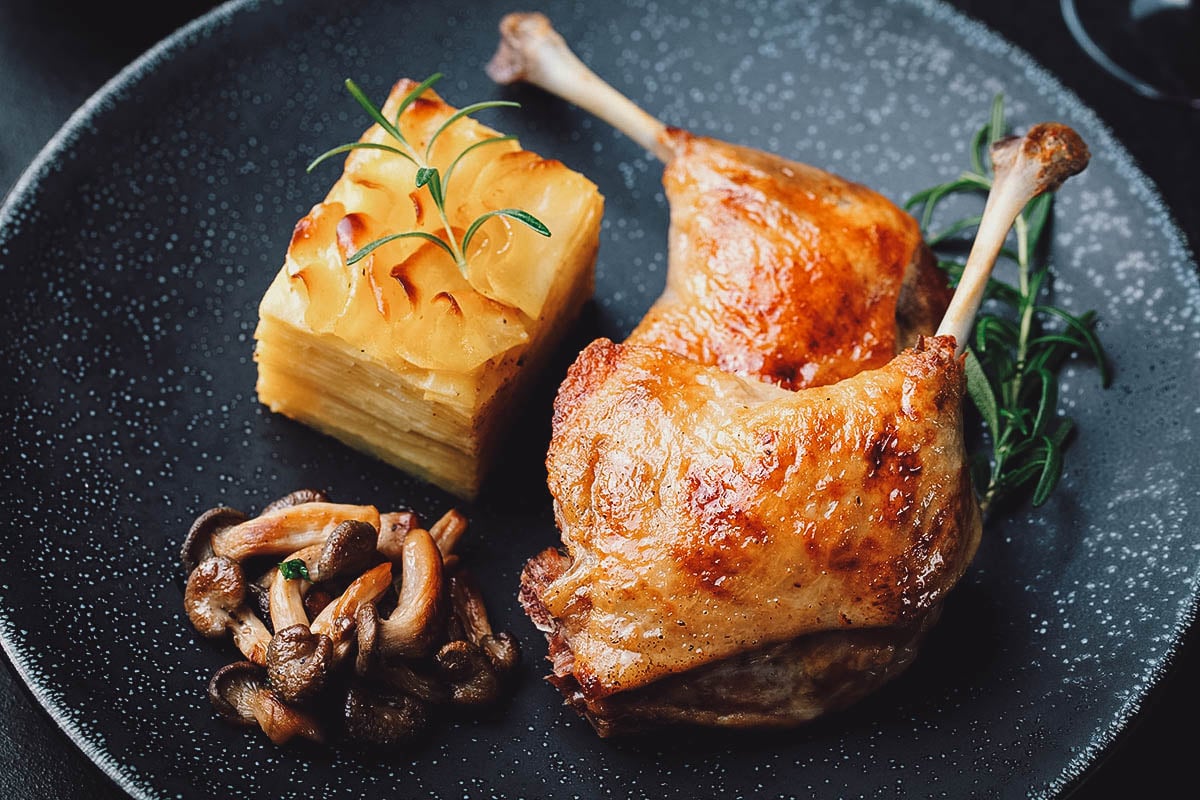
To speak of French cuisine is to speak of civilization itself. More than a collection of recipes, it is a language — one that shaped Western gastronomy, codified taste, and transformed eating into art. From Escoffier’s refinements to the humble baguette, French cooking balances rigor and romance, discipline and pleasure. Its cornerstones remain the foundation on which contemporary dining, in Paris and beyond, continues to rest.
Haute Cuisine and Escoffier
In the 19th century, Auguste Escoffier codified haute cuisine, turning centuries of aristocratic tradition into a systematic art. His “brigade” kitchen structure, his meticulous sauces, and his Le Guide Culinaire gave French cuisine a grammar — precise, hierarchical, endlessly replicable. To this day, every fine-dining kitchen in the world owes its organisation to Escoffier.
The Five Mother Sauces
At the heart of French culinary technique are the five mother sauces: béchamel, velouté, espagnole, hollandaise, and tomato. From these flow infinite variations — Mornay, Bordelaise, Béarnaise — a vocabulary of flavor that has become second nature to chefs worldwide. Mastery of sauces remains the rite of passage for any serious cook.
Bread and Wine
No element is more emblematic of France than the baguette. Its crackling crust and airy crumb embody both tradition and daily ritual; UNESCO has even recognised the baguette as intangible cultural heritage. Wine, too, is inseparable — not merely accompaniment but cultural axis. Bordeaux, Burgundy, Champagne: each region carries centuries of geography, soil, and savoir-faire in every bottle.
The Bistro and the Brasserie
While haute cuisine defined refinement, the bistro gave the world conviviality. Steak frites, coq au vin, onion soup — simple dishes elevated by technique, served amid the clatter of cutlery and the murmur of conversation. The brasserie, with its tiled floors and mirrored walls, extended this ethos: democratic, lively, Parisian to the core.
Cheese as Landscape
France’s cheeses are not delicacies but geographies. Brie de Meaux, Roquefort, Comté — each is a terroir, a microclimate, a village distilled into texture and taste. Charles de Gaulle famously quipped that it was impossible to govern a country with 246 varieties of cheese; the number today is far higher, each carrying centuries of craft.
Pastry as Poetry
If sauces are French cuisine’s grammar, patisserie is its lyric. Croissants, éclairs, macarons — confections where technique becomes theatre. From Antonin Carême’s elaborate pièces montées to Pierre Hermé’s modern artistry, French pastry turns sugar, butter, and flour into edible architecture.
Nouvelle Cuisine and Beyond
The 1970s saw the rise of nouvelle cuisine, with Paul Bocuse and the Troisgros brothers championing lightness, freshness, and presentation. It was a rebellion against heavy sauces and formalism, yet still rooted in tradition. Today, chefs from Alain Ducasse to Anne-Sophie Pic continue the evolution, marrying heritage with innovation.
The Eternal Table
What makes French cuisine enduring is its balance: the grandeur of haute cuisine alongside the intimacy of the bistro, the rigor of sauces beside the poetry of pastry. It is a cuisine that codifies technique without suffocating creativity, that honours terroir while embracing reinvention. To sit at a French table is to partake in culture itself — a ritual of taste, refinement, and joy.
Five Essential Dishes of French Cuisine
- Coq au Vin
– Chicken braised with red wine, lardons, and mushrooms; rustic peasant fare elevated to classic status.
– Recipe: New York Times Cooking - Boeuf Bourguignon
– Burgundy beef stew, enriched with red wine, pearl onions, and bacon; a dish immortalised by Julia Child.
– Recipe: Julia Child’s Version via Food52 - Soupe à l’Oignon Gratinée (French Onion Soup)
– Caramelised onions, beef broth, gratinéed bread and cheese — the quintessential brasserie comfort dish.
– Recipe: Serious Eats - Quiche Lorraine
– Egg custard with bacon and cream in a buttery pastry crust; a cornerstone of French home cooking.
– Recipe: BBC Good Food - Tarte Tatin
– Upside-down caramelised apple tart, invented by accident at the Hôtel Tatin in the 19th century.
– Recipe: Epicurious
Restaurants to Experience the Tradition
- Le Meurice, Paris – Ducasse’s temple of haute cuisine in a historic palace.
- Paul Bocuse, Collonges-au-Mont-d’Or – The spirit of nouvelle cuisine in Lyon.
- Bouillon Chartier, Paris – A democratic brasserie dating back to 1896.
Bakeries & Patisseries
- Poilâne, Paris – Legendary bakery for sourdough and tradition.
- Pierre Hermé – Modern patisserie genius, reinventing the macaron.
Cheese & Wine
- Fromagerie Laurent Dubois – Master affineur in Paris.
- La Cité du Vin, Bordeaux – A museum and tasting center dedicated to wine’s global culture.
TL;DR
French cuisine is not only food but foundation. From Escoffier’s sauces to the baguette, from bistro conviviality to patisserie poetry, it has given the world both rigor and delight. Its essential dishes — coq au vin, boeuf bourguignon, onion soup, quiche, tarte Tatin — remind us that to taste France is to taste culture itself.
 My World of Interiors