
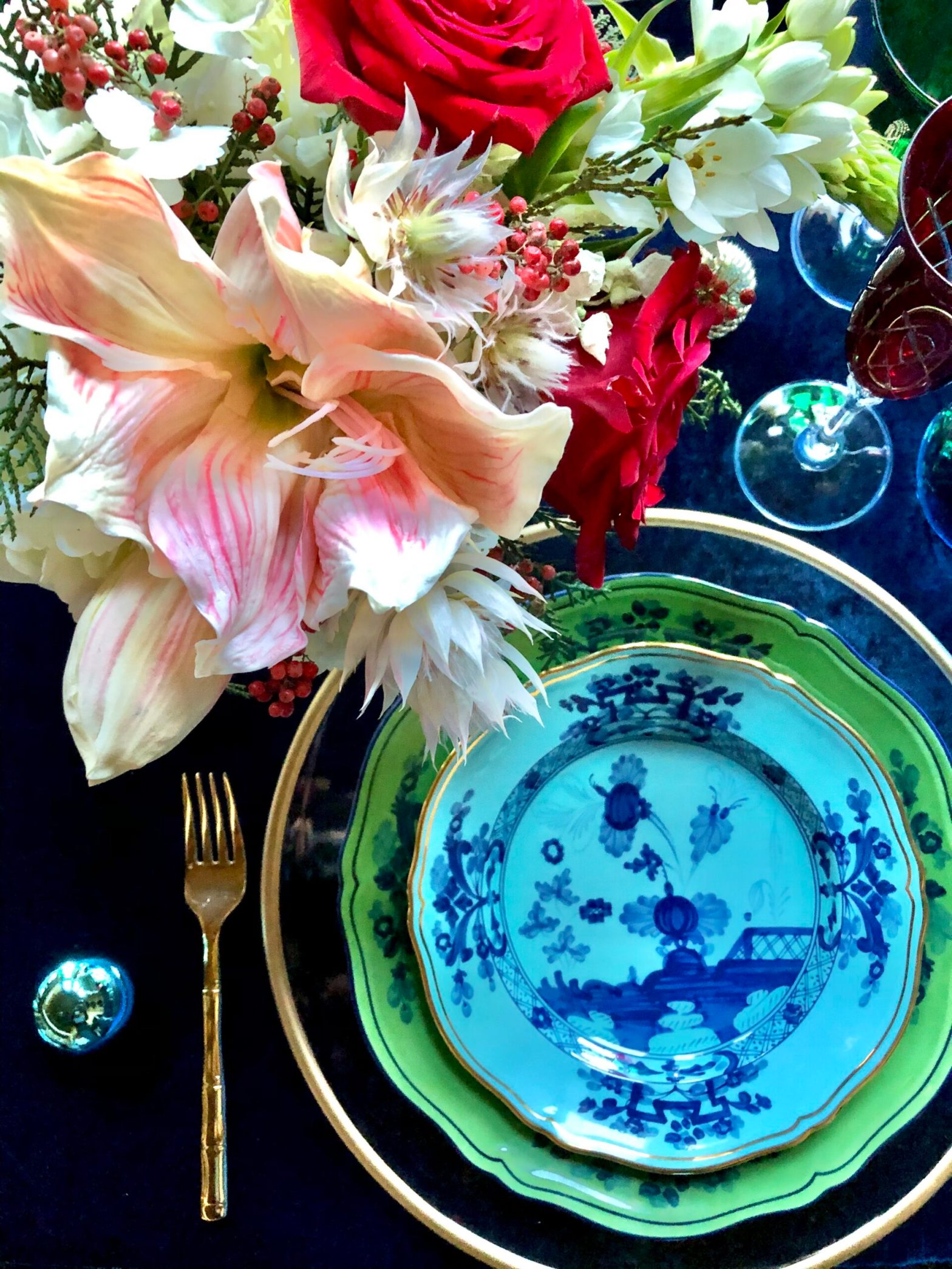
Every December, the table becomes more than a place to dine — it becomes a stage. It is where families gather, where traditions converge, and where the season’s beauty is distilled into linens, glassware, and candlelight. The art of the Christmas table is timeless: part ritual, part design, and part theatre.
From Banquet to Intimacy
The tradition of dressing the Christmas table began in the great halls of Europe, where feasts were marked by evergreen branches, gilt vessels, and towering confections. In Victorian England, holly, ivy, and blazing plum puddings transformed the table into a spectacle. Yet as the centuries turned, grandeur gave way to intimacy. By the mid-20th century, households embraced elegance through china, crystal, and silver, creating festive settings that felt personal yet ceremonial.
The Language of Objects
The Christmas table speaks through its details. A porcelain charger becomes a canvas, a crystal coupe refracts candlelight, and a linen napkin folded with care transforms the everyday into the extraordinary. Italian houses like Ginori 1735 gave the table an operatic sense of theatre, while Murano glassmakers infused it with colour and play. In Scandinavia, simplicity became its own art: bleached woods, beeswax candles, and sprigs of fir.
Candlelight and Ceremony
No element defines the Christmas table more than light. Candelabra once signified grandeur; today, rows of slender tapers in mismatched holders feel equally refined. Light is not only functional — it is symbolic. It illuminates faces, softens edges, and conjures warmth against the darkness of winter.
Nature at the Centre
Evergreens, berries, and flowers have long been central to the season’s aesthetic. Contemporary tablescapes often combine traditional elements with modern restraint: a single garland running down the centre, punctuated by pomegranates and citrus; or bowls of walnuts and figs alongside polished silver. The conversation between the raw and the refined is where true style emerges.
Setting the Scene
- Linens: Crisp white damask conveys ceremony, while rough-spun linen offers rustic charm.
- Glassware: Vintage coupes or Murano goblets infuse personality.
- Porcelain: A classic service — be it Ginori, Wedgwood, or Meissen — is timeless.
- Accents: A sprig of rosemary or a handwritten place card lends intimacy.
December Picks:
Porcelain & China
- Ginori 1735 – Italy’s historic porcelain house, known for bold colours and Baroque-inspired detailing.
- Wedgwood – Classic English fine china, from Jasperware to timeless dining collections.
- Meissen – Germany’s first porcelain manufactory, still producing exquisite tableware with centuries of heritage.
Glassware
- Salviati Murano – Venetian glassmakers famed for vibrant, hand-blown goblets and tumblers.
- Baccarat – French crystal at its most refined, from coupes to decanters.
- Saint-Louis – France’s oldest crystal house, known for jewel-coloured glass.
Linens
- Society Limonta – Italian linens in natural textures and contemporary tones.
- Libeco – Belgian linen mill crafting timeless tablecloths and napkins.
- Sferra – American-Italian luxury linens, perfect for formal settings.
Candles & Holders
- Diptyque – Parisian perfumer, offering holiday candles scented with pine, clove, and spices.
- Carrière Frères – Botanical candles inspired by 19th-century tradition.
- Georg Jensen – Danish silver designs, including sleek candleholders that blend tradition and modernity.
TL;DR
The Christmas table is not about excess but about intention. It is a place where history, design, and ritual intersect — where porcelain carries memory, where candles shape atmosphere, and where the simplest sprig of fir can feel as luxurious as crystal. In the end, the art lies not in decoration alone, but in the sense of occasion it creates.
 My World of Interiors