
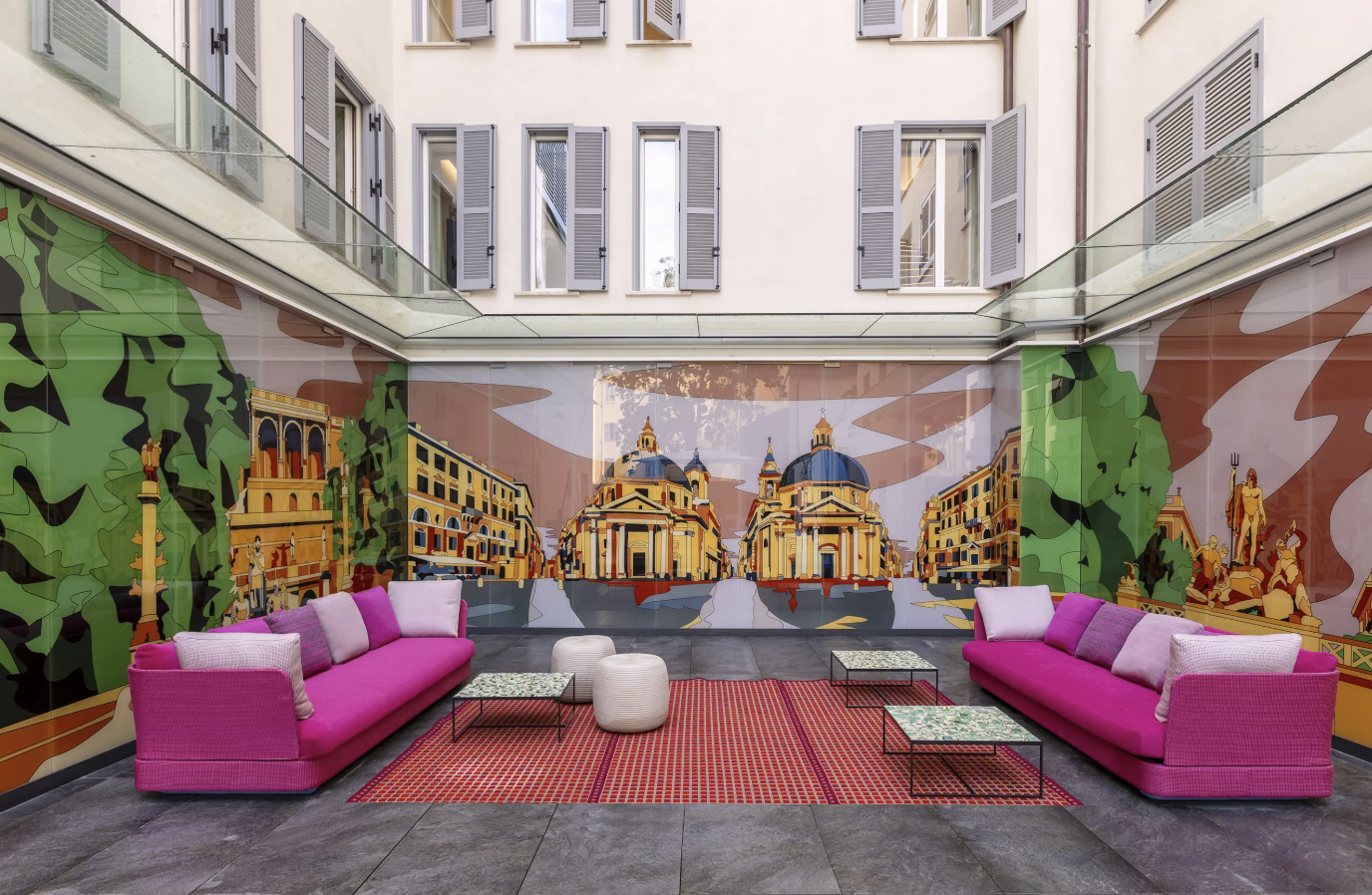
Rome is a city that has always contained contradictions: ancient ruins beneath Renaissance frescoes, Baroque piazzas beside Fascist rationalism. To open a new hotel here is to add another layer to that palimpsest. But to open one designed by Zaha Hadid — posthumously completed as her last architectural project — is to enter a different conversation entirely: not just about hospitality, but about legacy, futurism, and the very possibility of renewing history without erasing it.
A Palazzo Reborn
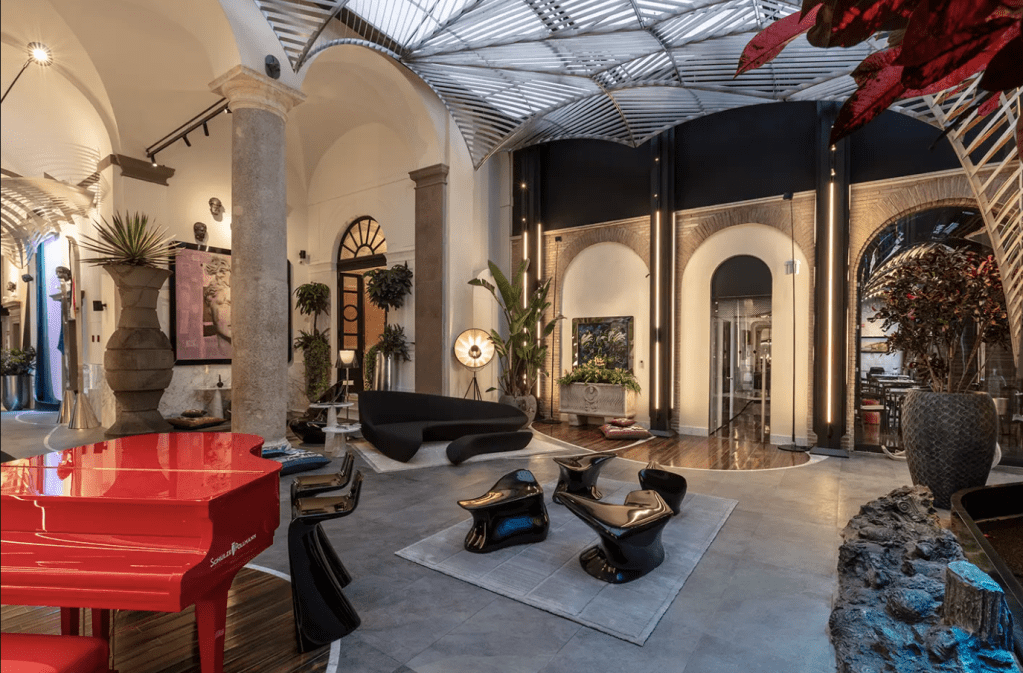
Romeo Roma occupies a sixteenth-century palazzo on Via di Ripetta, a stone’s throw from Piazza del Popolo. For centuries, it carried the weight of Roman history in frescoes, arches, and classical proportions. Today, it has been reborn as part of The Romeo Collection, with interiors and interventions drawn from Zaha Hadid’s design studio.
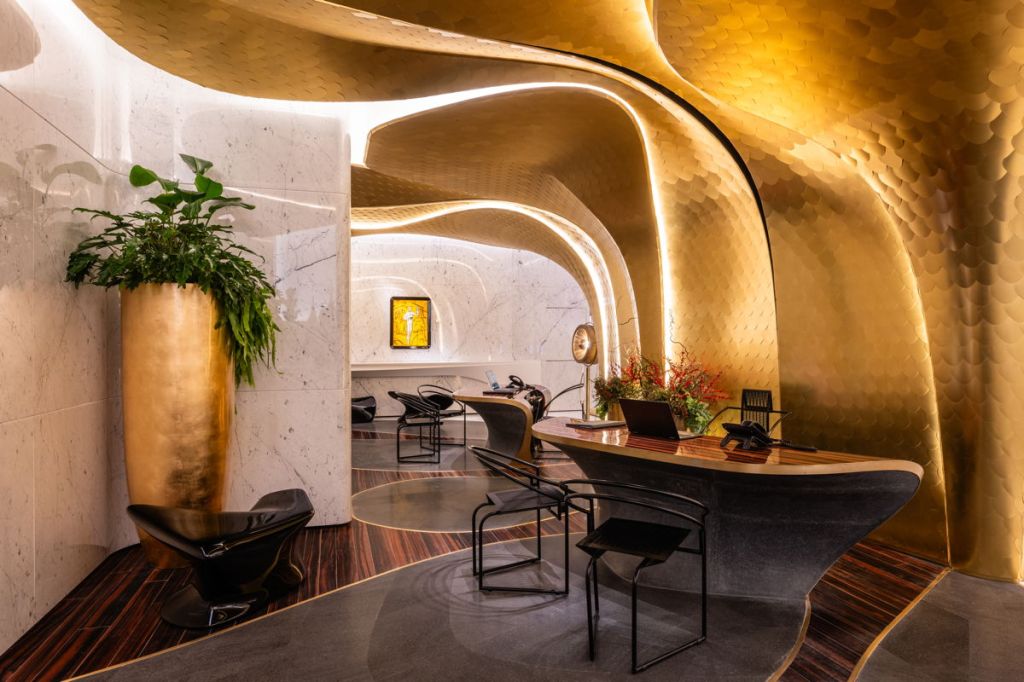
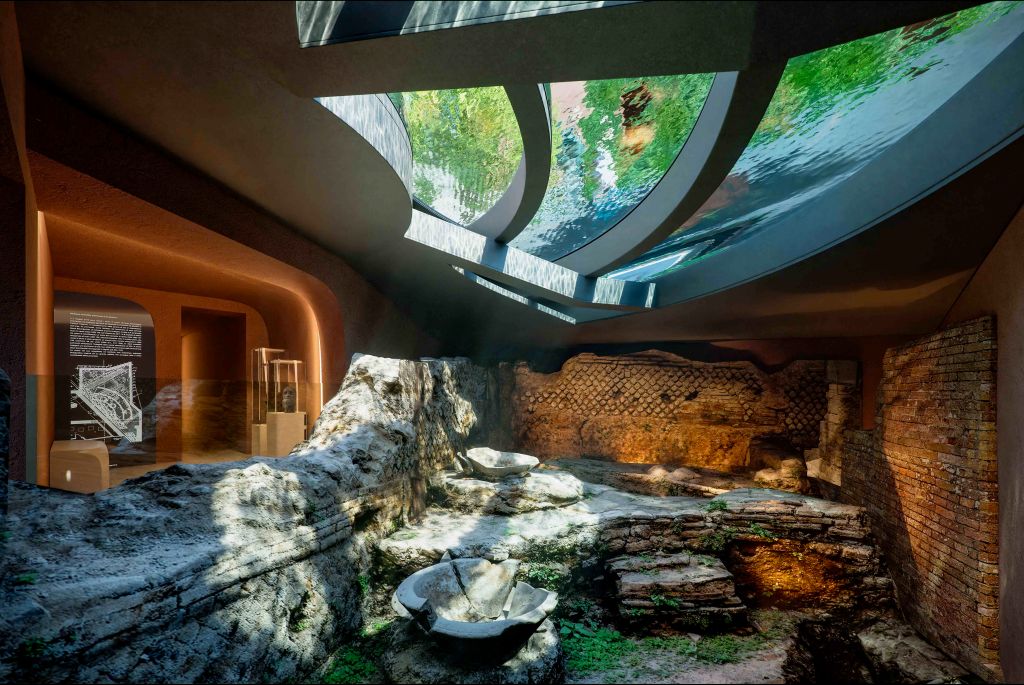
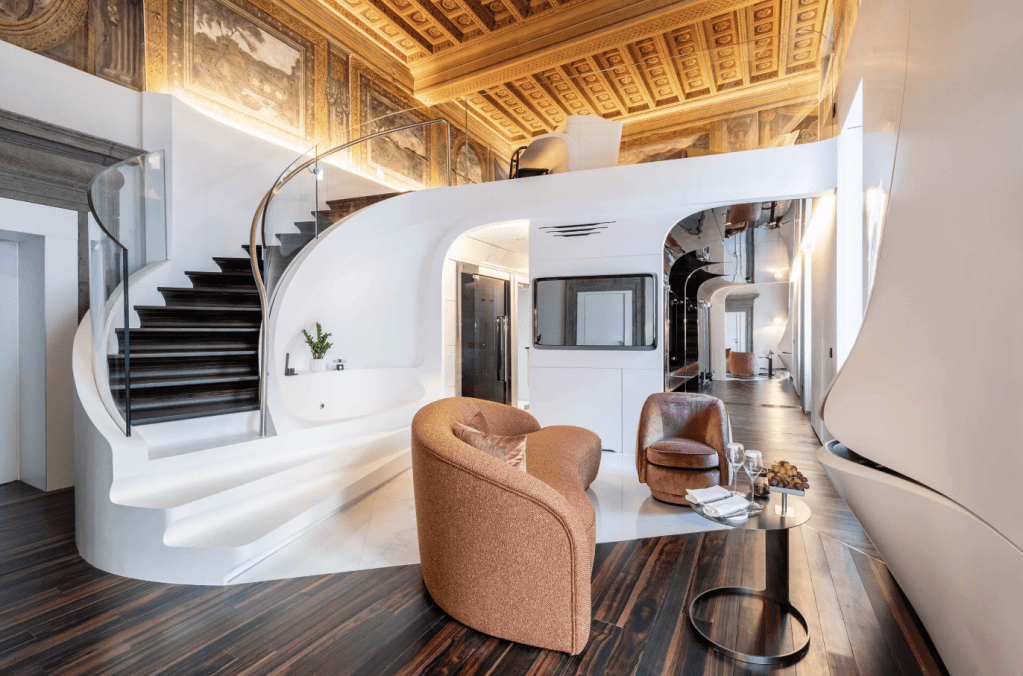
The result is a dialogue across centuries: Renaissance walls meet Hadid’s flowing geometries, a “second skin” of glass and metal wrapping history in undulating light. In one of the most theatrical gestures, glass-bottom pools reveal ancient stonework below, a reminder that even the most contemporary luxury rests on the sediment of the past.
The Hadid Touch
Hadid’s signature is everywhere — fluid lines, sculptural corridors, dramatic transitions from shadow to illumination. Yet unlike her civic works in Guangzhou or Baku, Romeo Roma had to negotiate intimacy. Here, the boldness is tempered: rooms are serene, pared-back, but never sterile. Interiors channel her love of movement, while preserving the frescoes and architectural relics of the palazzo.
This is Hadid’s genius: not a clash between past and future, but a choreography. The guest moves from ancient thresholds into futuristic halls, from Renaissance walls into spaces where design feels alive, continuous, and cinematic.
More Than a Hotel
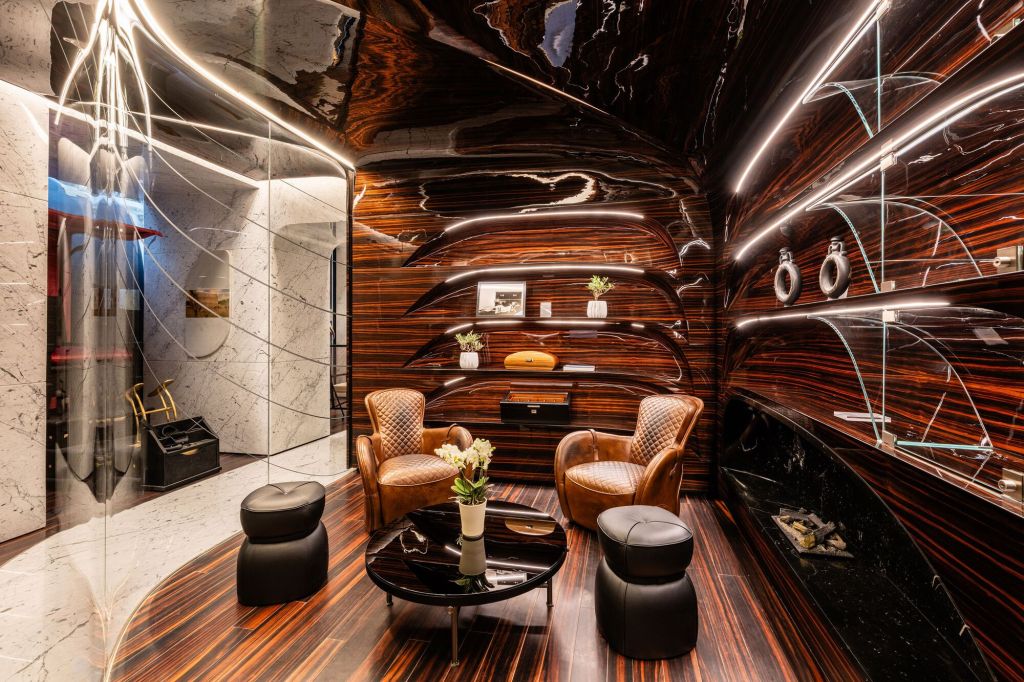
Romeo Roma is not simply a place to sleep. It is a curated experience that interweaves gastronomy, wellness, and art.
- Dining: Il Ristorante Alain Ducasse anchors the culinary program, where French precision and Italian tradition meet in theatrical plates.
- Wellness: La Spa Sisley Paris offers treatments as ritual, with interiors echoing Hadid’s fluid forms.
- Atmosphere: The palazzo’s history is everywhere, from preserved frescoes to vaulted stone cellars — yet reframed by design into something new.
The guest’s experience is not a checklist of amenities but a narrative: moving through spaces that layer time, luxury, and memory.
Legacy and Loss
Because Romeo Roma was completed after Zaha Hadid’s death in 2016, it carries the weight of legacy. It is both homage and continuation: proof that her vision remains vital, that her studio can translate her sensibility into contexts she never lived to see realized.
There is melancholy in that — but also triumph. This is not a mausoleum but a living space, filled with voices, music, laughter. It is Hadid’s architecture at its most humane: bold, yes, but also protective, enveloping, intimate.
Why It Matters
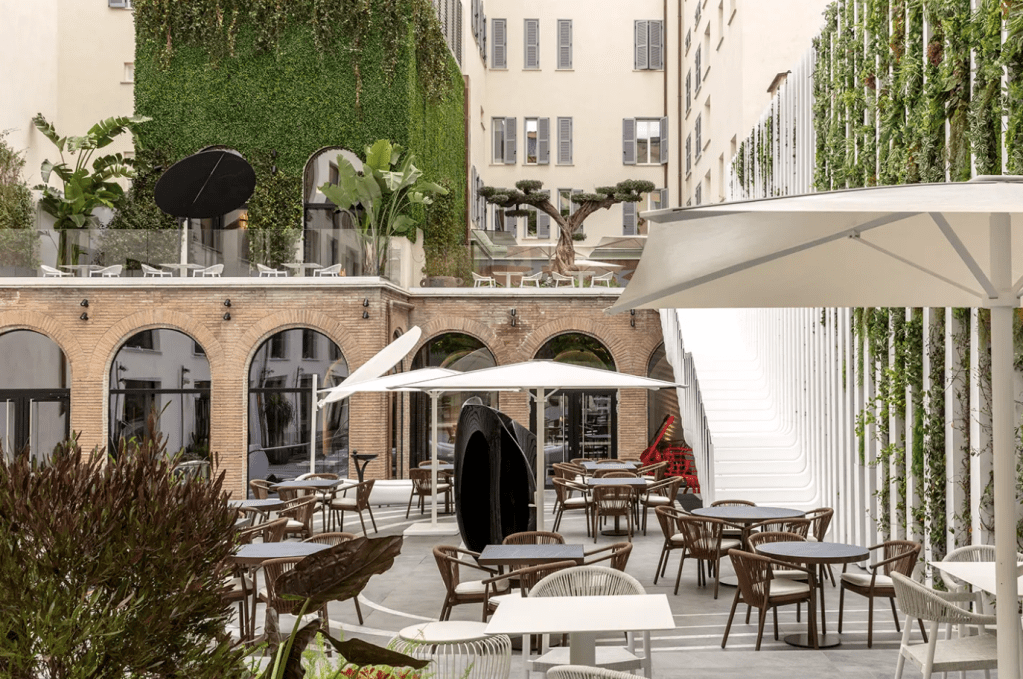
Romeo Roma signals a new chapter in luxury. Guests today want more than comfort; they want story, authenticity, atmosphere. They want to live inside history, but also to feel the pulse of the contemporary. This hotel delivers both, setting a standard for how heritage properties might evolve in the 21st century.
In Rome, where so much is already said, Romeo Roma offers something rare: a new sentence in an ancient book.
Closing Reflection
Zaha Hadid once said she was interested in “fluidity — of movement, of space, of thought.” Romeo Roma makes that philosophy tangible. It is a place where frescoed walls and futuristic curves converse, where history is not static but alive, refracted through design.
To stay here is not only to inhabit luxury, but to witness architecture as legacy — Rome’s eternal city meeting Hadid’s eternal vision.
Discover more and book at: http://www.romeocollection.com/romeo-roma
 My World of Interiors